Hardly a week goes by without another non-paper, proposal, or initiative suggesting how to make the most of enlargement policy in an era where geopolitics takes the front seat. EU institutions, member states, and think tanks have all entered this debate, generating a plethora of terms and concepts that address the need for creative thinking and urgent action. While they often overlap and frequently cause conceptual confusion, they nonetheless reflect a shared understanding that the traditional approach to enlargement is no longer fit for purpose.
Among the earliest attempts to translate this diagnosis into a concrete, detailed, and structured proposal was the Staged Accession Model. Co-developed by the European Policy Centre (CEP-Belgrade) and the Centre for European Policy Studies (CEPS) in 2021, the Model has set the stage for subsequent discussions on how to reanimate the enlargement policy. As 2026 marks five years since its inception, the following article situates the Model within the ongoing enlargement debate, examines which of its ideas have gained policy traction, and highlights those that are yet to be taken up.
Mapping out the Debates: Where does the Model stand?
The ongoing wave of discussions on how to reimagine enlargement policy has produced two categories of concepts. The first includes proposals that insist on the need for EU enlargement to become more gradual, credible, and politically rewarding before accession itself, so as to incentivise long-delayed reforms. On this front, the European Council adopted “gradual integration” in 2022 as the new official approach to enlargement. While often used interchangeably with terms such as “phasing-in” or “accelerated integration”, it was intentionally framed in broad terms, leaving enough space for more specific ideas to emerge as to how closer integration could be operationalised.
The second category includes ideas designed to address concerns that the Union might become dysfunctional as it acquires new members, assuming that the current institutional and decision-making system remains in place. Here, proxy models for full membership, such as “single market membership”, “associated membership”, and “reversed membership” come to mind as temporary solutions, offering interim steps for candidates while buying the Union more time to reform itself internally so that it can adequately absorb newcomers.
The reader might wonder where the Staged Accession Model fits within these debates. Its unique value lies in the fact that it bridges the two previously described categories of enlargement-related concepts, while having full membership as the final goal.
On the one hand, it envisaged linking access to increased institutional and financial benefits to the level of reforms achieved during the pre-accession period. By doing so in a gradual, merit-based, and reversible manner, the proposal was intended to increase the predictability and credibility of the entire process, thereby unlocking the political will of candidate countries to undertake essential reforms.
On the other hand, it addressed concerns about the difficulties of decision-making in an enlarged but unreformed Union by introducing temporary veto limitations and enhanced post-accession safeguards for new member states. This was intended to ensure that enlargement could proceed even if the EU’s internal reforms remained unfinished by the time a candidate country fulfilled the accession requirements.
Taken together, through these pre- and post-accession arrangements, the Model offered a unique and balanced response to the concerns of existing member states and the needs of candidate countries.
Tracking the Policy Uptake: How does the Model stand?
The Model’s ideas have made their mark on the EU’s approach to enlargement across four key policy areas, to varying degrees.
First, the Model’s proposal for more substantial but conditional financial incentives was brought to life in the form of the New Growth Plan for the Western Balkans (NGP). When the Model originally came out with this approach, it highlighted that such a step would help reduce the socio-economic convergence gap, strengthen domestic absorption capacities, and reduce the space for the involvement of malign external actors.
Today, the Reform and Growth Facility for 2024–2027 links financial support to reform agendas, with payments conditional on concrete quantitative and qualitative steps. In the words of the head of DG ENEST, the NGP represents “a form of staged accession”, as it provides increased financial incentives to candidate countries in a gradual, merit-based, and reversible manner. Importantly, the NGP not only incorporates the Model’s underlying logic but also broadly reflects its approach to the scale of additional funding made available to candidate countries.
The Model is set to regain relevance as the EU prepares a new Multi-annual Financial Framework (MFF 2028–2034), particularly in debates on increasing pre-accession funding and making it fully conditional on reforms.
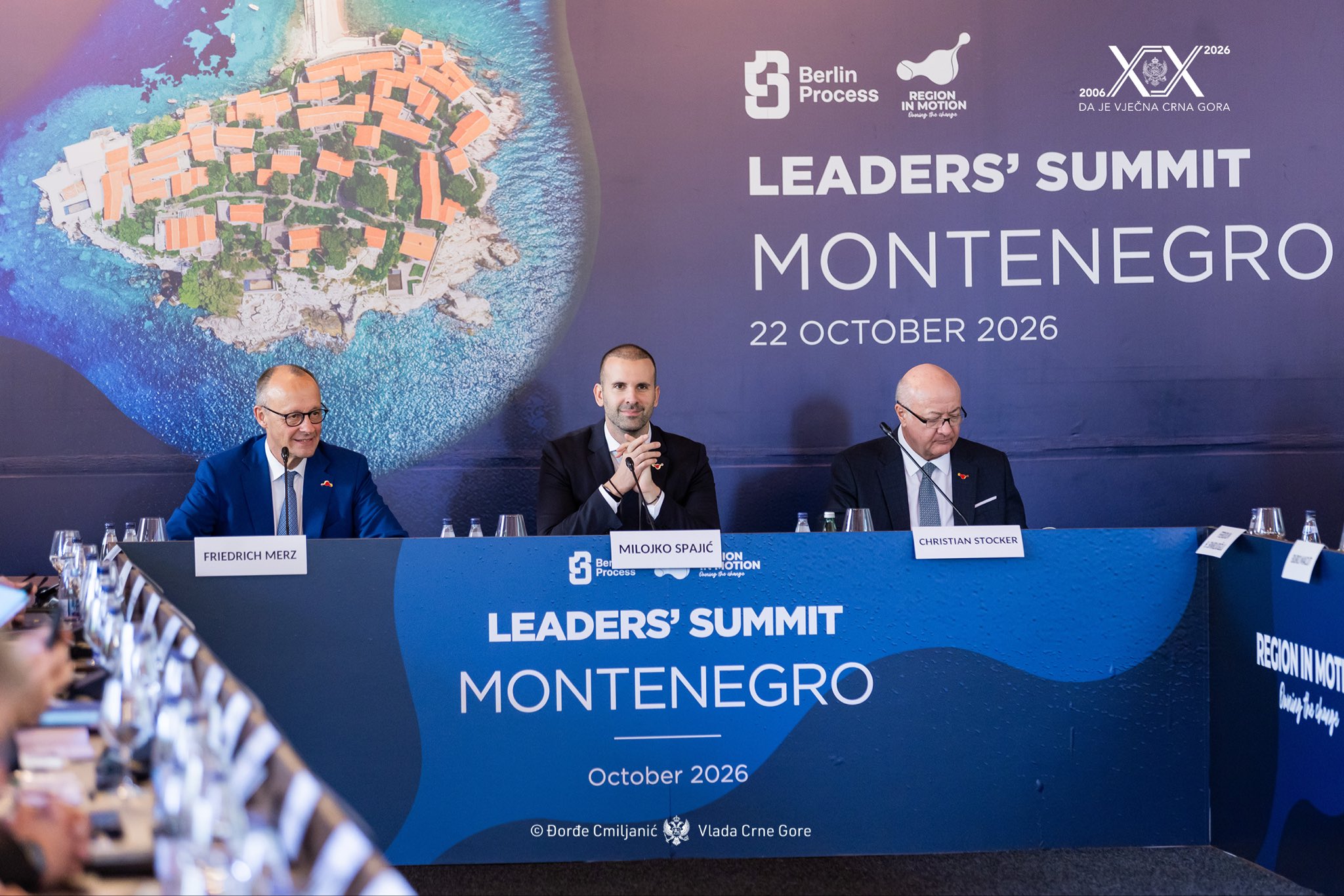
Second, the Model’s proposal for gradual institutional participation has recently been taken up by German Chancellor Friedrich Merz. In a letter to the heads of EU institutions, he called for the exploration of “innovative solutions”, including gradually opening the doors of EU institutions to candidate countries.
When the Model advanced this proposal, the intended benefits were threefold: it would provide a strong incentive for reforms by linking access to institutions with the level of progress, thereby complementing financial incentives; facilitate the socialisation of candidate countries’ representatives with their EU counterparts while giving them a voice in policy discussions; and encourage candidates to gradually build up their administrative capacities, enabling them to effectively assume membership obligations once negotiations are completed.
The Model’s focus was on the EU Council, while also advocating for inclusion of candidates in other EU institutions such as the European Parliament and Comitology, including different agencies. As Chancellor Merz has called for the establishment of a special Task Force on the matter, the Model’s blueprint for gradual institutional participation is well-placed to move from concept to concrete policy.
Third, the Model’s emphasis on post-accession safeguard clauses has now become a reality, with the Enlargement Commissioner Marta Kos spearheading this approach. Recognising the dangers of keeping enlargement on hold pending the Union’s internal reform, the Model proposed enhanced safeguards to ensure that conditionality does not end on the day of accession, especially in areas such as the rule of law.
These can be understood as legal provisions set out in Acts of Accession that allow the EU to take corrective measures if a new member state fails to uphold its commitments during a predetermined period following accession. Building upon existing precedents, the Model made the case that longer, wider, and more precise safeguards should emerge not as a mere technical add-on to Acts of Accession, as was largely the case in the past. Instead, these are to be relied upon as important means of ensuring that newcomers are welcomed without undue delay, yet effectively kept in check even when the pre-accession conditionality is gone.
With Montenegro’s Act of Accession currently being drafted, it provides a good testing ground for a new generation of safeguard clauses, so that such an approach can be applied in future rounds of enlargement.
Fourth, the Model’s proposal to temporarily limit post-accession veto powers remains its most politically sensitive element, albeit one that is increasingly being contemplated. Accounting for member states’ credible fears that newcomers could unilaterally misuse their vetoes in areas such as foreign or enlargement policy, the Model presented veto limitations as a measure of last resort to ensure that candidate countries do not face closed doors despite having completed the required reforms.
The proposal may prove necessary to avoid such a damaging scenario, particularly as timely internal reform of the Union cannot be taken for granted. In that case, any limitation would be temporary, limited in scope, and subject to automatic expiry – all codified in an Act of Accession – thus avoiding the creation of a second-class membership.
In practice, given that it touches upon equality of member states, no institution or member state has overtly championed it. Nevertheless, the proposal has entered political discussions, as illustrated by the Albanian Prime Minister’s continued public support for the idea. Naturally, this issue will be of prime importance for the Union in considering Ukraine’s accession.
What is the Model’s legacy?
Five years on, the Model’s greatest legacy lies in the fact that it has succeeded in completely rehauling the enlargement conversation: no one now defends the old binary, all-or-nothing enlargement model. While it is far from being adopted as a coherent architecture, parts of the proposal have entered the EU’s core vocabulary and policy thinking.
Indeed, the language of gradual integration, intermediate benefits, conditional funding, and post-accession safeguards – all presented as innovative solutions to the challenges facing enlargement – has become part of the EU’s everyday discourse. Importantly, even with such a track record, the Model’s potential is far from being fully exploited.
Views expressed in the Opinion section belong to the authors and do not necessarily reflect the views of European Western Balkans.