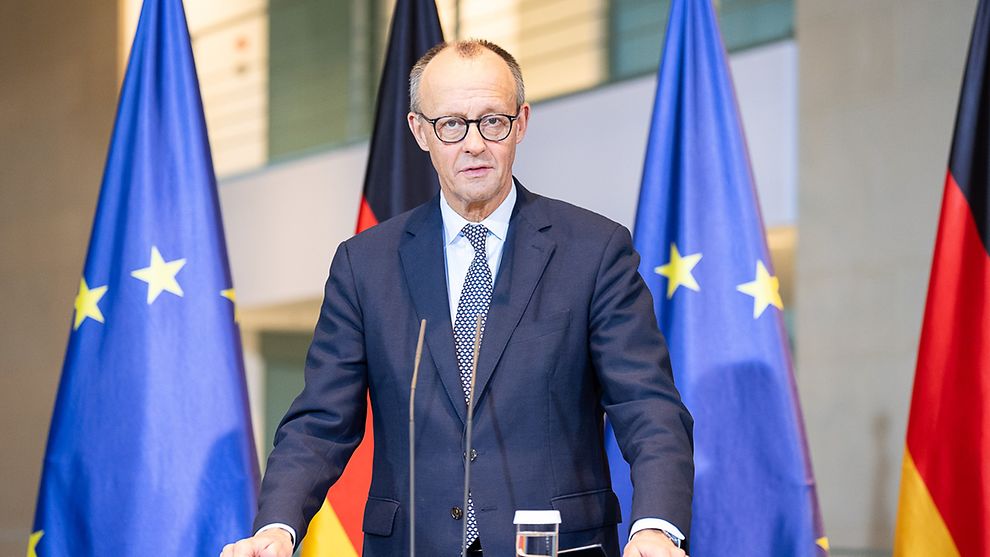
BERLIN – Ukraine should get an “associate Membership” in the European Union as a decisive step on its path towards full membership, while Western Balkans and Moldova could also be brought closer to the EU and their accession process accelerated, Chancellor of Germany Friedrich Merz wrote a letter to the European Union leaders.
The letter, seen by the European Western Balkans, was sent to the President of the European Council António Costa, the President of the European Commission Ursula von der Leyen and the President of Cyprus, which currently holds the presidency of the Council of the EU, Nikos Christodoulides.
In the letter, Merz proposes a new EU accession dynamic for current candidates – Ukraine, the Western Balkans and Moldova. This is because, as he writes, the enlargement of the European Union is a geopolitical necessity, but also a process that takes “much too long”.
In the first part of the letter, focusing on Ukraine, Merz proposes an “associate Membership” model. While Ukraine should become a full member state, it is obvious, according to Merz, that the accession process will not be completed shortly.
“However…, we do not have time for further delays. It is now time to boldly move on with Ukraine’s EU integration through innovative solutions as immediate steps forward,” he writes.
The status as an Associate Member State for Ukraine could include participation in the work in the European Union institutions without voting rights. It could also include the step-by-step application of EU legislation and budget and political commitment by the Member States to create a “substantial security guarantee” for Ukraine.
This proposal will “raise a couple of questions regarding political, technical and legal feasibility”, but it will also help facilitate the ongoing peace talks as part of a negotiated peace solution, Merz wrote.
In the following part of the letter, the German Chancellor asserts that the European Union should stand firm in its promise that the Western Balkans countries and Moldova can join the European Union.
“I suggest that we look into innovative solutions also for those candidate countries which have been preparing for their accession already for a long time now, and that we accelerate their accession process as well. Jointly with colleagues, I will continue to work on this”, Merz writes.
He proposes that the EU could envisage also for these countries substantial steps on their way to membership, with, for example, privileged access to the Internal Market and closer ties with the European institutions in the daily decision-making process.
“Gradual Integration could be established by building blocs which could be the basis for full application of the respective policy areas, and then be accompanied by increased support in the process of implementing the acquis. In addition, we could enhance the aforementioned institutional integration on the basis of substantive progress. All this could bring candidate countries significantly closer to us and thus spark a new ambition for further reforms needed to achieve full membership”, Merz wrote.
Last week, five EU member states circulated a confidential document among other European Union Member States, proposing a “merit-based access – if necessary, step by step – to the European single market” as a way to sustain the momentum of enlargement. The letter by Friedrich Merz is therefore another contribution to the recent discussions on enlargement within the EU.