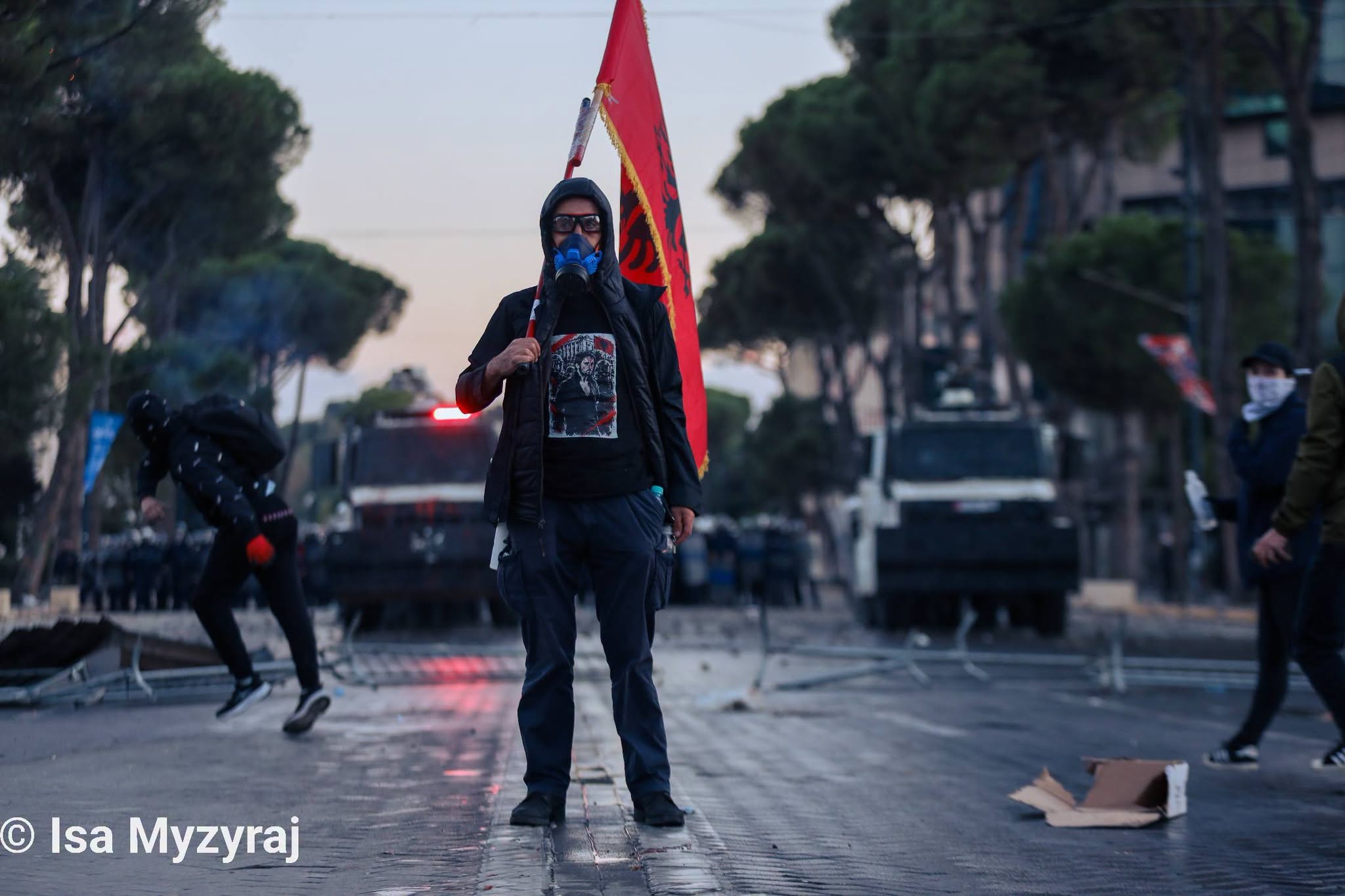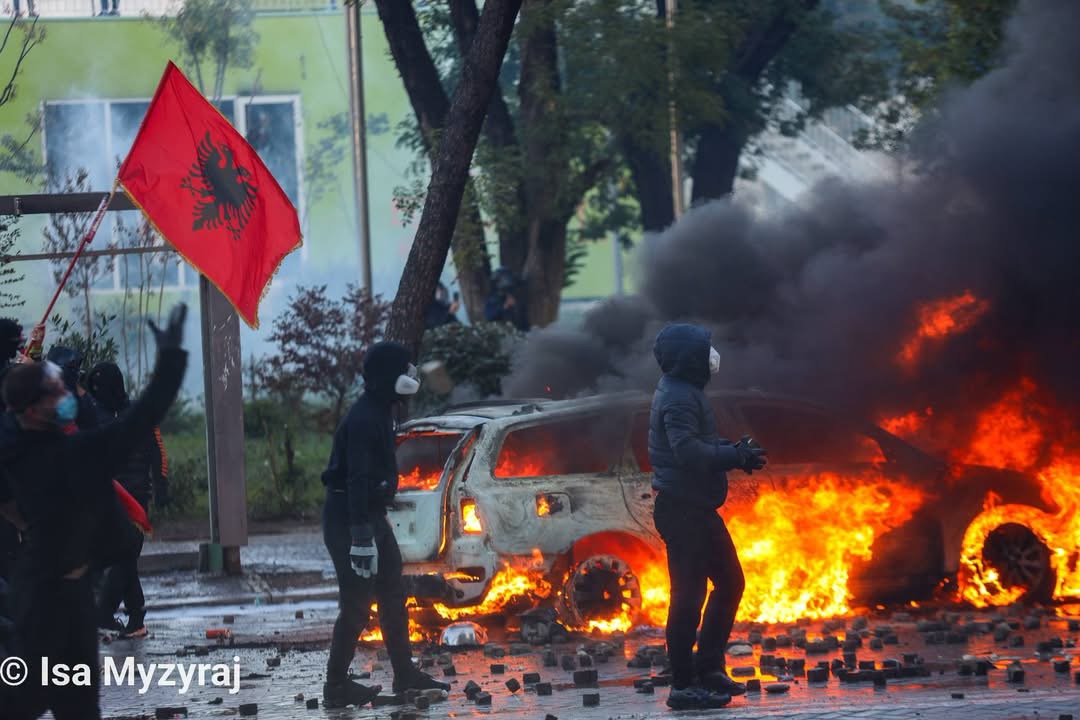
For the past several days, Albania has been swept up in nationwide, youth-led protests that are proving to be the most peaceful and massive the country has seen since the fall of the communist dictatorship.
The breaking point occurred on 30 May during a demonstration in Zvërnec, where private guards from Major Security assaulted and abducted a protester while present police officers stood by doing nothing. However, public friction over protected areas is not new to the Albanian discourse. A wave of demonstrations took place in 2024 when the government adopted Law No. 21/2024. This controversial legislation paved the way for infrastructure and tourism developments inside protected zones, posing a severe threat to Albania’s biodiversity and fragile ecosystems.
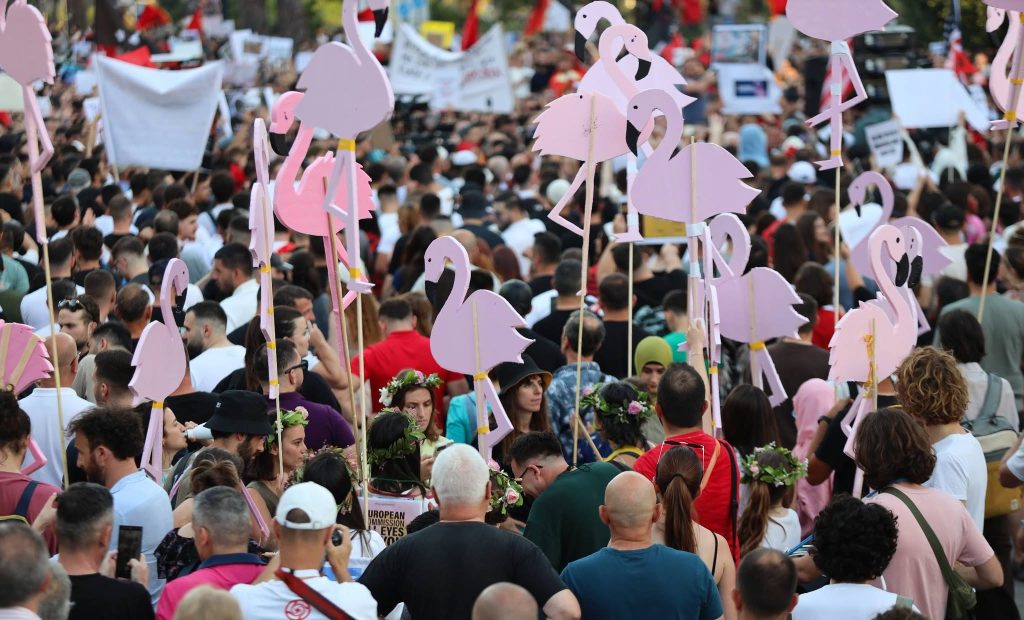
A prime example of this is a planned luxury resort within the protected coastal area of Vjosa-Narta, which is a vital biodiversity zone home to flamingos, sea turtles, and seals. Approved through opaque methods and vested interests that are currently under investigation, the project completely bypassed any proper assessment of benefits for the local community or the country at large.
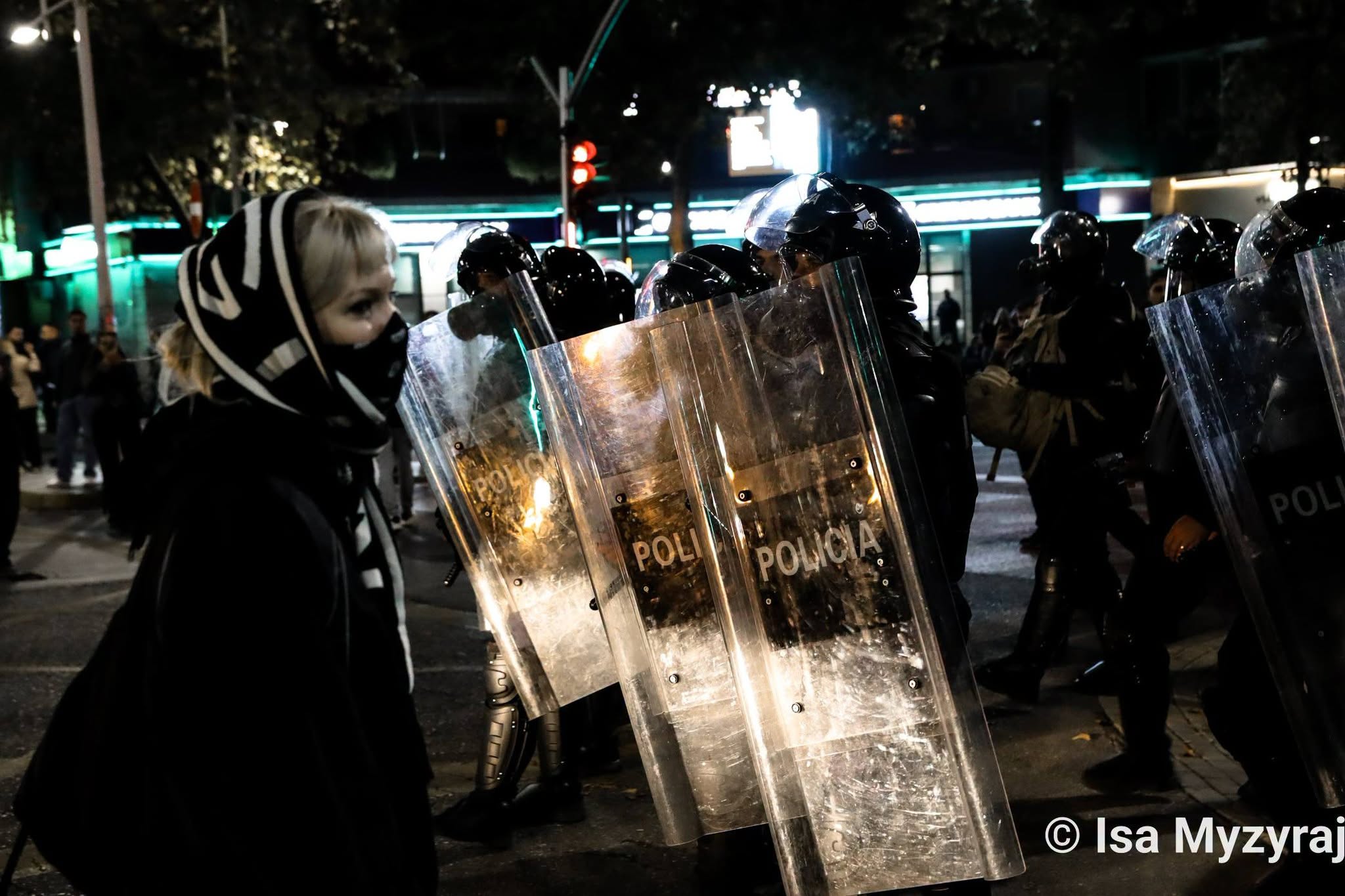
This display of institutional arrogance, combined with the inability of security forces to protect citizens, became the ultimate catalyst. Compounded by long-standing frustration over a lack of transparency, government accountability, and a series of “tailor-made” laws serving private interests, the public reached its limit.
What began as a targeted push by Gen Z and Millennials for environmental preservation and policy transparency has evolved into the most massive and hopeful movement in modern Albanian history.
While Tirana remains the epicentre with tens of thousands of participants, solidarity protests have ignited across major Albanian cities and diaspora hubs globally, including Germany, Italy, the United States, France, Netherlands etc.
Breaking the chains of the past
Why do these protests carry such historic weight for Albania? To understand their significance, one must look at the country’s political evolution. Albania’s 35-year transition from one of Europe’s most repressive and isolated communist dictatorships into a modern, pluralist democracy has been painfully slow. The legacy of the regime left behind a deep erosion of trust in public institutions and a fragile democratic culture, vulnerabilities worsened by systemic corruption and massive waves of youth emigration.
Older generations grew up under a totalitarian system that maintained absolute control through fear, division, and total indoctrination. The notorious “Sigurimi” secret police and labor camps silenced dissent, while purges and mutual surveillance bred deep-seated societal distrust. With education and media entirely controlled by the state, a rigid cult of personality, a ban on religion, and total isolation from the outside world, genuine civic engagement was virtually impossible.
This dark history fundamentally warped how citizens interacted with power, leaving behind an expectation of authority rather than accountability, and casting the act of public protest as something dangerous or futile.
Caught between an authoritarian past and a chaotic democratic present, Albanian society has long struggled to sustain a cohesive system of civic values, often defaulting to political apathy.
Among the very few massive protests the country has seen previously was the student movement during the fall of the dictatorship. Back then, protestors marched under the slogan “We want Albania like the rest of Europe.” At that time, Europe felt like a distant destination; hope was viewed as something existing beyond national borders, and the overarching goal was simply to escape the country’s bleak reality.
New Generation, New Expectations
In stark contrast, today’s youth-driven movement (Gen Z and Millennials) has rallied under a different slogan: “New Albania.” Rather than looking for an exit strategy, these protestors are demanding structural change at home. They are calling for the immediate cancellation of the amendments to the protected areas law and the termination of the Vjosa-Narta resort project. More broadly, the movement has transformed into a systemic rejection of poor governance and the entrenched political establishment.
The demands are uncompromising. Youth are calling for the resignation of Prime Minister Edi Rama while simultaneously denouncing the lack of a viable, uncompromised opposition with the powerful chant, “We are the opposition.”
In an unprecedented move, they are calling for the imprisonment of both Rama and Sali Berisha, the two longest-serving leaders who have dominated the political landscape since 1991. They are explicitly rejecting a political class whose failures have driven catastrophic rates of emigration, demanding instead a complete overhaul of societal values. If the post-dictatorship generation of 1990 fought for basic freedom, today’s young professionals are fighting to live with dignity.
Historically, Albanian youth have been stereotyped as apathetic, accused of spending their days sitting in cafés and scrolling through social media. Ironically, these two elements have become the movement’s greatest catalysts. Marching through the streets of Tirana with the mass chant, “Get up from the coffee bar,” young protestors have directly challenged societal inertia, successfully inviting older generations and diverse socio-economic groups to join them.
Furthermore, social media has effectively bypassed a heavily compromised media landscape. While mainstream outlets initially attempted to ignore or downplay the unrest, independent online platforms and civic influencers became primary information sources, creating a wave of accountability.
This shift has introduced a powerful wave of civic responsibility and “cancel culture.” Youth are actively calling for the boycott of media outlets that have long shielded corrupt figures or acted as government mouthpieces. Remarkably, this maturity extends to the logistics of the protests themselves: participants routinely collect their own trash after rallies, transforming the act of protesting into something trendy, honorable, and free from the fear or shame of the past.
While critics argue that civil unrest damages tourism and national reputation, the data suggests otherwise. Statistics show that 86.2% of Albanian youth view EU integration as a top priority. By standing up against state capture and advocating for environmental preservation, tens of thousands of citizens are demonstrating the exact political maturity and democratic alignment that the European Union expects from its member states.
Regardless of the immediate political outcome, the Flamingo Revolution marks a permanent awakening of civic consciousness in post-communist Albania. By explicitly rejecting societal apathy, media capture, opposition silence, and tailor-made legislation, the youth are successfully shaking the foundations of the old system. They have effectively reframed democracy not as an abstract Western ideal, but as an everyday habit of rights and responsibilities.
Views expressed in the Opinion section belong to the authors and do not necessarily reflect the views of European Western Balkans.