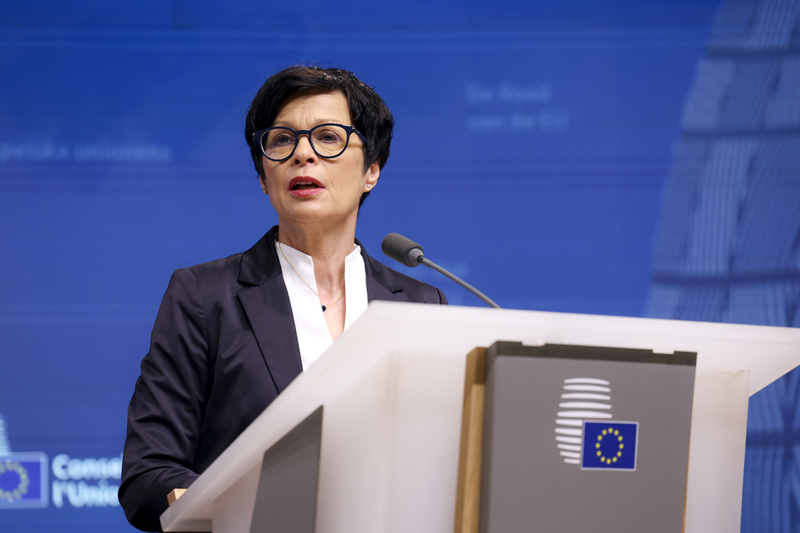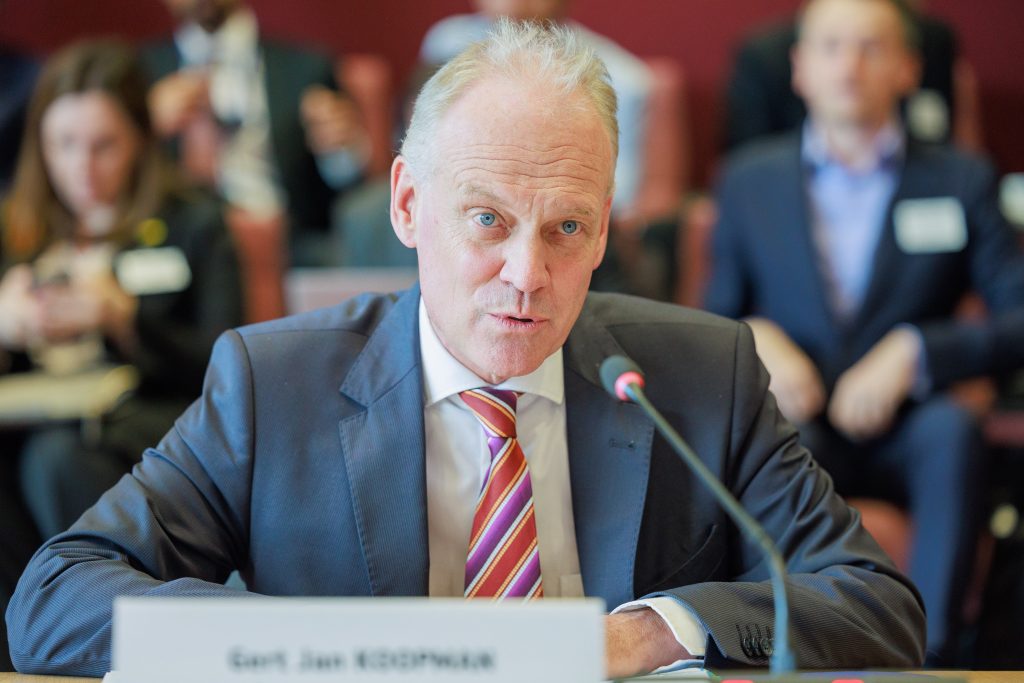
BRUSSELS – Director of the Directorate-General for Enlargement of the European Commission Gert Jan Koopman stated today in the European Parliament that, as of June, the expected implementation of the reforms under the Growth Plan for the Western Balkans is around 80% for Albania and Montenegro, 50% for North Macedonia and 35% for Serbia.
“When we met in January, we observed that, while progress was being made, it was slow. Now I am happy that I can report to you that a good 90% of all steps are either fully achieved or ongoing, with 57% having been achieved according to our estimates by June of this year. It is to be said that there is a significant divergence across the region, with Montenegro and Albania expected to reach levels of implementation of 80%, which also mirrors their very significant moment on the EU path”, Koopman said.
North Macedonia, he added, has, over the past months, significantly accelerated engagement and deepened it, and we now expect its implementation rate to exceed 50%, so it is catching up rapidly.
“Serbia, which is at a much lower level, has also shown engagement, admittedly more selectively, with delivery at around 35% and work on the 85% of steps ongoing. Recently, Serbia has also put much more emphasis on the implementation of the Facility”, Koopman said.
Kosovo is lagging far behind due to the internal political blockages that have prevented the adoption of important legislation.
“However, since the elections of June this year, we see that Kosovo is starting to build necessary institutional stability and therefore expect a higher implementation rate”, Koopman said.
The country that poses the most challenges is Bosnia and Herzegovina due to its internal political blockages. According to Koopman, the Commission has already cut the allocations for Bosnia and Herzegovina, and proposes, in the first instance, to transfer these funds to the European Innovations Council Compartment for the Western Balkans so that it stays in the region.
Asked about the situation on payments for Serbia, Koopman said that the Commission is still ascertaining whether one of the two levels of conditionality is met – general conditions related to the rule of law.
“The fact that we haven’t paid out to date (since January) suggests that we were not fully convinced that this is indeed the case. We continue to monitor this. The situation, as our rule of law non-paper described and also our last year’s enlargement report, is not perfect, it is far from satisfactory as you know and also as parliament has highlighted”, Koopman said.
Nevertheless, he added, the Commission also saw that the country has started addressing some of the problematic situations more seriously over the past months, and in fact, recently several significant steps were taken, including this past weekend, the start of the work of the REM council, the media supervisor.