Montenegro has entered the final phase of its accession negotiations with the European Union. It has opened all 33 negotiating chapters and provisionally closed 18. Several more chapters are expected to be closed at the next Accession Conference in mid-October, while the Government aims to complete the negotiations by the end of 2026 and achieve it “28 by 28” ambition.
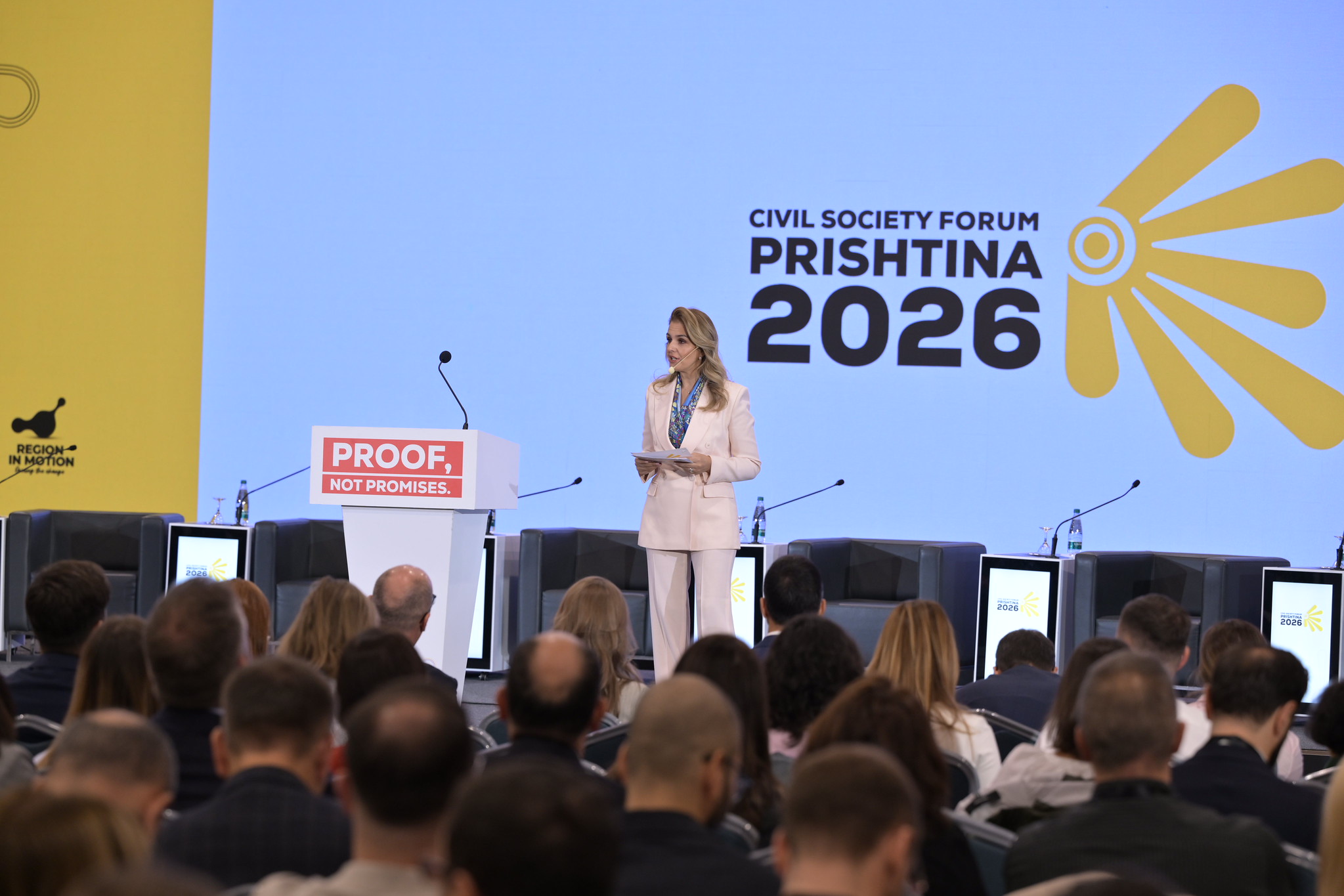
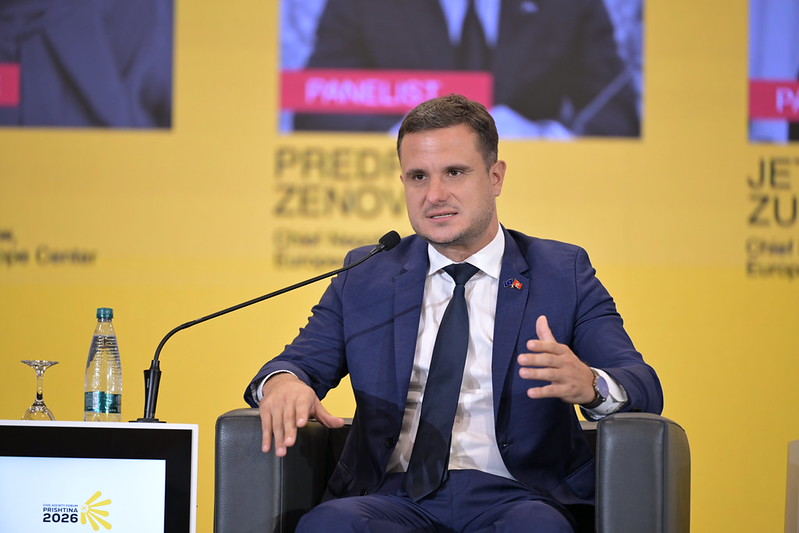
EWB spoke with Predrag Zenović, Montenegro’s Chief Negotiator with the European Union, on the margins of the 2026 Civil Society Forum in Pristina on 6 October. We discussed the pace of closing chapters, the risk of a Croatian blockade, possible safeguards for future EU members, political support for Montenegro’s 2028 membership objective and the future of the Berlin Process.
European Western Balkans: Do you expect Montenegro to close the negotiating chapters which, according to announcements, could be done in the coming days? More generally, what are the prospects of closing all chapters by the end of this year, as planned?
Predrag Zenović: That is a good question. To understand the dynamics of closing chapters, one must understand the process. The European Commission has completed its internal procedures and received Montenegro’s negotiating documents. Montenegro has likewise confirmed that it has completed the internal procedures necessary for these chapters to be closed. The Commission then submitted the draft EU common positions to the bodies of the Council of the European Union.
The pace at which each chapter is discussed depends on the nature of the chapter and on all the dimensions that form part of the negotiating process, both technical and political. Only when all member states give the green light can a country close a negotiating chapter.
We submitted the documentation for certain chapters to the European Commission several months ago. We expect those chapters to be closed, as the Commission itself has confirmed that, in its assessment, all the benchmarks have been met. How the member states will position themselves on those chapters is being decided as we speak, in bodies such as COELA and COREPER.
The Commission conducts the process together with the authorities of the candidate country, but it is ultimately the Council that confirms that a country has completed an important step.
I would not speculate at this point about how many chapters Montenegro will close at the next Intergovernmental Conference. However, considering the reforms that Montenegro is finalising and the obligations related to the closing benchmarks in all remaining negotiating chapters, I am convinced that Montenegro can close all chapters by the end of this year, as envisaged in the road map it presented to the Commission two years ago.
EWB: How can the issue of a potential Croatian blockade be resolved? We are talking primarily about Chapter 31, but possibly other chapters as well. How important is this issue at the moment, and what is being done to prevent Croatia from becoming an obstacle to closing all the remaining chapters?
PZ: Good-neighbourly relations are an important component of the accession process and something that Montenegro regards as a foundation of its foreign policy. The outstanding issues between Zagreb and Podgorica are being addressed through the formats designed for that purpose.
Unfortunately, these are sensitive issues rooted in difficult pages of our shared history, and they are therefore very complex. Their resolution can consequently be complex as well. I believe that the formats we already have provide an adequate response and that the two countries’ shared Euro-Atlantic orientation will ultimately prevail, allowing the outstanding issues to be resolved properly and as quickly as possible.
This would enable Montenegro’s European path, as well as the wider enlargement process, to proceed within the timetable we have set: for Montenegro to become a member in 2028 and for the Union to enlarge by one member that year.
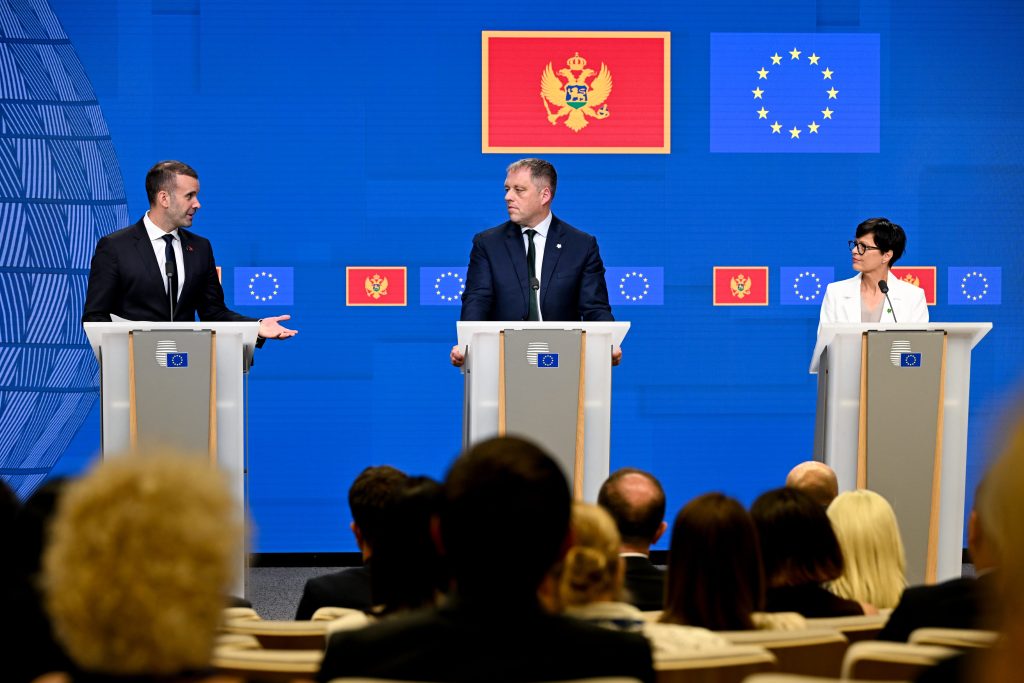
EWB: Regarding possible modalities of enlargement, there has been discussion of temporarily limiting some rights of future member states. Would it be acceptable to Montenegro to face restrictions on decision-making or on other rights granted to member states if this was a condition for joining the European Union?
PZ: Representatives of the Government of Montenegro and other decision-makers have already stated Montenegro’s position on these questions, which are connected to the reform of the Union. Montenegro understands the complexity and importance of reform, but it also knows the framework of the founding treaties and the fundamental values on which the Union rests. Equality among states is one of those elements.
Full and equal membership has repeatedly been emphasised as the objective to be pursued once all the conditions have been met and once Montenegro has carried out its share of the obligations and reforms and reached the necessary level of convergence.
This is what we mean by the merit-based principle. It must work both ways: candidate countries that complete all their tasks and reach the required level should receive, in return, the guiding objective of the entire project – full membership in the European Union.
We understand the need for safeguard mechanisms and that there has been considerable discussion about them. It is important for this dialogue to take place as soon as possible, both within the Union and between the Union and the candidate countries, so that we have a clear picture before us. Safeguards have always been part of accession processes. The Union protects its foundations, principles and rules, but full and equal membership is itself one of those principles and rules.
Montenegro insists on nothing beyond that: alongside all those safeguard mechanisms, we need a guarantee that Montenegro will ultimately be granted full and equal membership.
EWB: Do you currently see sufficient political will in the European Union for Montenegro to complete the entire process within the next two years, in line with the Government’s ambition of membership in 2028? Can that political will be translated into a successful conclusion of the process, given that ratification will ultimately rest with the member states?
PZ: Yes. This is, of course, a complex process involving the institutions of the Union and the member states.
When it comes to enlargement, not all member states have an identical position. I would say their views are similar, but not identical. I would call this a multiperspectivism among the member states: they recognise the necessity of enlargement and of enlargement based on merit, but they differ in how they see the pace, dynamics, direction and speed of that process.
I believe Montenegro, with broad support from the candidate countries and, I would say, all the member states, has provided enough arguments to show why enlargement matters and why Montenegro should be the first to join, within the timeframe we are discussing. This is not only an opportunity for Montenegro and the Western Balkans; it is an opportunity for the European Union itself.
Enlargement policy is one of the Union’s forms of soft power, through which it establishes itself as an important pillar of the global order. That soft power is credible only if candidate countries can continue towards transformation, convergence and, ultimately, membership.
We are now speaking realistically about membership. If Montenegro is the frontrunner, as we often say, and is running in this process, it is running to make sure that the EU’s door remains open for Montenegro and its citizens, but also for all societies and all candidate countries.
EWB: We are here at the Civil Society Forum of the Berlin Process, which Montenegro is chairing this year. How do you see the future of the Berlin Process, given that Montenegro expects to become a member of the EU within the next two years? How could the Berlin Process continue to function, and what role does Montenegro see for it?
PZ: The Berlin Process was formulated around the important idea of regional cooperation. Without regional cooperation, there can be no substantive European integration, because European integration itself grew out of smaller forms of regional cooperation which evolved into what we now see as the great European project. Regional cooperation is therefore a necessity.
Good-neighbourly relations, the creation of a common market and a joint presence in tomorrow’s large European and global markets are perspectives that place the practical, everyday dimensions of integration at the centre. The Berlin Process succeeded in doing this even when, as I said today, there was neither a promise nor evidence that enlargement was on the agenda.
The Berlin Process gave this region a framework that took account of its specificities and its post-conflict context. It gave the region an opportunity to sit at the same table, take its shared destiny into its own hands and establish its European future. I think that is the great contribution of the Berlin Process.
As the motto of the Montenegrin chairmanship says, this is a “region in motion”. It must be in motion not only in terms of connectivity, energy and a common economy, but also in its convergence towards a European standard of living.
All of this should, in my view, make the prospect of membership more certain and clearer. I see both the Berlin Process and accelerated integration as instruments serving the objective, rather than as ends in themselves. That objective follows from substantive transformation: membership in the European Union and all these societies and countries becoming EU member states.