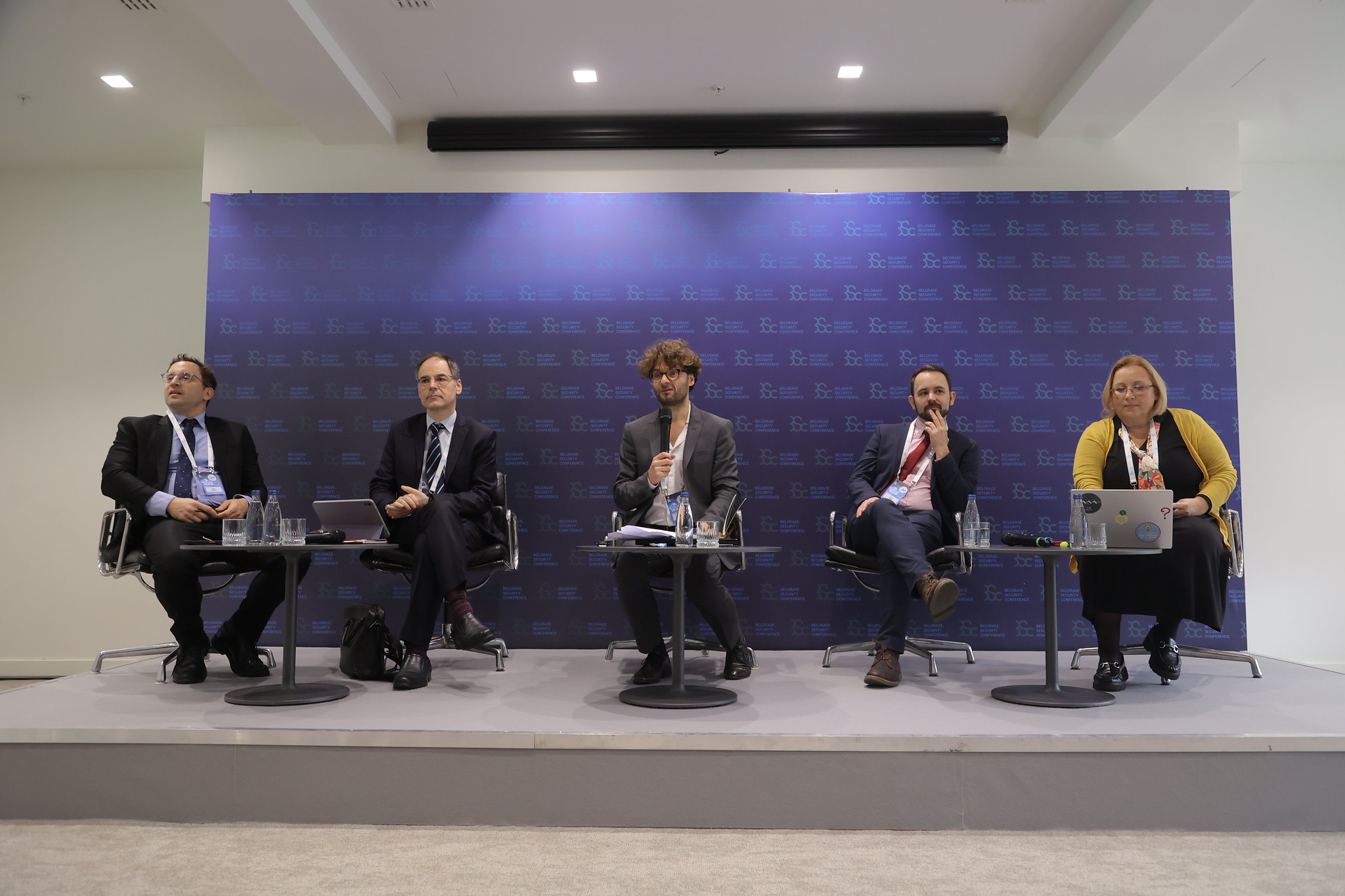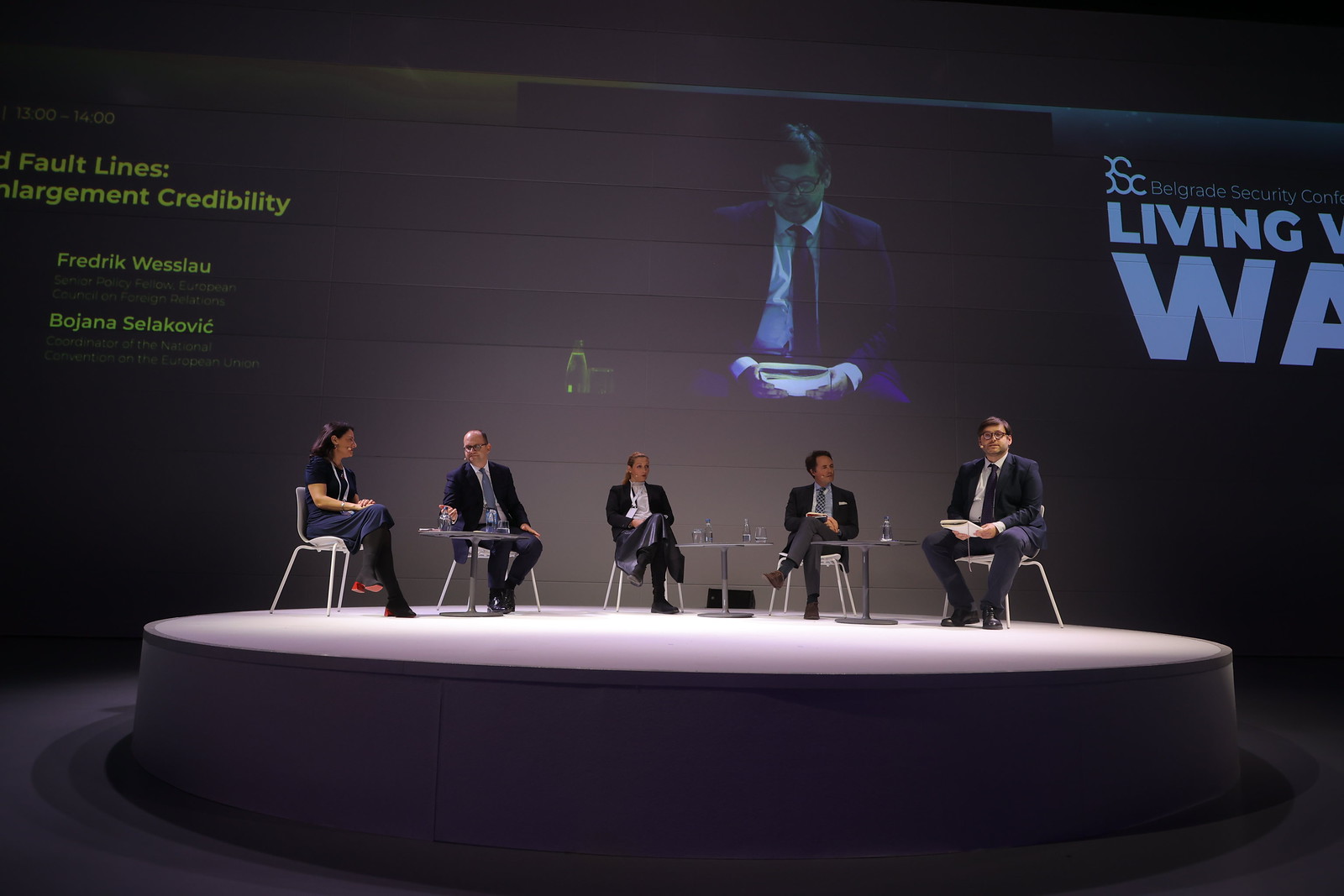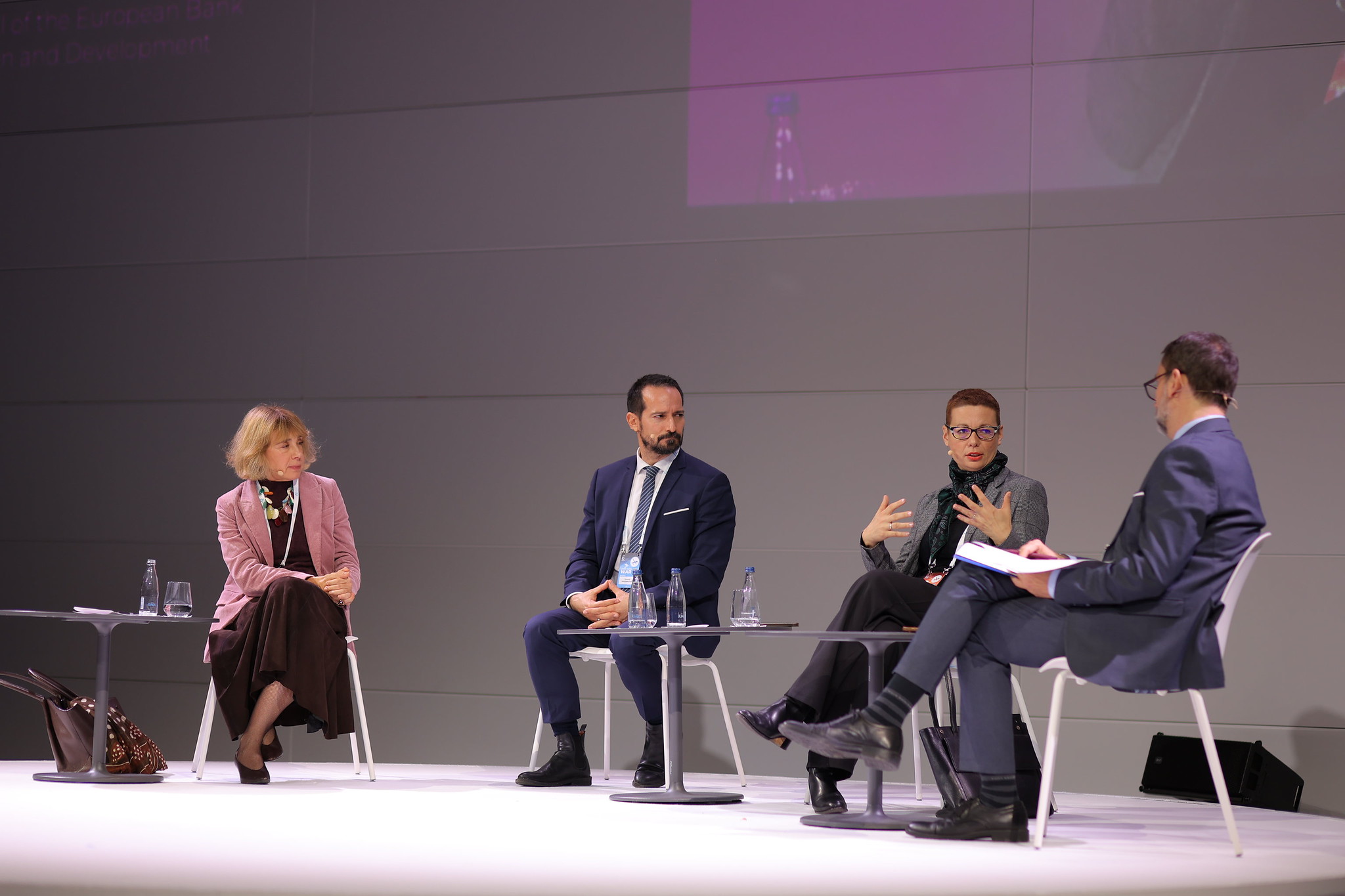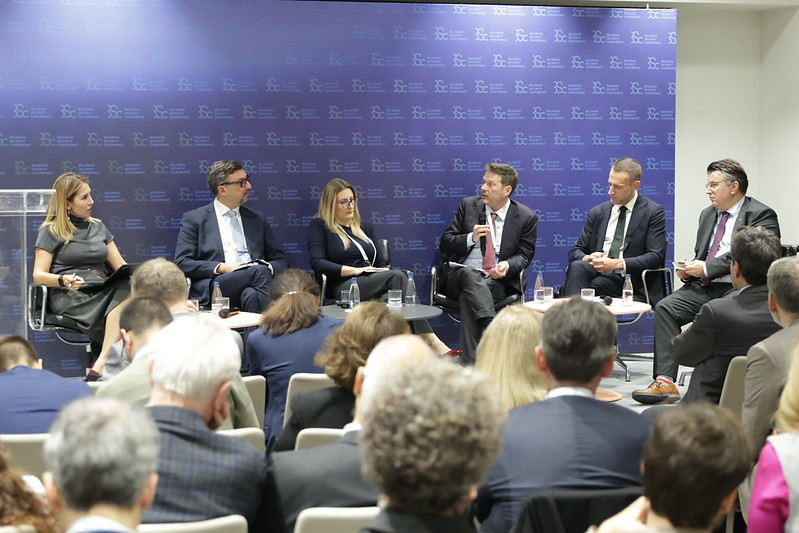
BELGRADE – Montenegro’s accession to the European Union could set the terms for future enlargements, including how the EU responds to democratic backsliding in new member states, panellists said at the Belgrade Security Conference.
The discussion titled “Can Europe Afford to not complete itself? From Gradual Integration to Full Membership“, also addressed what gradual integration can deliver for the Western Balkans and whether Serbia can catch up with the leading candidates following the Student List’s election victory.
Dragana Jaćimović, Executive Coordinator at Institute Alternative, said she hoped Montenegro would join the EU on 1 January 2028. She noted that, according to the European Commission, the safeguards in Montenegro’s accession treaty would serve as a model for future treaties, making negotiations over their design more complex.
Jaćimović raised concerns about a proposal that would allow a new member state’s voting rights to be suspended under safeguards applicable for up to 15 years after accession. She said the proposed threshold for suspending voting rights would be lower for new members than for existing ones.
“It goes too far and, I would say, it is demotivating,” Jaćimović said. She added that Montenegro had limited room to influence the safeguards and might ultimately have to accept the terms agreed by EU member states.
Matteo Bonomi, Head of the Europe Programme at the Istituto Affari Internazionali, said Montenegro had a genuine opportunity to join the EU. Its progress, he added, raised the question of what the Union could offer countries that were further from membership.
Bonomi said gradual integration had reached virtually every sector in the Western Balkans over years of preparation for accession, yet had yielded little economic convergence. He argued that the Commission’s latest proposals largely revisited ideas already on the table, such as the mutual recognition of goods, and called for a closer look at why existing instruments had delivered limited results.
“If we want to give credibility to this process, we need the resources to do better with the instruments that we already have,” Bonomi said, pointing to the importance of the EU’s next long-term budget.
Matej Zakonjšek, an independent adviser on European connectivity and former Director of the Transport Community Secretariat, pointed to the green lanes introduced during the COVID-19 pandemic as an example of what practical integration can achieve. The initiative was put in place within two months to keep medical supplies moving across borders and was later extended to perishable goods and other freight.
“We have managed to save more than 20 years of waiting time at border crossings, cumulatively, in the region,” Zakonjšek said. The initiative was later extended to crossings with EU member states, he added.
Srđan Majstorović, Chairman of the Governing Board of the European Policy Centre (CEP), said the Student List’s election victory had brought hope to a society marked by years of division, distrust and fear. He expressed confidence that Serbia could catch up with the countries leading the accession process.
Majstorović identified the judiciary, public administration, security services, the media and the energy sector as priorities for reform over the next four years. He said gradual integration offered Serbia an opportunity if it delivered concrete results and called on the frontrunners to keep advancing so that other candidates could see what was possible.
Serbia can still catch up with the countries leading the EU accession process, Julian Vassallo, Chargé d’Affaires at the Delegation of the European Union to the Republic of Serbia. said, arguing that the parliamentary elections had opened an opportunity to rebuild ties with the European Union and reconnect the accession process with citizens’ expectations.
Vassallo said the EU was ready to support Serbia if it chose to accelerate its accession bid. He stressed that gradual integration could bring immediate benefits to citizens and businesses, while progress towards membership would depend on reforms and strategic alignment with the EU.
Boris Mijatović, a member of the German Bundestag, warned that the accession process would remain stalled if candidates waited for the EU to move while the EU waited for candidates to deliver reforms. He pointed to Montenegro as a country with momentum that could set an example for others.
Drawing on the experience of Franco-German reconciliation, Mijatović also urged the region to confront its wartime past. He said the continued glorification of war criminals and the use of bilateral blockages would undermine the prospects for successful enlargement.