BRUSSELS – The European Commission adopted today its annual Enlargement Package, taking stock of progress made by the candidate countries over the past year and setting out reform priorities for the way forward. Alongside the reports the Commission presented indicative roadmaps for the most advanced negotiating countries and a common framework for gradual integration into the EU.
“The significant progress achieved by some candidates over the last year allows us to turn the promise of enlargement into reality. We are now proposing a set of indicative roadmaps for the most advanced negotiating countries – Montenegro, Albania, Ukraine and Moldova. A clear path for the year ahead and a firm anchor for the upcoming negotiations. Step by step, we are building a more complete, stronger Union,” said European Commission President Ursula von der Leyen.
As it was stated by the European Commission, reports show that the pace of reforms, particularly in the areas of democracy, the rule of law and fundamental rights, alongside political choices on security and defence, as well as progress towards economic convergence, directly shapes the speed of the accession process for each partner.
Montenegro could close remaining chapters by the end of the year, Albania advances
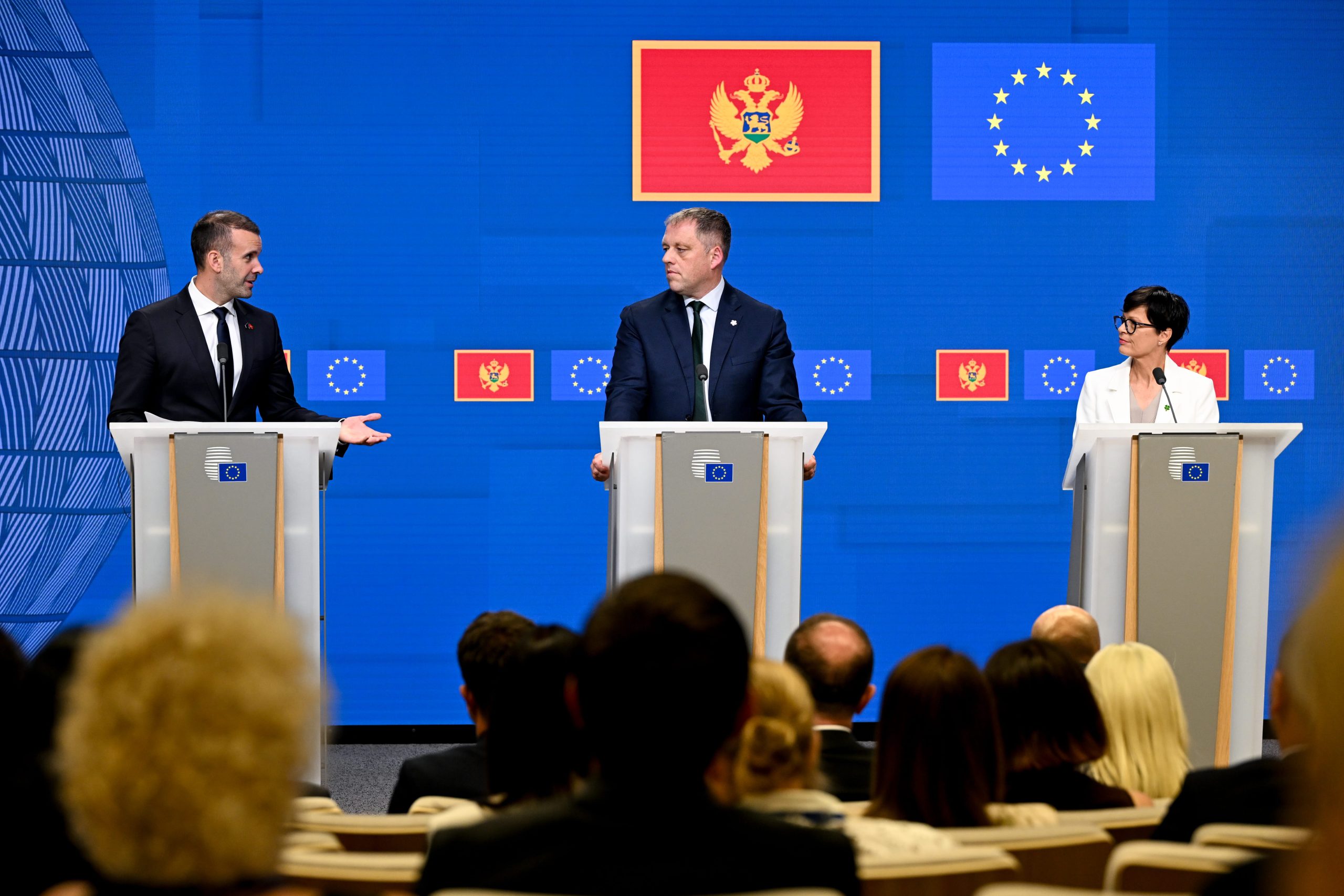
Montenegro has made remarkable progress towards EU accession, having provisionally closed 21 chapters to date. Subject to Member States’ agreement, Montenegro could provisionally close the remaining chapters by the end of this year.
The ongoing work on Montenegro’s accession treaty, alongside the adoption of Council Conclusions on the financial package for the country’s EU accession, confirms that Montenegro is close to the final stage of its accession process.
This year, the Commission presented the financial package for Montenegro’s accession, and work on the accession treaty is well underway.
Sustained reform efforts and broad political consensus remain essential for the country’s EU future, the Commission stressed.
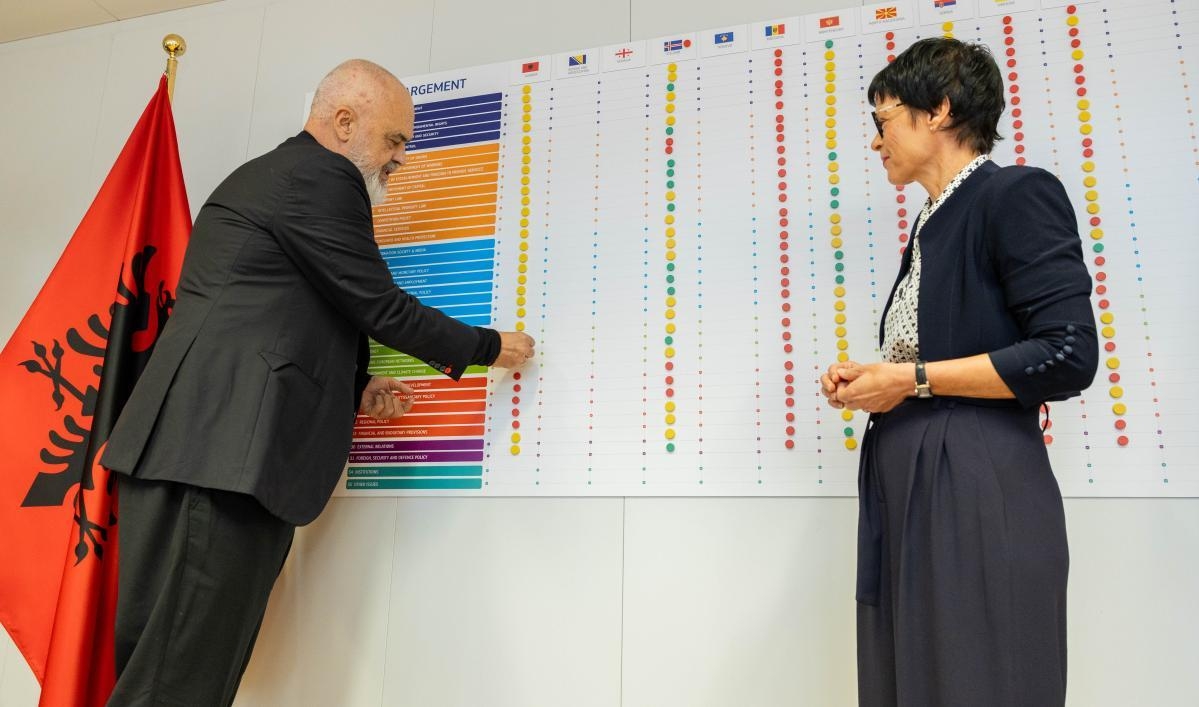
Albania continues to make progress towards EU accession. During the reporting period, it opened the last remaining cluster and met the interim benchmarks on the rule of law chapters, paving the way for the provisional closure of four chapters.
Continued efforts are now needed across all remaining chapters. Reaching Albania’s ambitious but achievable objective of concluding accession negotiations by 2027 requires maintaining reform momentum and fostering inclusive political dialogue.
Keeping up the momentum will require swift delivery on high-quality EU-related reforms, the Commission said.
At the same time, the reporting period saw the country’s largest civic mobilisation since its democratic transition. EU accession is a whole-of-society approach that requires constructive dialogue, the Commission added.
North Macedonia has yet to adopt constitutional amendments, BiH increasingly disengages from its EU path
North Macedonia continued work on the opening benchmarks for the fundamentals cluster. This includes the adoption of the roadmap for public administration reform and continued work on the roadmap for the rule of law, alongside the accompanying action plan on minorities.
North Macedonia has yet to adopt the necessary constitutional amendments, which it committed to undertake. Further efforts are needed to reinforce the rule of law.
The country made significant progress in implementing reforms under its Reform Agenda, making it one of the top performers under the Reform and Growth Facility.
Intensified efforts to adopt the necessary constitutional changes and address opening benchmarks remain essential to move the accession process forward, the Commission concluded.
Serbia makes no substantive progress in accession negotiations, Kosovo’s EU-related reforms stall amid institutional crisis
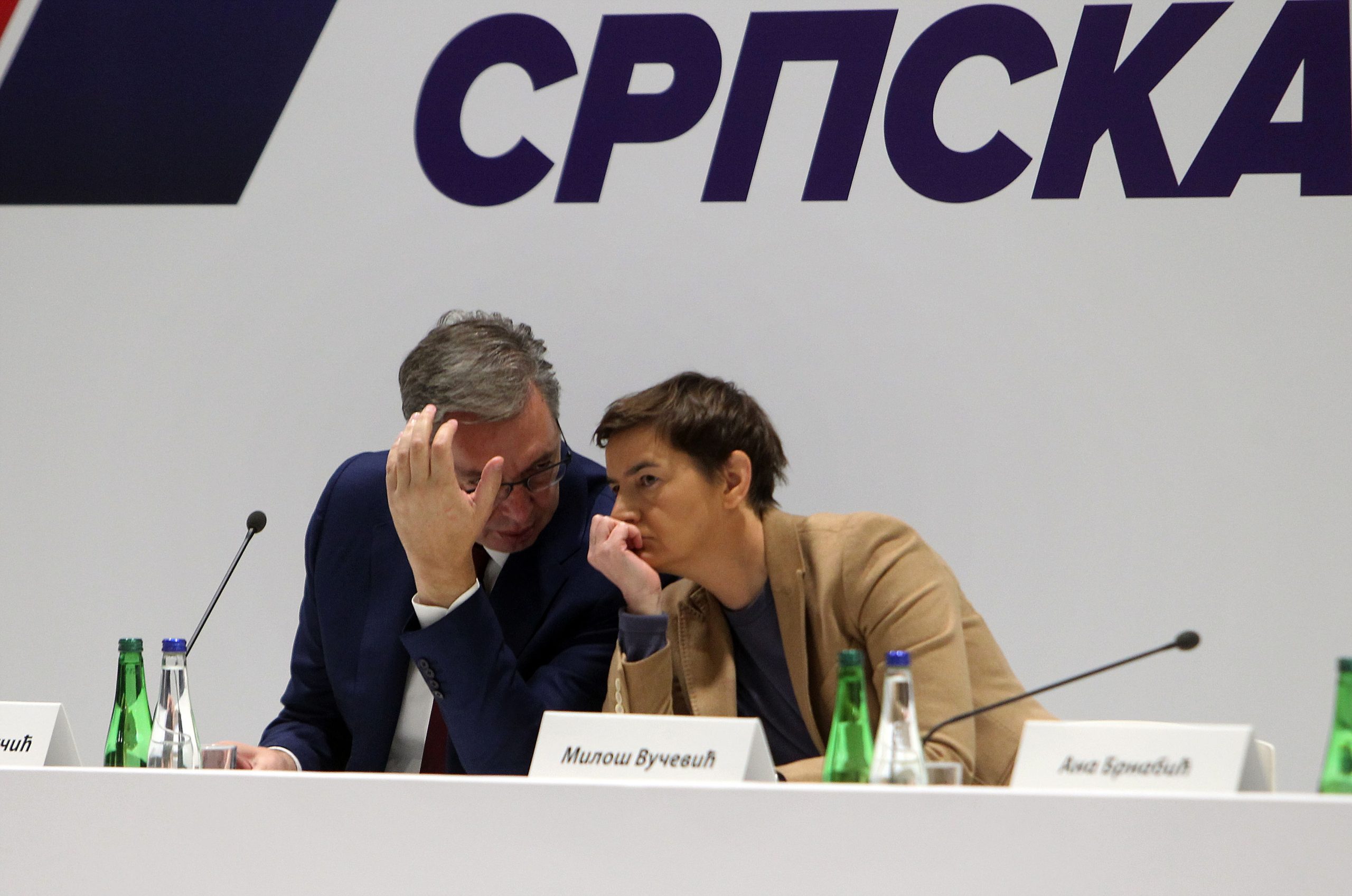
Serbia did not make any substantive progress in accession negotiations, the Commission concluded. The reporting period was marked by increasing societal polarisation, including in the pre-electoral context.
While Serbia advanced the work on alignment with the EU acquis and technical standards, negative trends related to the fundamentals of the accession process ran counter to the authorities’ declared objective of EU accession and the values underpinning Serbia’s EU path.
Alignment with the EU’s Common Foreign and Security Policy (CFSP) remained low. Serbia also needs to implement all obligations stemming from the EU-facilitated Dialogue, which remains an integral part of its European perspective.
The recent parliamentary elections in Serbia provided the newly elected government with a strong mandate for reforms, the Commission stated.
Progress towards EU accession will depend on the incoming government’s efforts to reverse the negative trends and prioritise the fundamentals, including democratic criteria, the judiciary and fundamental rights.
“It will need to restore respectful democratic dialogue, demonstrate a clear and unambiguous commitment to EU values, including as regards alignment with the EU’s foreign and security policy and efforts towards reconciliation, good-neighbourly relations and normalisation,” the Commission said.
Roadmaps set out concrete milestones towards EU accession
In light of the progress achieved by Montenegro, Albania, Moldova and Ukraine, the Commission presented indicative roadmaps with concrete milestones and targets for the year ahead, as announced by President von der Leyen in her 2026 State of the Union address.
Building on past experiences, in particular from the 2004 and 2013 enlargements, they will help organise the next stages of preparation in a more structured and transparent manner, supporting the work of both candidate countries and EU institutions and Member States.
The Commission may adjust the roadmaps depending on progress made in meeting the required conditions and will update them regularly.
The Commission stands ready to put forward similar roadmaps for other candidate countries once they have reached a similar level of advancement, pace and engagement in the accession negotiations.
Gradual integration to deepen ties before membership
The Commission also presented a common framework for gradual integration to further deepen integration in strategic sectors, such as energy, transport, digital and defence. This will make gradual integration more structured and coherent.
Reforms, investments and the gradual integration of enlargement partners are already strengthening the Union’s capacity to protect its interests, reduce vulnerabilities and create new opportunities, the Commission said.
Its recent Communication, “Preparing for a wider Union”, highlights the need to reinforce the gradual integration of accession partners as they advance towards EU membership.
To this end, the Commission presented a mapping of existing instruments, providing a basis for identifying opportunities to deepen integration in strategic sectors.
Subject to conditions, reinforced gradual integration will further boost growth, competitiveness and security, while remaining an integral part of the accession process.
The mapping aims to ensure greater coherence, predictability and reversibility, allowing for a more structured integration that brings clear benefits for enlargement partners and the EU.
Over the next six months, the Commission will launch dialogues on gradual integration with enlargement partners to take stock of existing measures and their financing and identify more tailored opportunities for each partner.
As enlargement partners advance on their reform paths, the EU must be ready to welcome them and match the pace of their progress, the Commission stressed. With “Preparing for a wider Union”, it has laid the groundwork for ensuring that a larger Union is also stronger, more resilient and more effective.
It is now for the Council to consider the Commission’s recommendations and take decisions on the steps ahead in the enlargement process.