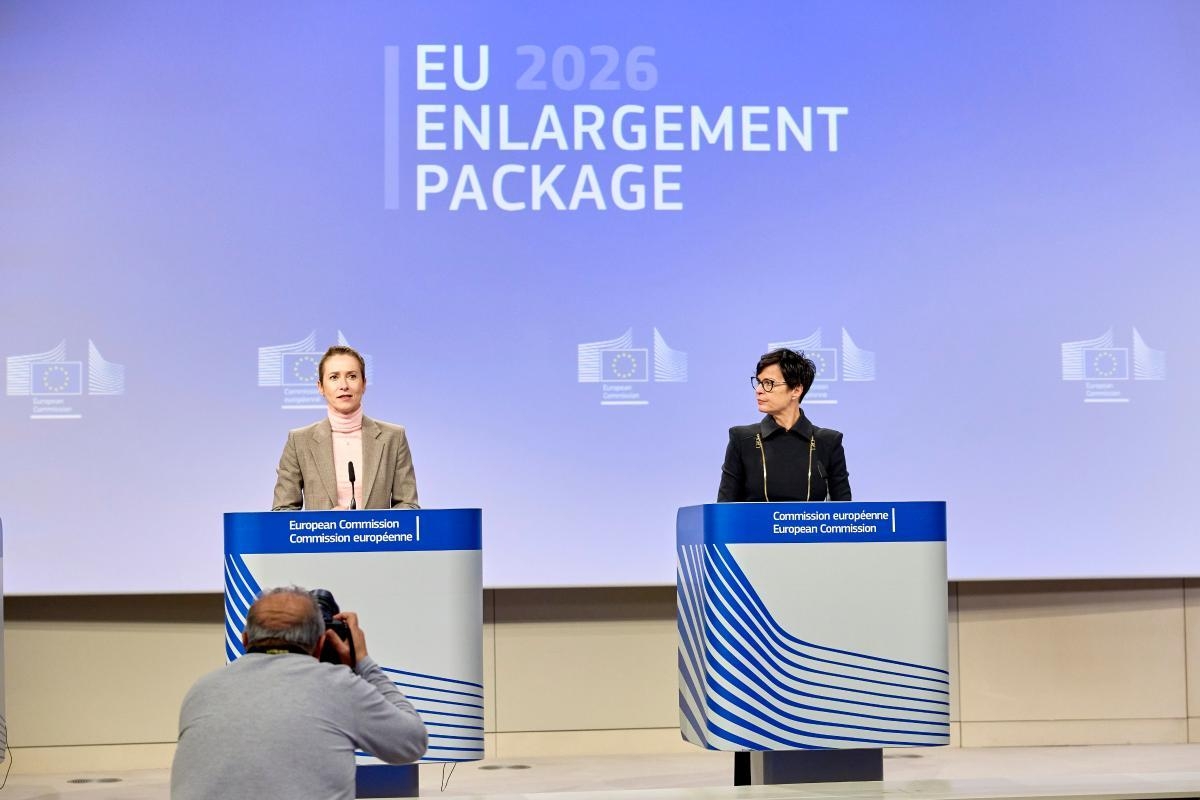
European Commission published its annual enlargement reports yesterday. We report the key findings of the Report on Kosovo in the areas of democracy, rule of law and economic criteria:
The framework for elections is broadly aligned with international standards. Attempts to politicise the work of the Central Election Commission were observed, though the Election Complaints and Appeals Panel and the Supreme Court effectively handled complaints. While the electoral campaign was competitive, there were instances of regulatory gaps in pre-campaign activities, misuse of public resources, digital campaigning and campaign finance. The Independent Media Commission struggled with oversight, and electoral disinformation was inadequately addressed.
The Assembly can exercise its powers, albeit with significant shortcomings, including repeated use of fast-track procedures, prolonged paralysis and suspension of activity. While women representation in the Assembly at 34.2% exceeded the quota of 30% set by the law and women held key positions including Assembly Speaker, sustained efforts are needed to broaden participation. Non-majority communities remain well-represented through constitutional guarantees, though their participation is eclipsed by ongoing polarisation among the main ruling and opposition parties. Oversight of the executive was strongly limited due to the political crisis, with weak checks and balances and misused governance mechanisms.
The institutions in charge of the EU integration process have been restructured. A chief negotiator / national coordinator for the Reform and Growth Facility was appointed, and a high-level executive commission was established to coordinate the EU accession process. Stabilisation and Association Agreement bodies continued to meet, and agreements relating to the Reform and Growth Facility were ratified in February 2026. However, progress remains uneven due to instability and political gridlock. Inclusive dialogue with the civil society and non-majority communities remains essential.
As regards governance, the caretaker government operated with limited powers during the Assembly hiatus, briefly resuming full functions only in February 2026 and then again beyond the reporting period in September 2026. Challenges in relations between central institutions and municipalities persist. Coordination remains reactive, with municipalities facing delays and capacity issues. Despite de-escalation and progress brought by peaceful and inclusive local elections and the election of Kosovo Serb mayors in northern municipalities, those municipalities continue to be hampered in exercising municipal powers.
Civil society organisations (CSOs), including human rights defenders, operate in an overall enabling environment, but face politicisation and polarisation, especially during elections. They are consulted inconsistently and late, with limited incorporation of their input. The new ‘Strategy for cooperation with CSOs’ should be approved to ensure funding predictability among other things and address financial sustainability challenges.
Kosovo has some level of preparation in public administration reform. Some progress was made during the reporting period, including through the launch of centralised recruitments, publishing a first-time annual report on public-service human resource management, the further expansion of digital services, and strengthening administrative justice. However, there are still considerable gaps in the implementation of the strategic and legal framework. There are extensive delays in the adoption of internal organisations of public administration bodies and the finalisation of job classifications and systematisation, which remain key for modernising Kosovo’s administration.
Kosovo is between an early stage of preparation and having some level of preparation and overall made no progress on the functioning of the judiciary. Undue influence from internal and different external elements, such as political and economic interests, not only remains a significant obstacle to independence and impartiality, but in some respects has intensified. The package of draft laws on the justice system has not yet been adopted, which is preventing much-needed reforms in the area. This has negatively affected efforts to strengthen the accountability and efficiency within the judiciary and prosecution.
On 6 October 2026, the Assembly adopted amendments to the Law on the Kosovo Specialist Chambers (KSC) and Specialist Prosecutor’s Office. On 22 October the Law was returned back to the Assembly by the President for reconsideration. The amendments as proposed raise serious concerns regarding Kosovo’s international commitments and compliance with basic rule of law principles, in particular judicial independence, the protection of victims and witnesses, the continuity of procedural rights, and effective accountability for war crimes. The amendments also raise concerns regarding their constitutionality. The challenges in ensuring that the amendments to the Law on the KPC are effectively implemented indicate limited perception of accountability and commitment to reform, as well as continued influence of vested interests. There are notably concerns regarding retroactively issued warrants and the application of relevant procedures and safeguards. The Venice Commission’s recommendations on the Law on KPC will need to be fully reflected in the future amendments.
Nevertheless, some positive developments were achieved on issues such as the selection of the Chief State Prosecutor and changes to the Kosovo Prosecutorial Council (KPC) membership in line with amended legal framework, despite the challenges. The insufficient representation of Kosovo Serbs in the judiciary remains a serious concern, as it negatively affects the multi-ethnic character of the justice system and undermines the 2015 Dialogue Agreement on justice.
Kosovo is between an early stage of preparation and having some level of preparation in the fight against corruption and made limited progress. Regarding non-high-level corruption cases, final court decisions and convictions significantly increased. However, there was a decline in the number of final court decisions and convictions in high-level corruption cases. Kosovo still does not have a comprehensive strategic framework for tackling corruption, and there is no coherent approach to strengthening anti-corruption efforts. The Law on the protection of whistle-blowers is in line with the latest EU legislation in this area. The number of whistleblowing reports received by the Agency for the Prevention of Corruption (APC) rose substantially, almost doubling compared to last year, indicating a higher tendency to report corrupt practices. Moreover, the APC demonstrated a proactive approach and satisfactory follow-up when referring cases to other competent law enforcement authorities for further action. It handled the submission and registration of asset declarations successfully but needs to take further efforts to strengthen the effective control and verification of declarations. Most public institutions submitted integrity plans on time, but they need to be implemented more effectively. At the same time, Kosovo continued conducting risk assessments in sectors particularly exposed to corruption.
Kosovo has some level of preparation in freedom of expression and made limited progress. Radio Television of Kosovo (RTK, the public broadcaster) and the Independent Media Commission (IMC) board members were mostly appointed, with four RTK board seats still vacant. New laws on the IMC and RTK remain to be adopted. The Kosovo Judicial Council prioritised handling of cases involving media and CSOs. While the media landscape remains pluralistic, it continues to face challenges related to transparency in media ownership and financial sustainability. The environment in the Serb-populated areas and especially in the north of Kosovo remains restrictive, fostering selfcensorship among the public, media and civil society.
Kosovo has some level of preparation in the fight against organised crime and made some progress in this area, notably through the adoption of (i) the Kosovo Police strategic development plan, (ii) the strategy on integrated intelligence-led policing and community policing, (iii) the Kosovo Police human resources strategy, and (iv) through the development of operational capabilities in seizing and managing crypto assets. The doubling of police intelligence structures at both central and local levels, combined with the introduction of dedicated neighbourhood/sector officers, resulted in increased analytical capacities, improved mapping of organised crime and enhanced capacity to initiate proactive investigations. International police cooperation improved significantly, especially the use of Europol’s Secure Information Exchange Network Application (SIENA). The high number of requests and responses in civil and criminal matters exchanged with EU Member States demonstrate Kosovo’s commitment to combating transnational organised crime. Moreover, the track record on final convictions of organised crime cases substantially improved.
Kosovo has some level of preparation and made some progress in developing a functioning market economy. Economic activity slowed down due to a weaker growth in household consumption and a less supportive external environment. Despite robust revenue performance, the headline budget deficit slightly rose in 2025, partly due to large pre-election increases in social spending and public wages, which also weigh on the 2026 budget and hamper efforts to reduce inflationary pressures and contain external imbalances. Although public debt remains low, fiscal challenges persist, stemming from a narrow tax base, inefficiencies in public investment management, poorly targeted social benefits, and governance and weak financial performance of publicly owned enterprises (POEs). The labour market is characterised by low participation and still high unemployment rates, particularly among women and vulnerable groups. The banking sector remains sound but further strengthening of supervision remains important amid robust lending growth. Some progress was made in improving the business environment and reducing the large informal economy, but rule-of-law weaknesses continue to hinder private sector development.
Kosovo is between an early stage of preparation and some level of preparation and made limited progress in terms of its capacity to cope with competitive pressure and market forces in the EU. The education system is not sufficiently aligned with labour market needs. Limited progress was made in improving transport infrastructure and expanding renewable energy sources. The digital transformation of the economy is progressing steadily. Micro- and small enterprises account for a very large share of the economy and struggle to compete on international markets. However, trade openness has increased significantly over the last 6 years.