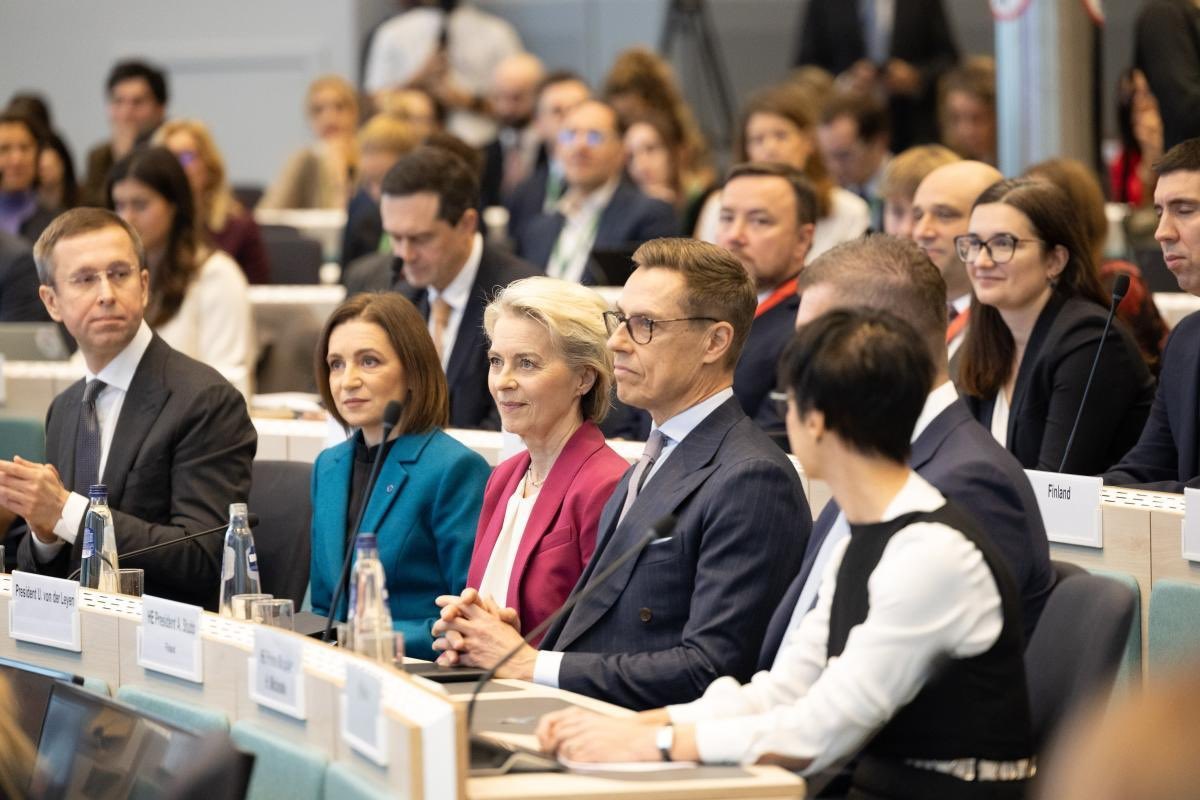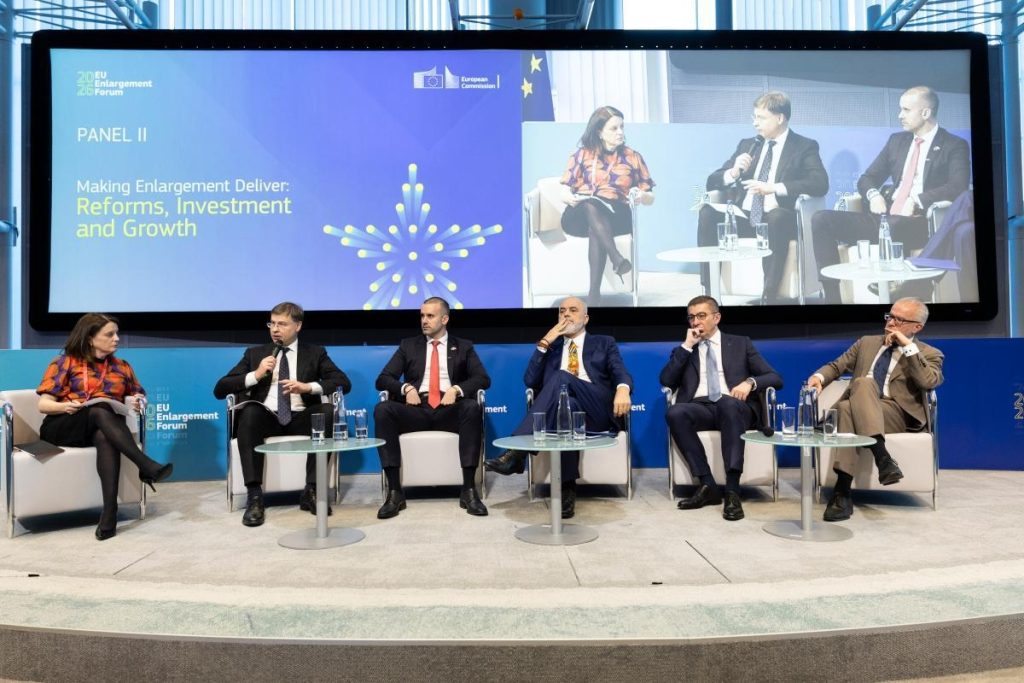
BRUSSELS – EU enlargement must deliver tangible benefits for citizens, while progress on reforms in candidate countries must be matched by political commitment from EU member states, it was concluded during the panel “Making Enlargement Deliver” at the EU Enlargement Forum 2026.
The discussion brought together Albanian Prime Minister Edi Rama, Montenegrin Prime Minister Milojko Spajić, North Macedonian Prime Minister Hristijan Mickoski, European Commissioner Valdis Dombrovskis and Member of the European Parliament Thijs Reuten.
While speakers highlighted the economic and institutional benefits of accession, they also warned that political obstacles and unfulfilled promises risk undermining the credibility of the process.
Prime Minister of Montenegro Milojko Spajić said Montenegro’s progress reflected more than a decade of negotiations, alongside an intensified reform effort since 2023. He recalled that the government had initially focused on securing a positive Interim Benchmark Assessment Report (IBAR) before turning to the closing benchmarks for individual negotiating chapters.
According to Spajić, Montenegro had completed the remaining technical tasks in the preceding weeks and submitted its negotiating positions for all chapters.
The next stage, he said, would depend on diplomacy and political decisions involving the Commission and all 27 member states. Montenegro must now persuade every member state that its accession would also serve their interests, he argued, acknowledging that this would be a demanding task.
Prime Minister of Albania Edi Rama argued that the merit-based accession process primarily benefits candidate countries by helping them build stronger institutions and functioning systems of government.
He described the EU as an unparalleled source of expertise for countries seeking to overcome a history of weak institutions and limited democratic development. Albania, he said, had already been transformed by the accession process.
Rama distinguished between the European Commission’s scrutiny of reforms and the political decisions taken by member states.
While the Commission’s demanding approach helped drive change, he argued, political decisions within the EU had repeatedly disappointed candidate countries because of domestic considerations or weaknesses within individual member states.
He supported gradual integration, describing the Growth Plan for the Western Balkans as an example of an approach that could help countries narrow the substantial gap with the EU before accession. However, he rejected proposals for an alternative status, such as associate membership for Ukraine, arguing that these should not replace the existing accession framework.
Prime Minister of North Macedonia Hristijan Mickoski focused on the prolonged obstacles facing North Macedonia, warning that repeated demands touching on national identity had fuelled public frustration.
He recalled that the country’s European integration journey stretched back more than two decades and had involved disputes and concessions over national symbols and the country’s name.
The latest requirement to amend the constitution, he said, came without assurances that it would be the final such demand.
Mickoski argued that enlargement should centre on transforming institutions, making them more modern, accountable and accessible to citizens. Demands perceived as changing national identity, he said, should not determine whether a country can advance towards membership.
Despite these frustrations, he said North Macedonia remained committed to accession and was working constructively to overcome the obstacles.
He pointed to reforms under the Reform Agenda, alignment with the EU’s Common Foreign and Security Policy and practical integration measures involving payments and roaming as evidence of that commitment. He added that public support for EU membership remained high in North Macedonia, reflecting the country’s strategic commitment to joining the EU.
European Commissioner Valdis Dombrovskis highlighted the economic gains associated with EU membership, citing research indicating that previous enlargements had substantially increased participating countries’ economic output compared with a scenario in which they had remained outside the Union.
He argued that similar gains could be achieved by current candidates.
He said that the EU’s €6 billion Growth Plan for the Western Balkans was designed to support this convergence by linking financing and investment to the implementation of reforms.
Member of the European Parliament Thijs Reuten criticised the EU’s record over the previous decade, arguing that enlargement had suffered from a failure to deliver on commitments. He welcomed the renewed momentum behind the process and credited Enlargement Commissioner Marta Kos with advancing gradual integration and roadmaps for accession.
However, he argued that the Council needed to demonstrate greater political commitment, stressing that enlargement served the interests of existing member states as well as those of candidates.
Reuten called for honesty on both sides and said the Growth Plan could succeed only if accompanied by effective conditionality.
He also warned against using the need for internal EU reform as an indefinite justification for delaying enlargement. He said that those who considered such reforms necessary should work to deliver them.