BELGRADE – The Belgrade Security Conference, taking place on 16–18 November at the Sava Center under the title “Living With War”, comes at a political turning point for Serbia.
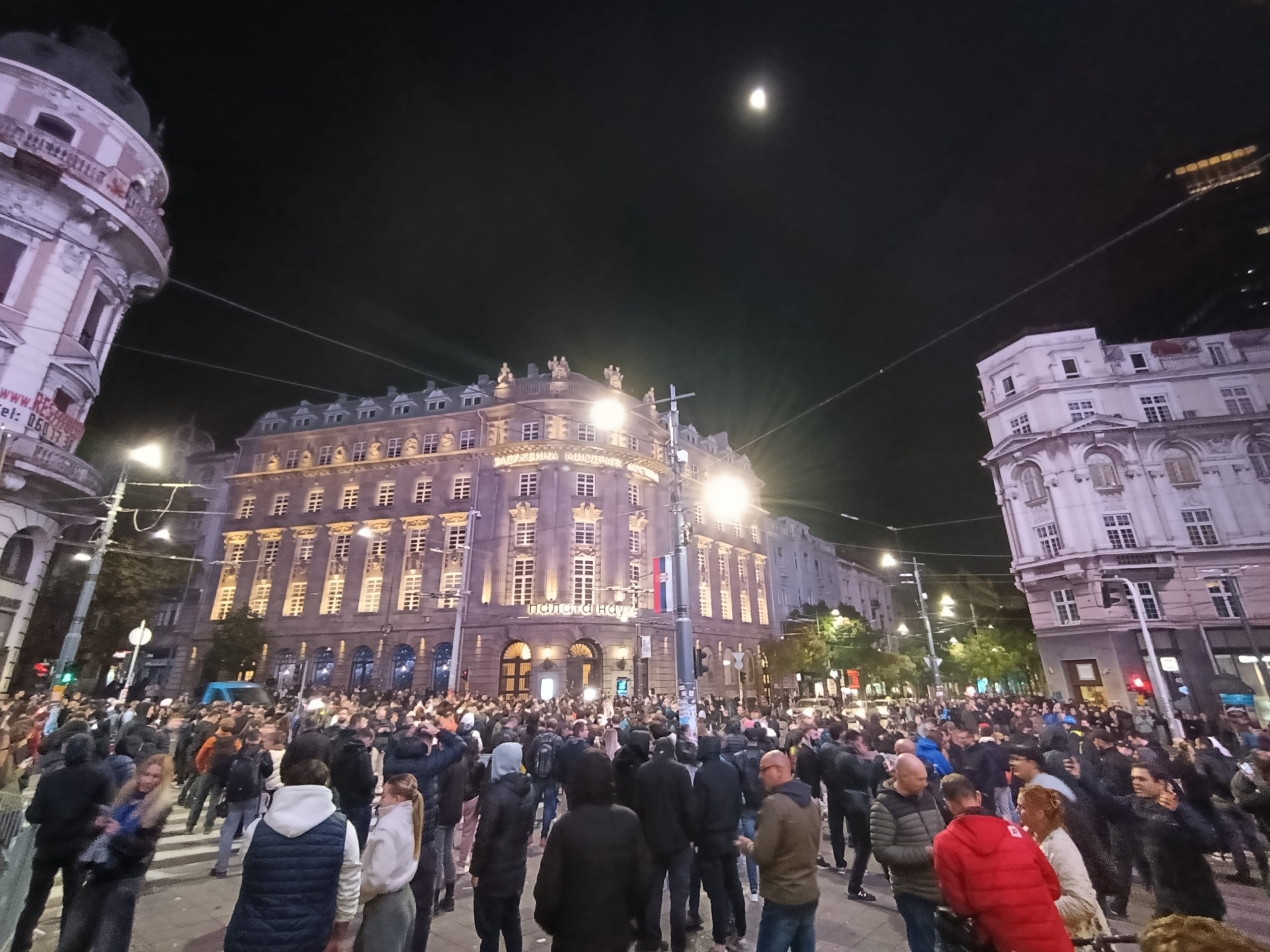
Following the victory of the Student List in the 25 October elections, the programme centres on how to turn an electoral mandate for change into a lasting democratic renewal of the state.
Discussions on freeing institutions, European integration and regional relations are tied to the wider challenges of war, energy dependence and the uncertain future of the transatlantic partnership, it has been reported by the organizer of the event, the Belgrade Centre for Security Policy.
At the heart of the programme is the panel “Democracy Prevails: Serbia Opens a New Chapter”, where the upcoming reforms and European support for Serbia will be discussed by Benjamin Haddad, French Minister for Europe, Milica Delević, Secretary General of the European Bank for Reconstruction and Development, and Tanasije Marinković, Professor of Constitutional Law and member of the Republic Electoral Commission, moderated by Milan Šarić.
The panel links the priorities of democratic renewal (an independent judiciary, the fight against corruption, media freedom and a professional administration) with the chance to restore the credibility of Serbia’s European path. Its particular importance lies in opening a direct dialogue between those leading the change and European partners on concrete support for reforms.
The programme also includes video addresses by U.S. Congressman Joe Wilson and Anita Orbán, Deputy Prime Minister and Minister of Foreign Affairs of Hungary.
Several sessions deal with the hardest task of the transition: dismantling the mechanisms that turned institutions into instruments of party control. Savo Đurđić, Bogoljub Živković, Željko Bodrožić and Lenche Ristoska will speak about police, judicial and media reform, while Bálint Madlovics, Melissa Hooper and Wojciech Przybylski, moderated by Nicole Fritz, will consider the professionalisation of public administration and protection against renewed state capture.
The experiences of Hungary, Poland, North Macedonia and South Africa give these conversations practical value: how to ensure accountability for abuses, preserve institutional capacity and establish rules that also bind the new government.
EU enlargement is one of the main threads of the programme. Prominent participants include Ditmir Bushati, former Minister for Europe and Foreign Affairs of Albania, Tanja Fajon, former Minister of Foreign and European Affairs of Slovenia, Stefan Lehne, Erwan Fouéré, Boris Mijatović and Majlinda Bregu, as well as Srđan Majstorović and Bojana Selaković.
For post-election Serbia, the key question is whether progress on democracy and the rule of law can bring a tangible step towards membership. The conference also examines the Union’s own readiness for enlargement and the relationship between gradual integration and full membership. Political change in Belgrade therefore sets expectations for both sides: implementation of reforms in Serbia and a convincing response from European partners.
The opening of the conference is devoted to the future of NATO to 2030, with Ian Lesser, Christoph Israng, Director-General for Europe at the German Federal Foreign Office; Philippine Bentégeat of the French Directorate-General for International Relations and Strategy; and Klaus Korhonen of the Ministry for Foreign Affairs of Finland. The conversation on war and pathways to peace brings together, among others, Dmytro Naumenko and Nina Delany.
Topics include the sustainability of the American security commitment, European defence capabilities, and the relationship between military support, deterrence and diplomacy. For a Serbia undergoing political change, these debates raise the question of where military neutrality and future partnerships fit in the European security architecture.
The panel “New Partner, Same Csárdás? Hungary and the Western Balkans after Orbán” brings together Péter Krekó, Ferenc Németh, Srđan Cvijić, Anastasia Mgaloblishvili and Dane Taleski.
The changes in Serbia and Hungary opened space to reassess a relationship that rested on the closeness of political leaders and connected networks of influence. The discussion will consider how durable those networks are and what opportunities exist for cooperation based on institutions, the public interest and European obligations.
With Aleksandar Macura, Aleksandar Kovačević, Damir Miljević and Philip Hiersemenzel, the energy panel considers sanctions, ownership of strategic infrastructure and options for diversification. For the new government, energy security will also be a matter of transparent decision-making and of limiting political and private interests.
In parallel, the experiences of Moldova, Poland and other countries open a debate on protecting elections and the public sphere from foreign information manipulation while preserving freedom of expression. The common theme is a democratic state’s ability to reduce external dependencies and protect citizens from the abuse of power.
A distinct perspective comes from the presentation of the book published to mark BCSP’s 25th anniversary, with Miroslav Hadžić, Jelica Minić and Đorđe Pavićević. The conversation about the unfinished transition after 2000 connects the experience of earlier reforms with the current opportunity to build institutions that are more resistant to an authoritarian return.
European Western Balkans and Savremena politika will be media partners of the Belgrade Security Conference 2026.