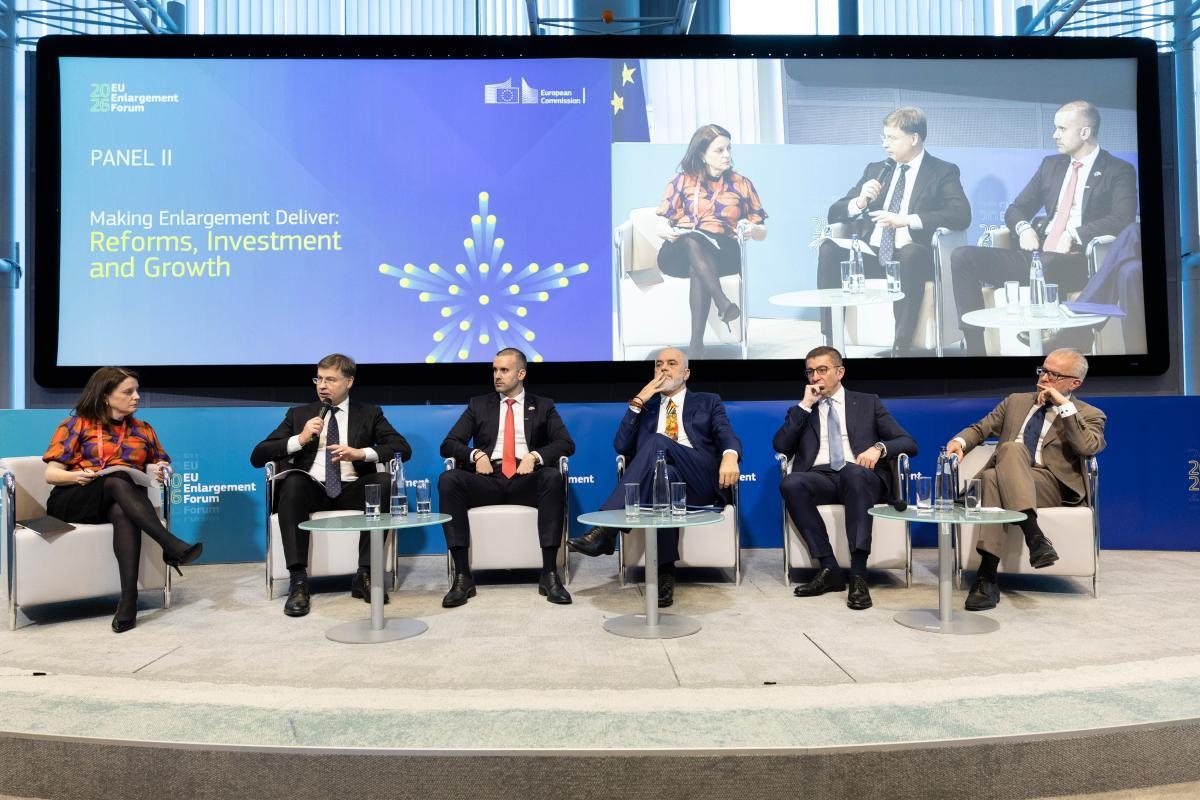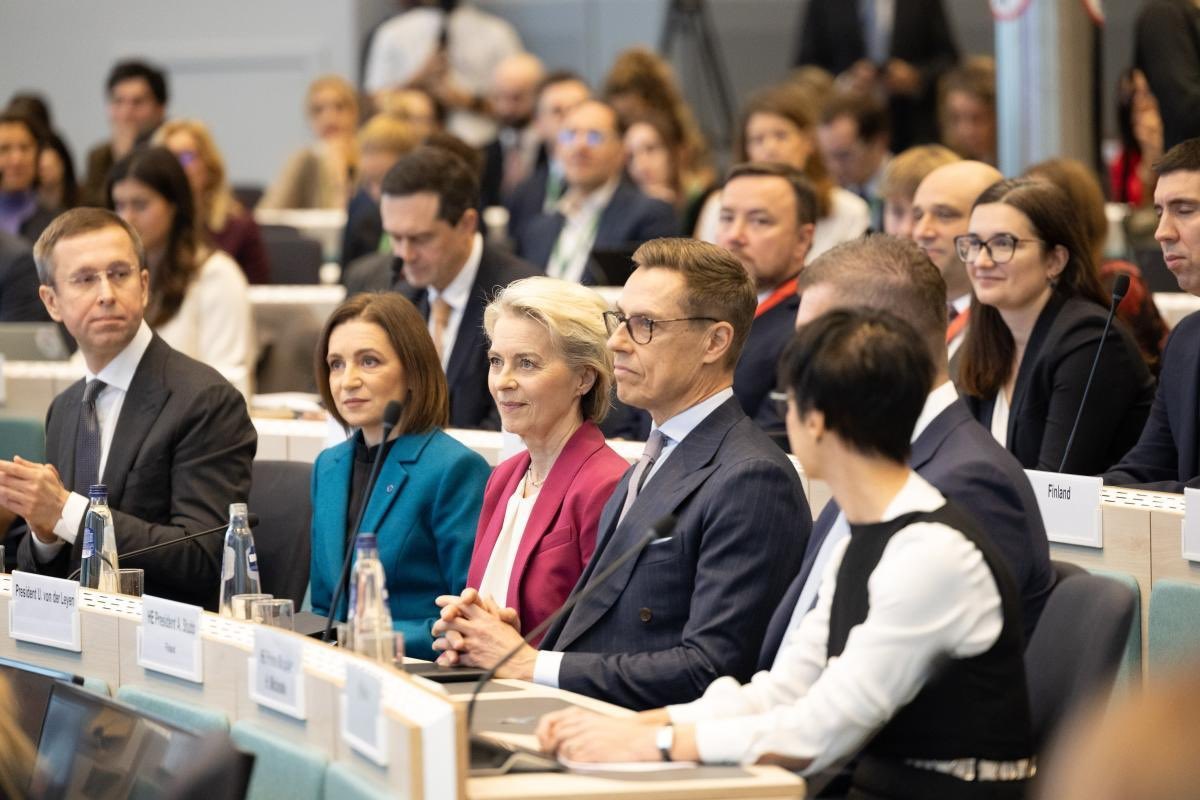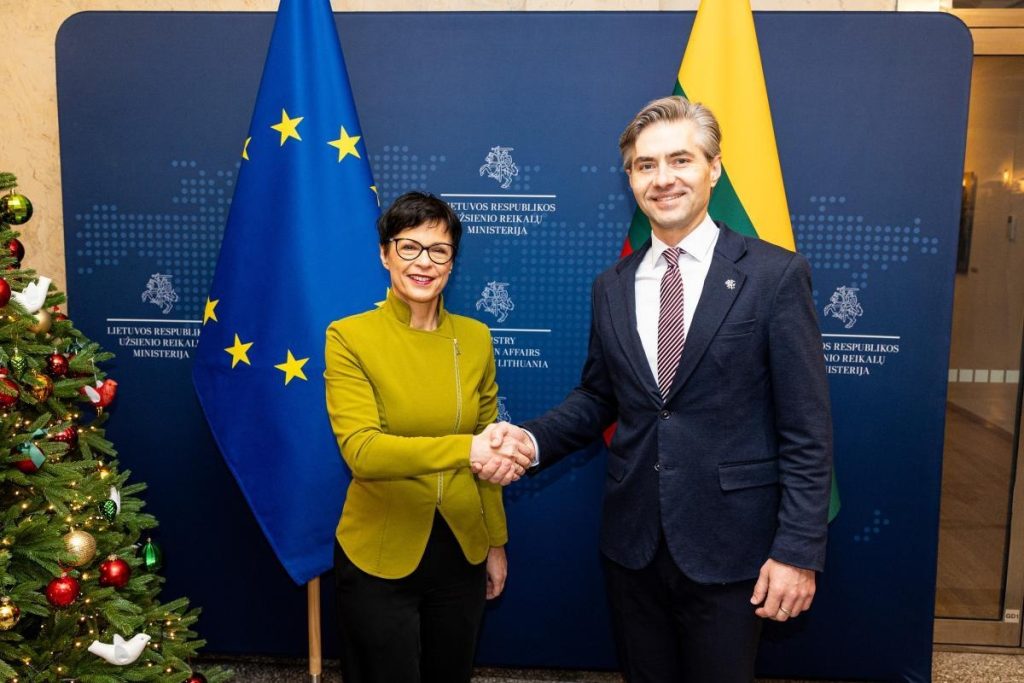
BRUSSELS – Ukraine could become a member of the European Union by 2030, while Serbia must make clear where it stands geopolitically, Lithuanian Foreign Minister Kęstutis Budrys said at the EU Enlargement Forum in Brussels. Lithuania prepares to take over the six-month rotating presidency of the Council of the EU from Ireland on 1 January.
Speaking at a panel bringing together foreign ministers from several EU member states, Budrys stressed that alignment with the EU’s Common Foreign and Security Policy was a key requirement for Lithuania when it came to candidate countries.
“When we see Chinese missiles there, when we see alignment with Russia and very low levels of alignment with us, this is not about percentages. It is about geopolitical belonging,” Budrys said, referring to Serbia.
He argued that the EU needed greater clarity about the geopolitical objectives of enlargement, particularly at a time when Europe faces serious security challenges.
“I don’t want to spend a minute questioning whether an EU member state is actually with us or not,” he said, adding that it would be unacceptable for Lithuania to see future EU members travelling to Moscow to celebrate 9 May, a date associated in his country with Soviet occupation.
Turning to Ukraine, Budrys said EU membership by 2030 remained achievable under the existing accession methodology, without the need for shortcuts or alternative models of integration.
“If they negotiate as we did in two and a half years, they can finish in 2028. It took us an additional two years for the accession treaty to be ratified. So 2030 is doable,” he said.
The Lithuanian minister argued that concerns over the impact of Ukrainian membership on sectors such as agriculture could be addressed through transitional arrangements and reforms. He warned, however, that some opposition to Ukraine’s accession was driven by political and ideological considerations rather than genuine economic concerns.
Budrys described Ukraine’s accession as a fundamental European security interest, warning that prolonged delays could undermine Ukrainians’ confidence in their country’s European future.