STRASBOURG – Albania, Montenegro, North Macedonia and Serbia continued implementing the reforms aimed at strengthening the judicial independence but there are still great pressures on the judicial systems, particularly by public officials and politicians, note the Rule of Law Reports 2025, published yesterday by the European Commission. In addition, the widespread corruption remains a matter of great concern in all these countries. There is also “a narrow space” for the functioning of the civil society organisations, and there are numerous challenges regarding media freedom, particularly in Serbia.
On 8 July, the European Commission presented the sixth annual Rule of Law Report, examining key developments in all member states and, for the second time, four candidate countries from the Western Balkans – Albania, Montenegro, North Macedonia and Serbia. The four countries were included due to their most advanced status in negotiations, to put them on equal footing with member states early on.
The reports cover four main areas: justice system, anti-corruption framework, media pluralism and media freedom and checks and balances, and this year were presented by Henna Virkkunen, the Executive Vice President of the European Commission for Tech Sovereignty, Security and Democracy, and Michael McGrath, the European Commissioner for Democracy, Justice, Rule of Law and Consumer Protection.
According to Virkkunen, “the rule of law is not only the backbone of democracy – it is also a cornerstone of Europe’s competitiveness”.
“This year, the same four enlargement countries as in 2024 are included in the Rule of Law Report. We will further extend the inclusion of more enlargement countries in the Rule of Law Report as and when they are ready”, she said at the press conference in Strasbourg.
Justice system: The independence of the judiciary is affected by the state officials
The Report on Albania notes that the country continued implementing the judicial reform, strengthening judicial independence and prosecutorial autonomy, but “challenges remain regarding timely and qualitative evaluations, and appointments of non-magistrate members to the High Judicial Council and the High Prosecutorial Council”. Also, it is stressed that while the resilience of the judiciary has improved, attempts by public officials or politicians to exert undue interference and pressure on the judicial system raise serious concerns.
When it comes to the situation in Montenegro, the Report states that the country is working on the implementation of the 2024-2027 Judicial Reform Strategy, yet not all planned activities for 2024 have been fully implemented. At the same time, it is underlined that the implementation of the previously amended legal framework has yielded some initial positive results, while the composition of the Judicial and Prosecutorial Councils remains to be further improved.
The Report on North Macedonia states that interference and pressure from other State branches raise serious concerns about judicial independence. In addition, the EC warns that the limited financial resources allocated to the judiciary continue to affect its financial autonomy.
Similarly, the Report on Serbia finds that political pressure on the judiciary and the prosecution services remained high, “with little or no follow-up by the High Judicial and Prosecutorial Councils, the Government or Parliament”. According to the document, the transparency of the High Judicial Council needs to be further strengthened.
Anti-corruption framework: The legislation still needs to produce results in multiple domains
The Report on Albania stresses that although efforts on repression and prevention have increased, corruption remains prevalent in many areas, including in high-risk areas for corruption. It is noted that the legal framework to fight corruption is broadly in place, but legislation on prevention of corruption needs to be completed.
In Montenegro, the track record of investigations and prosecutions in cases of high-level corruption continues to improve, but the low number of final convictions and lack of effective and deterrent penalties contribute to a perception of impunity. Also, the Report assesses that human resources capacities in the fight against corruption have slightly increased but remain insufficient overall.
The Report on North Macedonia states that corruption remains a significant challenge in multiple sectors. It is noted that one area that is particularly susceptible to petty corruption is public healthcare, where instances of bribery and abuse have been reported, affecting the quality and accessibility of healthcare services.
In Serbia, establishing a robust track record of investigations, indictments, and final convictions in high-level corruption cases, including the seizure and confiscation of criminal assets, remains a challenge. The Report stresses that following the canopy collapse at Novi Sad railway station in November 2024, which prompted widespread public protests, authorities launched investigations into alleged corruption linked to the tragic incident, which are yet to be completed.

Media freedom: Concerns about the independence of regulators and the safety of journalists
In Albania, the independence of the Audio-Visual Regulatory Authority remains an issue of concern. At the same time, concerns regarding the independence of the public broadcaster have increased. According to the Report, “high concentration of media ownership continues to negatively impact media independence”, and the journalists continue to face verbal and physical attacks, smear campaigns and strategic lawsuits against public participation (SLAPP).
The Report on Montenegro assesses that delays in appointing members to the Councils of the Agency for Audiovisual Media Services and the Radio Television of Montenegro hinder the implementation of the media legislative framework. It also stressed that although the ownership transparency has improved following the adoption of the new Media Law, there remain a number of influential online news media outlets that do not provide information on ownership despite the new obligations in the media law.
In North Macedonia, the financial independence of the Agency for Audio and Audiovisual Media Services has been improved, while appointments of new members to its Council are still pending. Despite some progress in strengthening the legal protection for journalists, their working environment has not improved.
The Report on Serbia stresses that serious concerns remain on the independence of the Regulatory Authority for Electronic Media (REM), and the delay and shortcomings in the selection procedure of a new REM Council undermine public trust in the process. In addition, issues of editorial autonomy and pluralism of public service media have become an increasing concern, while measures to increase transparency in ownership structures and public funding of the media sector have only been partially implemented. Finally, the safety of journalists has become a source of increasing concern.
Checks and balances: High political polarisation and lack of genuine parliamentary debate, NGOs work within the “narrowed” space
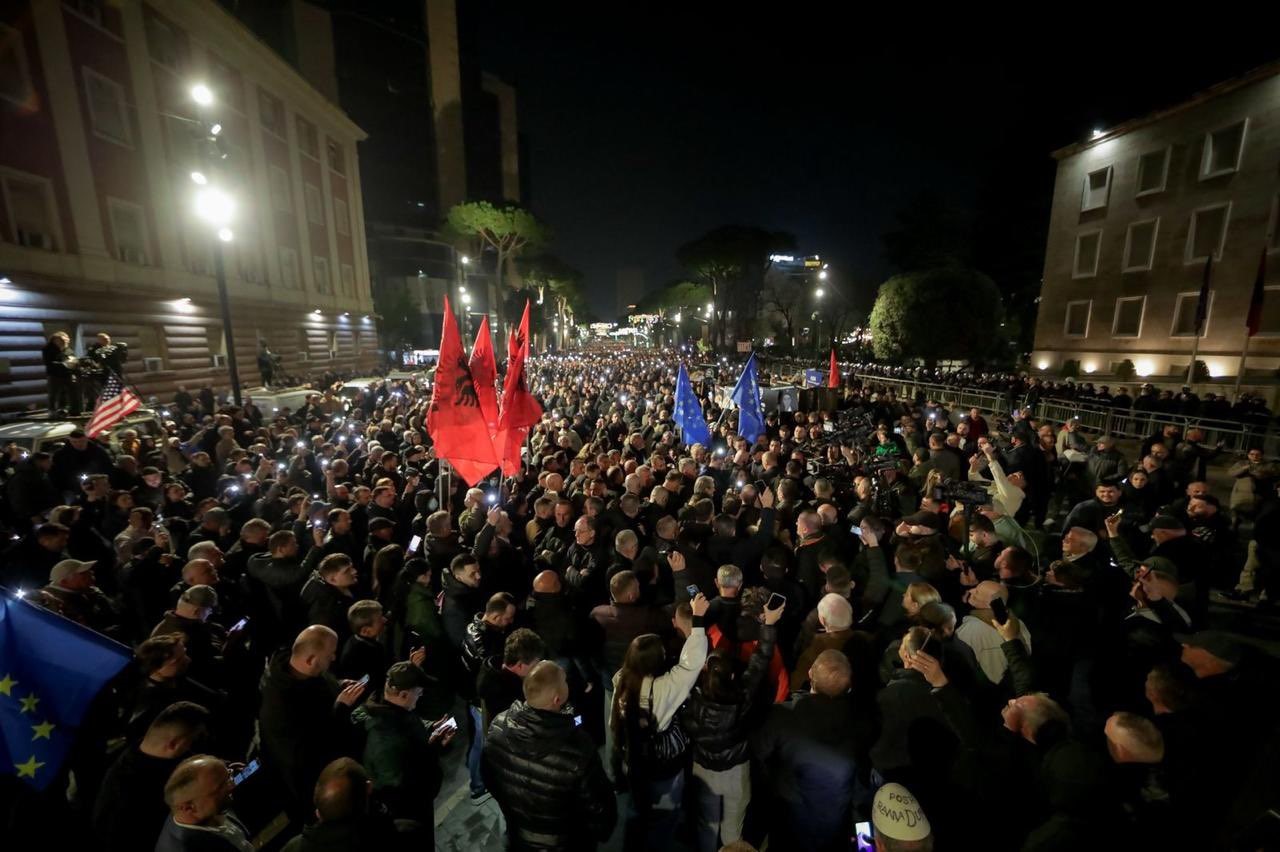
In Albania, political polarisation continued to impact the parliamentary work. During the 2024 autumn session, clashes between the ruling majority and a part of the opposition continued in Parliament, causing disruptions to its work. Civil society organisations remain overall free to operate, but challenges remain, including on registration requirements and limited public funding. The civic space remains “narrowed” due to concerns about the state of press freedom and restrictions on the right to peaceful assembly.
The Report on Montenegro recalls that the deep institutional and political crisis emerged over the decision of the Parliament to unilaterally declare the retirement of a Constitutional Court judge, raising concerns about the respect for the independence of the Constitutional Court. On 17 December 2024, tensions escalated following the Parliament’s decision on the retirement of a Constitutional Court judge. A political agreement was reached in mid-March, paving the way for the resumption of Parliamentary work. Montenegro’s civil society landscape remains narrow, with stakeholders noting a limited space for civil society organisations to operate effectively and a lack of structured dialogue between the Government and civil society.
In North Macedonia, the Parliament is implementing the new Rules of Procedure, which were adopted to improve its oversight and efficiency. However, challenges remain regarding parliamentary appointments to independent institutions, which raise concerns about merit-based selections. The Government initiated measures to enhance cooperation with civil society, while civil society raised challenges, including online hate speech. Civil society organisations function within a ‘narrowed’ civil society space.
In Serbia, Parliament’s effectiveness and oversight function continued to be hampered by the low frequency of sessions and the lack of genuine political debate. Since its constitutive session of 6 February 2024, nine plenary sessions have been held. The space for civil society in Serbia is rated as “obstructed”. The Report assesses that the organisations and individuals that criticise the authorities are under increasing pressure, in particular those monitoring alleged electoral irregularities and environmental damage, or protesting against lithium mining or the glorification of war criminals.
This article was published as part of the project “Civil society for good governance and anti-corruption in southeast Europe: Capacity building for monitoring, advocacy and awareness-raising (SELDI)” funded by the European Union.