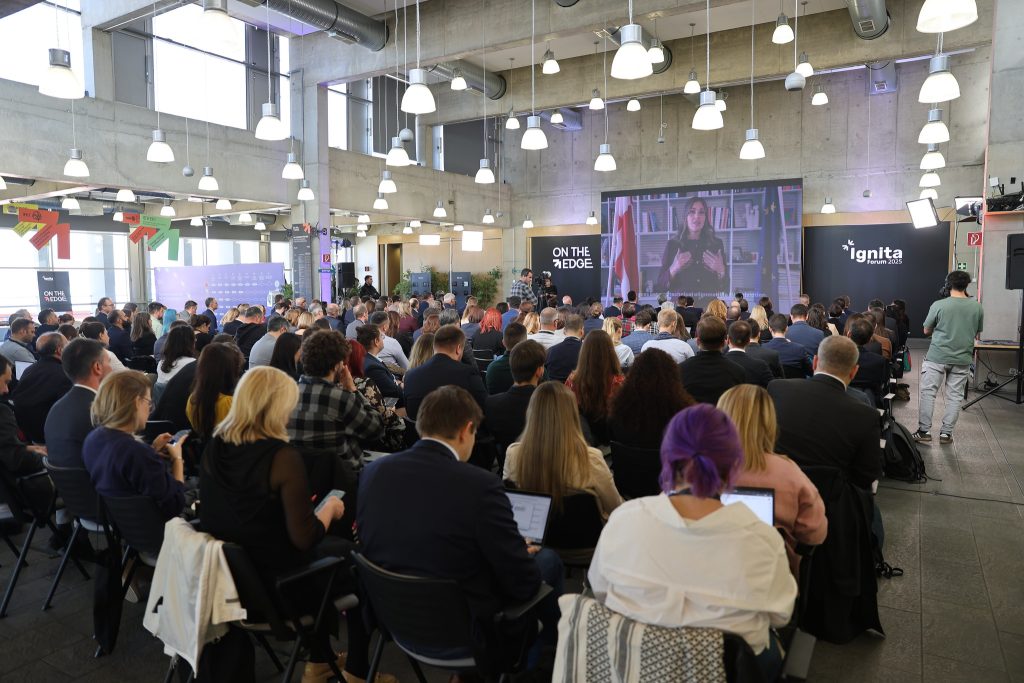
PRIZREN – The inaugural “Ignita Forum 2025: On the Edge” held from 8 to 10 October brought together over 200 participants from across the Western Balkans and the European Union.
Hosted by the Open Society Foundations – Western Balkans (OSF–WB), the Forum marked the launch of a new regional platform designed to anchor evidence-based, cross-sectoral dialogue on the Western Balkans’ European future, reads the press release of the OSF-WB.
Under this year’s theme, On the Edge, participants examined the political, social, and technological thresholds the region must cross to converge with the EU, from green transition and AI governance to youth participation and institutional reform.
“Ignita was built precisely for this moment, a place where civil society can transform waiting into action, fatigue into foresight and fragmentation into convergence,” said Andi Dobrushi, Director of OSF–WB, in his opening remarks.
“Everyone uses the EU as a tool, but having the European Union as a value has been left to the left. Social democrats of our continent should rise to their historical task and embrace this opportunity, in spite of all the risks and dangers that surround us,” stated Albin Kurti, Prime Minister of Kosovo.
In a video address, Marie Bjerre, Denmark’s Minister for European Affairs, underscored that the fundamental principles of democracy, rule of law and human rights are non-negotiable.
“EU membership is not an easy path. Entering the European Union is a long and demanding process. But if we succeed, we will see a much stronger EU in the future, too big an opportunity to miss. And when we do realize a bigger and stronger Union, we might just ask ourselves why it didn’t happen even sooner”, Bjerre said.
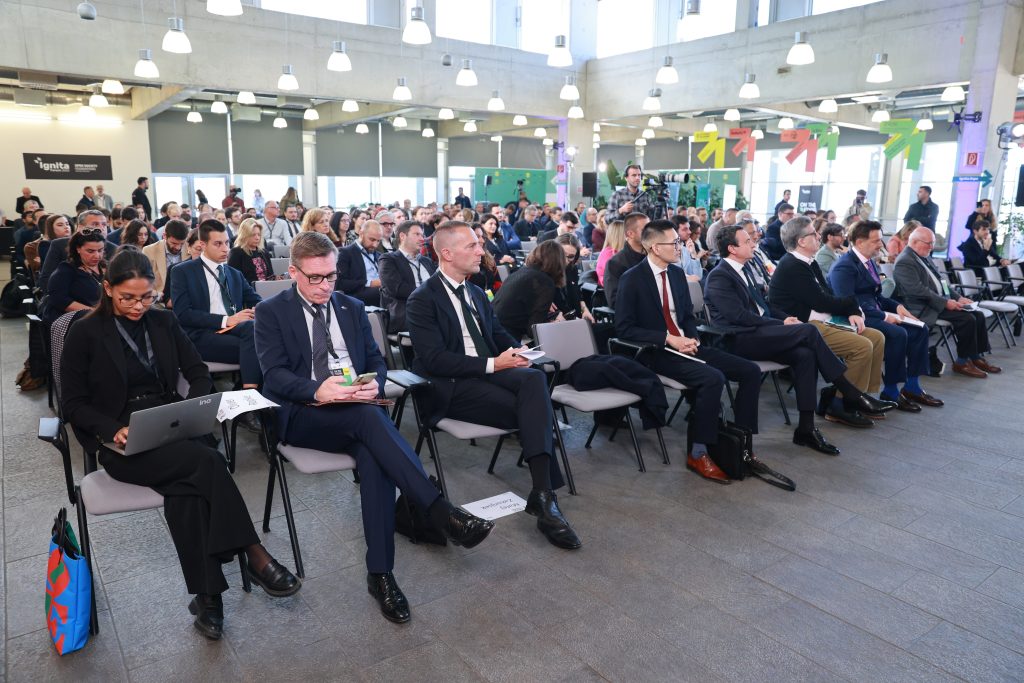
Participants discussed the Convergence Dashboard and Index, a new analytical tool developed by the Vienna Institute for International Economic Studies (wiiw), Think Europe, and regional partners, measuring the socio-economic and institutional gap between the Western Balkans and the EU.
They also debated the costs and opportunities of the green transition and engaged with youth-led findings from OSF–WB’s upcoming regional study “Political Realities of Generation Z in the Western Balkans”, to be published later this year.
“Across this region, a new generation is reimagining what it means to belong, not to a flag or a bloc, but to a future worth fighting for. From students marching in Belgrade to young innovators designing AI tools for transparency, to the quiet networks of city volunteers, what they are designing is exactly what courage should look like,” added Andi Dobrushi, OSF–WB.
The Forum also saw the launch of the Ignita Memos, a concise series of policy insights authored by regional knowledge partners, ELIAMEP, SCiDEV, EPI, KCSS, Zasto Ne?, RERI and IPECC, distilling research into actionable recommendations for policymakers.
The Forum’s outcomes will be captured in the forthcoming Ignita Report, co-authored by OSF–WB and Ignita partners, synthesizing key takeaways and tracking convergence dynamics across the region.