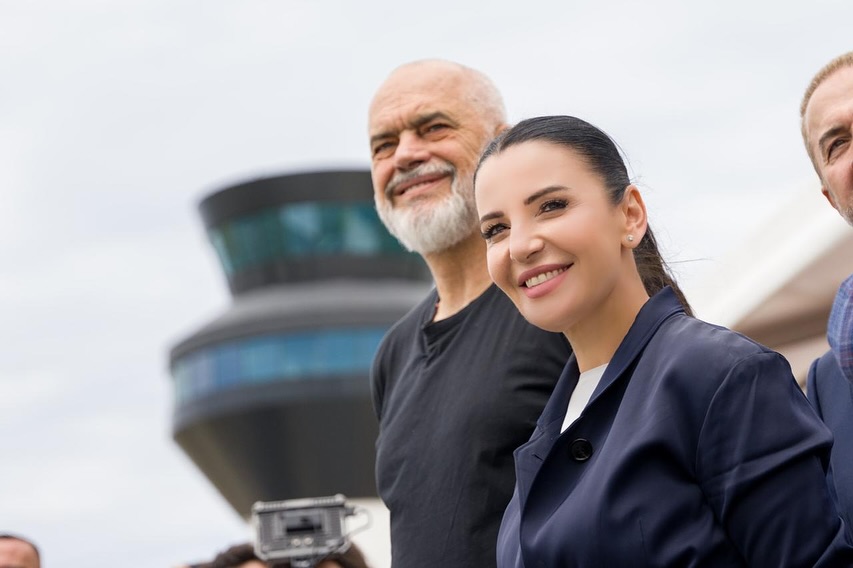
TIRANA – Parliament of Albania denied on Thursday the request of the Special Anti-Corruption Prosecution (SPAK) to lift the immunity of former deputy prime minister Belinda Balluku over corruption charges. Such a decision triggered strong reactions from the European Union Delegation in Tirana and some of the EU member states.
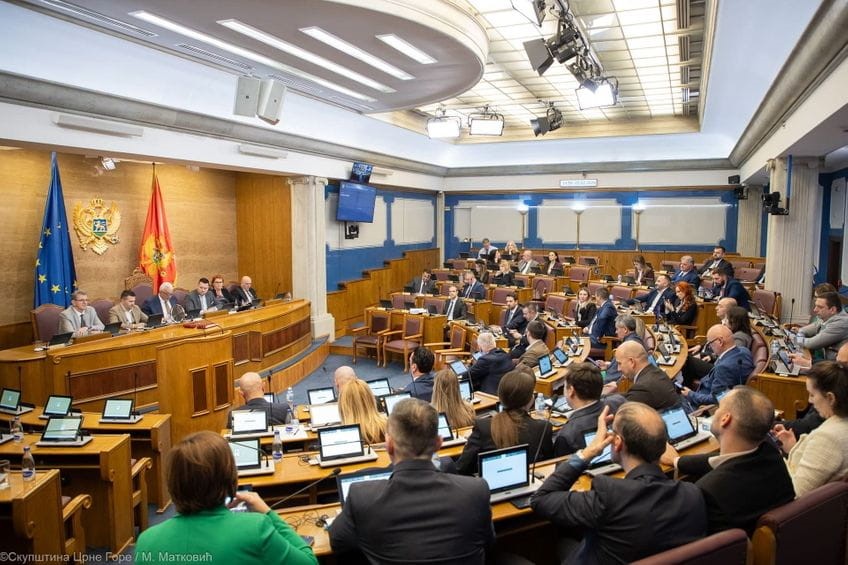
SeeNews reported that 82 lawmakers, mainly from the ruling Socialist Party (PS) of which Balluku is a member, voted against the request in the 140-seat parliament, while 47 voted to lift her immunity. Balluku was not present at the vote.
As the plenary session concluded, the opposition protest continued outside the Parliament, demanding the arrest of Balluku and the resignation of Prime Minister Edi Rama.
SPAK had requested authorisation from the Assembly to lift Balluku’s immunity, with the aim of arresting her. She is accused by the Special Prosecution Office of abuse of millions of euros with tenders in several infrastructure projects.
On 26 February, Albanian Prime Minister dismissed Deputy Prime Minister and Minister of Infrastructure Balluku as part of a government reshuffle. She was initially suspended from office and forbidden from travelling abroad by the Special Court against Corruption and Organised Crime.
In a reaction to the outcome of today’s voting, the European Union Delegation to Albania stated that “commitment to the rule of law and the fight against corruption are of essential importance for the EU accession process”.
“Ensuring an appropriate environment for SPAK to effectively carry out its work is essential to credibly support Albania’s progress towards membership in the European Union. We underline that creating an enabling environment for the functioning of justice institutions is a key element for advancing reforms”, the EU Delegation told the Albanian media outlets.
For its part, the German Embassy in Tirana stressed that the prosecution of high-level corruption must be implemented quickly and without obstacles, remembering that these are conditions for the EU membership process.
“A necessary condition for making progress in this merit-based process is the effective prosecution of corruption, even in high-profile cases. Our clear expectation is that even in these cases, criminal prosecution through justice can be carried out quickly and without obstacles. Albanian politics continues to be required to guarantee this process”, the statement notes.
In addition, the United Kingdom embassy in Tirana called for accountability and maintaining the rule of law as key in Albania’s path towards EU integration.
Last month, the European Parliament urged the Albanian parliament to process SPAK’s request without delay, also calling for accountability.
On the other hand, Edi Rama remarked that he welcomed the statements of the embassies, but “the Assembly rightly rejected the abolition of the freedom of a deputy”.
“Justice reform is not reversed, judicial independence is not affected, and support for SPAK remains unwavering. The real fight against corruption continues, more persistent than ever, as the updated objective overview of the European Commission clearly shows. Belinda Balluku is not accused of corruption, and the investigation into the case should continue, undisturbed by either obstruction or the interference of SPAK, by factors outside the boundaries of independent judicial power”, he stated.
According to Rama, “the Parliament of Albania demonstrated today that the dignity of parliamentarians is not material for socio-political experiments, which make the cure more dangerous than the disease it has to fight”.
“The ruling majority did today without any discussion what any democratic parliament in Europe would do, where passing the prosecutor’s requests not for the arrest without trial of a deputy, but for whether or not to start investigations, is nowhere like passing without any kind of border control in the Schengen area. It is a serious process, based on constitutional and legal norms, which are neither carte blanche nor closed doors for the prosecutor’s office”, he claimed.
By contrast, Gjergji Vurmo, a founder of ELEVATE Consulting and a member of the Balkans in Europe Policy Advisory Group (BiEPAG), claimed that “today Albania witnessed its biggest backsliding since 1996”.
“We travelled back in 2011, at the time when the PM Berisha refused the arrest of suspected national guard members. This will cost us dearly”, Vurmo wrote on X.