Voting scheduled for October

The 2026 election in BiH – between opportunity for change and continued fragmentation

The election in Republika Srpska is expected to be a high-stakes battle between the ruling SNSD and a unified opposition bloc, while in the Federation of BiH fragmentation remains a major risk for the “Troika” coallition.

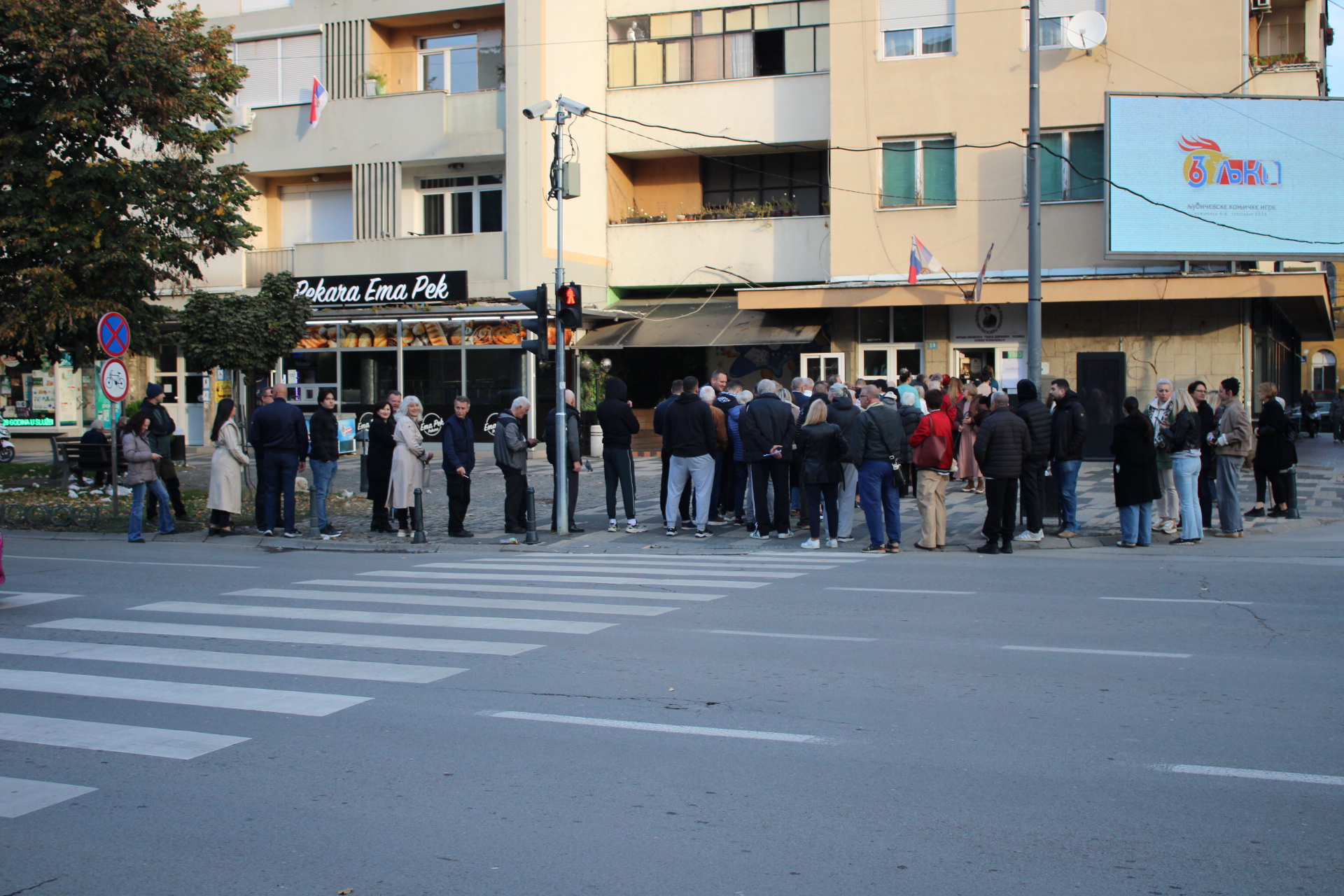
Voters exam their ballot papers during local elections in BiH; Photo: OSCE/Katya Andrusz

The general election in Bosnia and Herzegovina has been called for 4 October 2026 and will take place against a backdrop of heightened political tensions in both entities – the Serb majority Republika Srpska and the Bosniak-Croat Federation of Bosnia and Herzegovina.

Political observers note that the most critical “races” will focus on the leadership of RS, having in mind the fact that Milorad Dodik stepped down from the presidential post last year due to intense international pressure and legal rulings, as well as on three members of the BiH Presidency (a Bosniak, a Croat, and a Serb), who collectively serve as the head of state. Dodik, however, remains the dominant force within the ruling SNSD party, which he continues to lead as president.


In addition, it is believed that the formation of the post-election coalition in BIH, particularly in the Federation, will be difficult, primarily due to the current “fragility” of the “Troika” alliance.

According to Adi Ćerimagić, a Senior Analyst at European Stability Initiative (ESI), “the 2026 general election in Bosnia and Herzegovina is likely to be defined less by parliamentary arithmetic than by a handful of highly consequential individual races”.

“Among them, the election for president of Republika Srpska may prove to be the single most important contest in the country. The significance of the office lies in the constitutional and political structure of Republika Srpska itself”, Ćerimagić notes for European Western Balkans.

Tanja Topić, a political analyst and head of the Friedrich Ebert Foundation office in Banja Luka, expresses her hope that the “election process in October will be significantly less susceptible to political corruption and fraud than all previous ones”.

“It would be a positive change, having in mind the long-standing sense of powerlessness in front of the political ‘apparatus’ that has subdued voters, electoral commissions and institutions. However, I expect far more negative things to happen, including recycling of the promises we hear over and over again in every new election, repeated by the same politicians who have been ruling sovereignly for decades, but who, after the polls close, turn their backs on voters and commit themselves to the pursuit of personal interests”, Topić remarks for EWB.

“Introduction of modern vote-counting procedures will be a major institutional test”

A total of 518 officials will be elected in the general election in BiH. The election was called for the Presidency of Bosnia and Herzegovina, the House of Representatives of the Parliamentary Assembly of Bosnia and Herzegovina, the House of Representatives of the Parliament of the Federation of BiH, the National Assembly of Republika Srpska, the President and Vice-presidents of RS, and ten cantonal assemblies in the Federation of BiH.

The electorate includes roughly 3.4 million regular voters. Citizens living abroad can apply for out-of-country voting through the web portal of the Central Election Commission (CEC) of BiH by 21 July 2026.

The official election campaign is scheduled to start on 4 September, 2026. The CEC has emphasised that until the official start date, both paid political advertising and premature campaigning, including the presentation of candidates or party programs, are strictly prohibited.

Media outlets in BiH report that biometric voter identification, scanning of ballots, and video surveillance will be introduced at around 5,000 polling stations during the general election, which should enable a faster, more efficient, and more reliable electoral process.

Adi Ćerimagić underlines that “beyond the individual races, the election also marks a major institutional test for Bosnia and Herzegovina because of the planned introduction of electronic and modernised vote-counting procedures”.

“The implementation of these systems will test the capacity of domestic institutions. At the same time, there are already concerns about possible attempts to delay, obstruct, or politically delegitimise the reforms. The credibility of the electoral process itself may therefore become one of the defining issues of the campaign period”, Ćerimagić adds.

Will opposition in the RS rally around a single presidential candidate?

Following a rerun snap election held in early February 2026, Siniša Karan, the candidate of Alliance of Independent Social Democrats (SNSD), has been confirmed as the new President of RS. Karan succeeded the ousted Milorad Dodik, a leader of SNSD, and will serve until the regular general election in October 2026.

Siniša Karan is expected to be a leading candidate for the SNSD in the upcoming general election.

While the opposition in the RS has not officially rallied around one single presidential candidate yet, the Serb Democratic Party (SDS) unanimously confirmed Branko Blanuša as their candidate for the post. Blanuša narrowly lost to Karan in the February 2026 election, receiving roughly 48.09% of the vote compared to Karan’s 50.54%. The vote was repeated in 17 municipalities.

One of the possible scenarios implies that Blanuša would be a single candidate of the opposition parties in the RS for the president of this entity, while Draško Stanivuković, a mayor of Banja Luka, would be nominated for a Serb member of the BiH Presidency by the opposition.

Draško Stanivuković and Branko Blanuša; Photo: @Stanivukovic_D /X

Adi Ćerimagić clarifies that the President of RS “plays a decisive role in government formation, since the mandate to form a government is granted by the president and does not necessarily have to go to the largest party or to a coalition that can demonstrate a parliamentary majority in advance”.

“Over the past two decades, this institutional arrangement has helped both Milorad Dodik and his party, the SNSD, remain in power at the entity level even when they lacked an outright parliamentary majority. In fact, the SNSD last held such a majority on its own in 2006. For this reason, ongoing negotiations among opposition parties over a joint presidential candidate have become one of the central political dramas ahead of the election. These talks are proving difficult, not only because parties disagree over which political force should lead the challenge to the SNSD, but also because of competing personal ambitions among opposition figures”, Ćerimagić stresses.

In Ćerimagić’s opinion, two broad scenarios appear possible regarding the opposition in RS.

“In the first, the opposition succeeds in rallying around a single candidate and genuinely unites behind that person throughout the campaign. Were this to happen, it could create the most serious challenge to SNSD’s dominance in more than twenty years. Such a unified candidacy would consolidate opposition votes at a moment when Dodik himself is unable to run for another individual office”, he notes.

Ćerimagić states that the second scenario is “one in which the opposition either fails to agree on a common candidate or formally agrees on one without genuine and coordinated support from all parties involved”.

“In that case, the SNSD candidate would likely benefit from fragmentation within the opposition camp and could retain control of the presidency and then the government”, he assesses.

Similarly, Tanja Topić remarks that the “opposition in RS is mainly preoccupied with itself, and the frictions between opposition parties have become the breaking news in the TV political shows, daily papers and at web portals”.

“They (the opposition) behave like the ethnonational parties in power in the state of BiH – they all claim that they are ready for compromise, as well as that there is no victory in the election without unity, but they want the conditions for unity to be determined by individuals, mostly by leaders of the parties. The more ambitious they are, the more unscrupulous they become, so they believe that they should determine the rules for opposition action. The strength of the individual parties is irrelevant in this case, i.e. form outweighs the substance”, Topić says.

She adds that “this is a good opportunity to purge the opposition ranks of the numerous ‘Trojan horses’”.

“The election race will be reduced to a fight ‘for’ or ‘against’ the current political establishment in RS. Therefore, the false unity of the opposition is not crucial for victory”, Topić states.

Is “Troika” going to pay the price for the “unfinished” reforms?

The “Troika”, a liberal-progressive political alliance in the Federation of BiH, formed the government of the Federation entity in 2023, together with the Croatian Democratic Union (HDZ BiH). The coalition consists of the Social Democratic Party (SDP BiH), the People and Justice Party (NiP), and Our Party (NS).

The alliance was formed with the goal of breaking the long-standing dominance of the Party of Democratic Action (SDA) among Bosniak voters.

At the state level (national level) of government in BiH, the “Troika” formed the coalition with Dodik’s SNSD as well. The coalition consisted of the “Troika”, SNSD, and HDZ BiH, which operated within the Council of Ministers of BiH and the Parliamentary Assembly of BiH. However, in January 2025, the Troika announced it was terminating its partnership with SNSD due to disagreements over European Union accession legislation and alleged obstruction by SNSD.

Troika representatives; Photo: HR BiH

The Troika faces significant hurdles that threaten its continued dominance and its ability to maintain power in the upcoming general elections in October 2026. For instance, the state-level government has been criticised for slow progress on EU accession reforms and limited impact.

In addition, the Troika’s reliance on HDZ BiH for a majority means they must make compromises on ethno-political issues that are ideologically distant from their progressive platform.

At the same time, SDA is actively working to undermine the Troika, hoping for a return to power in the upcoming general election.

Tanja Topić notes that the Troika has been in free fall since the first day of its participation in the government.

“SDA has long been working on a campaign that seeks to defame the Troika, but I must point out that the Troika itself is a coalition in hibernation, which has almost no communication with SNSD, while HDZ BiH ‘watches the back’ of its eternal partner – SNSD. So, it is quite certain that the Troika will pay the price of the unfinished EU-related reforms; it will pay for even the things it was not able to influence. Therefore, it will be a rather uncertain race in the Federation, in which it is impossible to rule out the return of SDA to power”, Topić concludes.

Speaking on the same topic, Adi Ćerimagić states that in the Federation entity, attention is increasingly focusing on the expected race for the Bosniak member of the state presidency.

“Current indications suggest a contest between Bakir Izetbegović and the incumbent Denis Bećirović. Such a race would represent a broader political struggle between two competing visions within pro-Bosnian politics: one centred around the SDA and the other around the Social Democratic-led bloc. Smaller parties could nevertheless play a disproportionately important role, both by shaping the narrative of the campaign and by influencing post-election coalition building”, he stresses.

“Bosnia and Herzegovina is therefore likely to continue producing fragmented and highly polarised parliaments, requiring broad coalitions involving four, five, or even more parties from the cantonal to the state level. As a result, the elections will not merely determine electoral winners, but also the balance of power in the difficult coalition negotiations that follow”, he underlines.

In Ćerimagić’s opinion, the race for the Croat member of the presidency is also shaping up to be highly consequential.

“The HDZ BiH is going with a younger candidate with a comparatively moderate public narrative, while opposition forces are expected to support a more confrontational challenger, arguing that the dominant Croat party has failed to secure key Croat political interests in Bosnia and Herzegovina”, he stresses.

Adi Ćerimagić concludes that whoever emerges victorious from this election will immediately face a demanding political agenda, having in mind that “international actors, particularly the EU and the United States, are expected to press the next governments to address unresolved issues ranging from state property and the future role of the High Representative to announced foreign investment projects and long-delayed institutional reforms”.

Tags