PRISTINA – Implementation and accountability remain the key challenges of the energy transition in the Western Balkans. The countries do not need a new set of commitments, but finances and coordination in order to carry out the existing ones, stressed the participants of today’s thematic session on green and sustainable transition at the Civil Society Forum 2026.
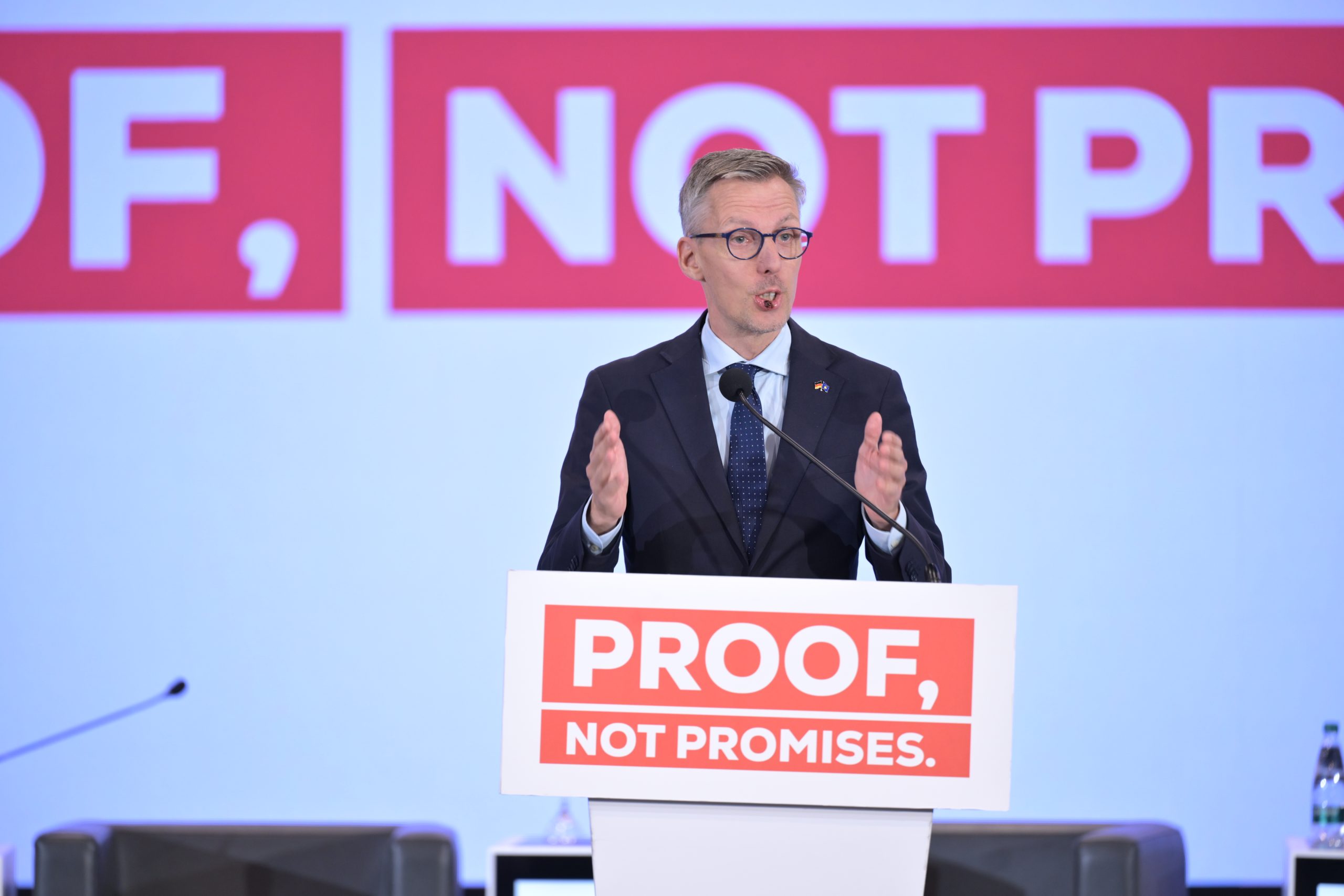
Nora Latifi Jashari, Programme Manager of the GAP Institute, who delivered the framing remarks, said that the region does not lack commitment – governments across the Western Balkans have adopted ambitious climate and energy objectives and have aligned themselves with international obligations.
“The next phase of the green transition must therefore be judged less by the adoption of laws, strategies and targets and more by concrete results”, Latifi Jashiri said.
According to her, progress needs to be seen in clean air and water, lower emissions, green energy efficiency, climate resilience, more secure energy systems, reduced energy poverty, healthcare ecosystems and, in general, better economic opportunities for the citizens of the region.
“Implementation and accountability need to become central benchmarks for the green transition”, Latifi Jashiri said.
She added that, in several Western Balkan economies, fossil fuels remain directly connected to employment and local revenue, which makes the transition economically and socially sensitive. This is where green industrial policies become relevant, as they link climate objectives with industrial development.
Another issue is access to finance, which does not ensure implementation alone. The decisive issue is the capacity to turn available resources into a mature, transparent and high-impact process.
“The core task is, therefore, not to create a new layer of commitments. It is to make the existing agenda implementable, accountable, investible and socially credible”, Latifi Jashiri said.
During the discussion, Emil Balavac, Canton Minister of Trade, Tourism and Environmental Protection from Herzegovina-Neretva Canton of BiH, said that the two main challenges his country is facing is the lack of financing and the lack of joint initiatives of cities and municipalities.
“Laws are beautifully written, but many of them are not implemented”, Balavac said.
He added that there are zero joint initiatives of nine cities and municipalities making up his canton on any environmental issue facing them right now. As a positive change, he mentioned the amendments to the law which recognised sustainable tourism and enabled the local population to feel more direct financial benefits.
Mirza Kušljugić, president of the Assembly of the RESET Center Sarajevo, said that what the region is offered from the European Union is a green transition, while it is up to the Balkans to make it sustainable and just.
In the context of the just transition, ownership of energy assets could be discussed, he added. He said that he was not against private energy transition projects, but he also believes that there should be support for local, community-led energy transitions.
Kušljugić also pointed out that there is a lack of research on sustainable transition across the region. Changing that should be a priority in the next three years.