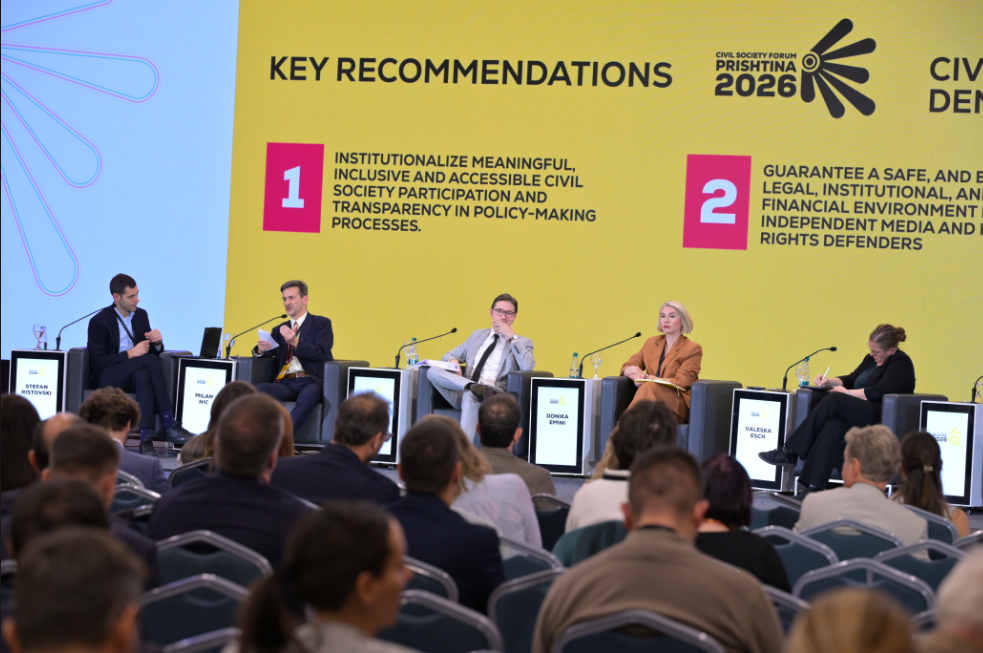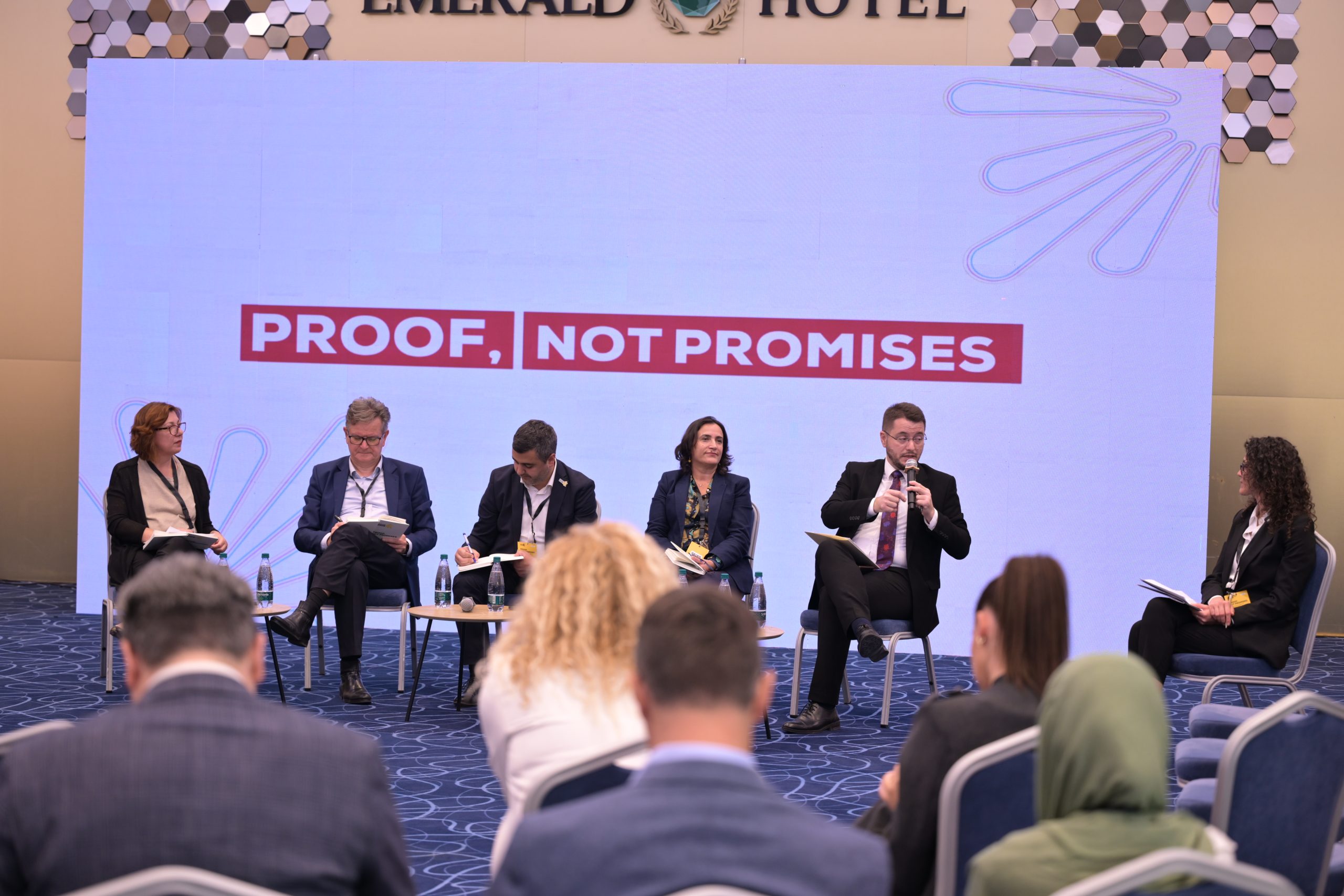
PRISTINA – Closer integration with the EU’s Single Market could boost development in the Western Balkans, but removing trade barriers alone will not be enough to narrow the region’s economic gap with the EU, it was concluded during the panel “Competitiveness & Growth: From CRM to Single Market”, at the Civil Society Forum in Pristina.
Participants agreed that stronger productive capacity, investment and institutions capable of implementing agreed reforms are also needed.
Lorena Sekiraqa, Political Advisor t the Prime Minister of Kosovo and Sherpa for Regional Affairs, highlighted the Common Regional Market’s achievements, including the elimination of roaming charges within the region, green lanes to facilitate trade and mobility agreements.
She said applying EU rule through regional cooperation allows economies to prepare for the EU single market at the same time.
“We reform once and benefit twice – first in the region and then in the EU Single Market”, Sekiraqa added.
However, she stressed that regional cooperation is not end in itself, but a step towards EU membership. The region alone lacks both the market size and the investor confidence that membership brings, she argued, calling for greater EU support to help its economies converge with the bloc before accession.
Discussing obstacles to implementing CRM, she assessed they are “more political than technical”.
Amer Kapetanović, RCC Secretary General, said global changes made it necessary to accelerate regional integration and turn political promises into concrete results.
He announced that RCC would publish a mechanism for monitoring implementation of the CRM Action Plan by the end of the year. It would track the pace of implementation, compare commitments with results and seek to assess the impact on GDP growth and investment.
“If we do not narrow the gap between Western Balkans and EU average, this entire discussion about gradual access to the Single Market will not produce tangible results”, Kapetanović warned.
He added that a publicly accessible monitoring mechanism would enable civil society to hold government and regional organisations accountable on the basis of data and results.
Discussing the region’s gradual integration into the EU Single Market, he identified two key obstacles: the legal conditions governing access to specific areas and insufficient investment.
He said that political promises must be backed by appropriate legal arrangements.
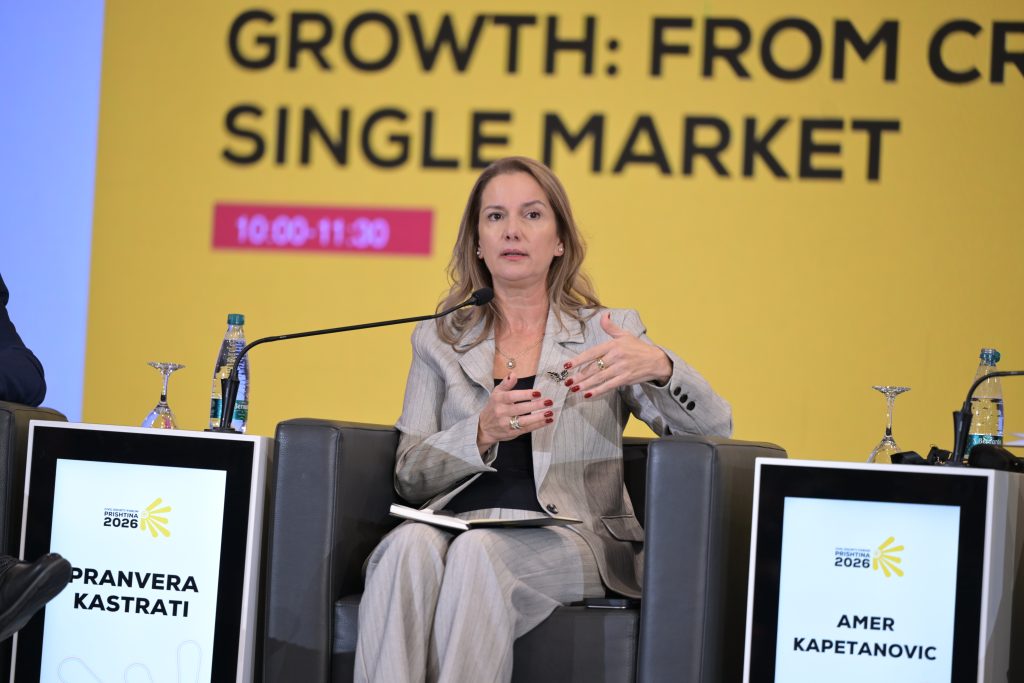
Pranvera Kastrati, Director of CEFTA Secretariat, said the agreement’s role was evolving from removing tariffs and facilitating trade towards preparing economies to apply EU rules and compete in a much larger market.
She explained that this involved alignment with the EU acquis, strengthening institutions’ capacity to implement and enforce rules, and preparing privet sector.
“What happens tomorrow, when we become EU members, will depend to a large extent on whether we are able to oversee and enforce what the rules require”, Kastrati added.
She stressed that governments and the relevant institutions remain responsible for implementing regional agreements, while regional organisations can align and coordinate their work.
As an example of a potential improvement, she pointed to accepting test results and certifications already recognised by the EU, without requiring additional assessments or repeating procedures at the regional level. Such an approach could reduce barriers to business and help prepare economies for the single market.
During the discussion on industrial policy, Branimir Jovanović Economist from the Vienna Institute for International Economic Studies (wiiw), warned that easier market access would not, on its own, deliver developments if the region’s economies lacked sufficient capacity to produce goods and services for export.
Jovanović therefore urged Western Balkan countries to identify sectors that could drive future growth and develop concrete measures to support them. Industrial policy, he stressed, need not be limited to manufacturing, but could also cover services and information technology.
Asked whether national industrial policies could intensify competition among countries in the region, he argued that a “race to the bottom” was already under way, with economies competing to offer lower taxes and wages to attract foreign companies.
“With a proper industrial policy, we would offer quality, not low prices,” Branimir Jovanović said.
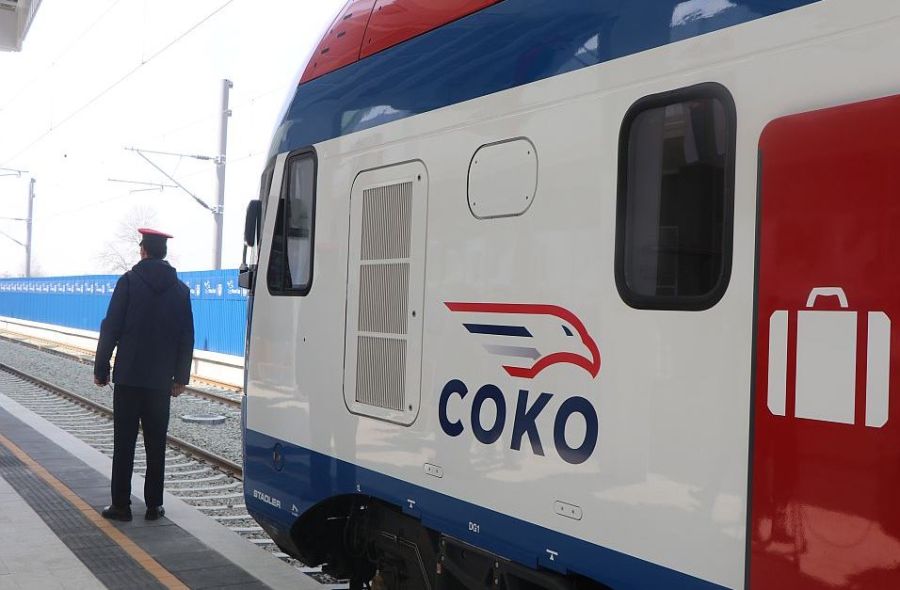
Talis Linkaits, Director of Permanent Secretariat of the Transport Community, said that border bottlenecks, differing technical standards and limited rail connections continue to undermine the Western Balkans’ economic competitiveness.
He stressed that improving transport requires both investment in infrastructure and regulatory reforms to allow operators neighbouring countries to compete on equal terms.
“Politicians are very keen on opening roads,” he said, adding that the less visible work of creating a level playing field for transport operators remains unfinished.
He also highlighted the lack of passenger rail connections as one of the region’s most visible shortcomings.
“When you were coming to Pristina for this conference, I believe none of you used rail,” he said, calling for stronger civil society pressure to restore connections and improve transport services.