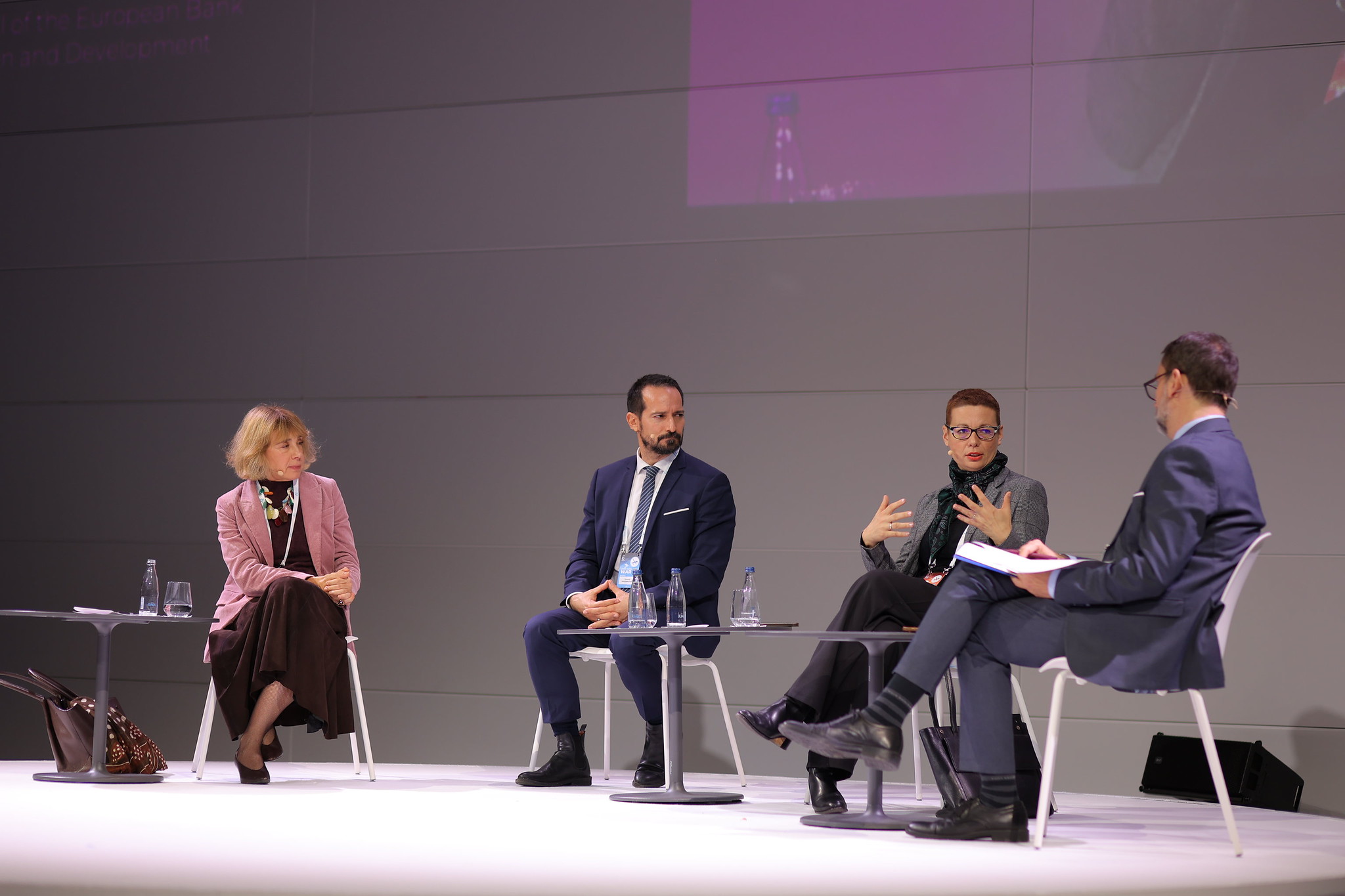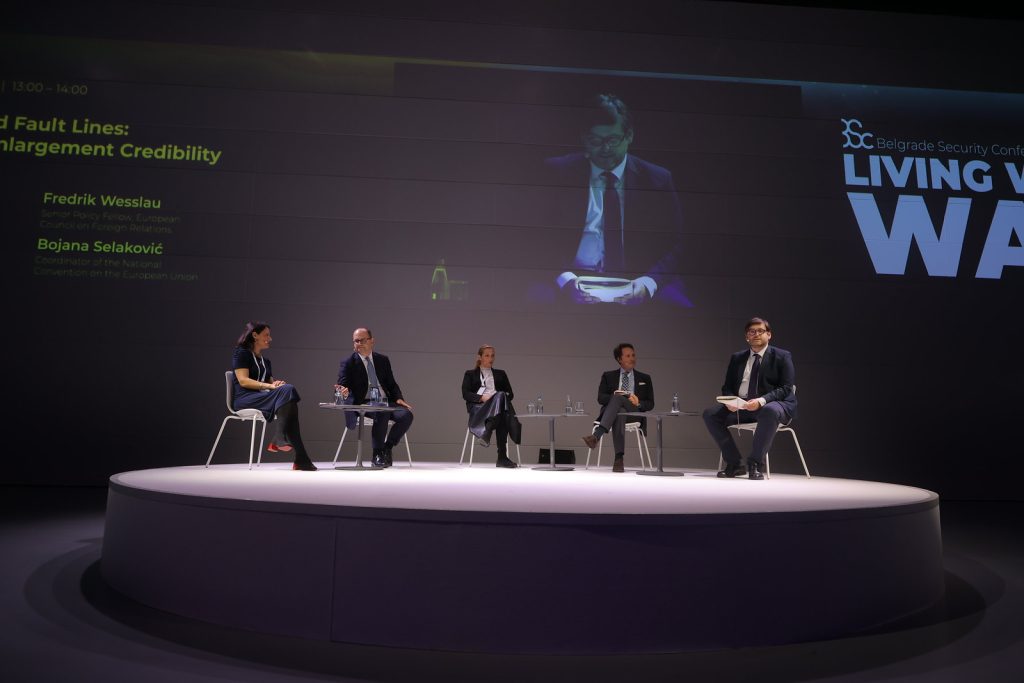
BELGRADE – The European Union must take strategic decisions, and the candidate countries must do their “homework” so that the integration of the new states becomes a tangible and feasible process, stated the participants on the panel “Front-Runners and Fault Lines – Testing the EU’s Enlargement Credibility”, which was held at the Belgrade Security Conference 2026.
According to Oana Popescu-Zamfir, Senior Research Fellow at the European Security and Head of the RUSI European Security in Transformation programme, full membership must remain a credible prospect for the countries aspiring to join the EU.
“The Union is willing to demonstrate that enlargement is very much alive, but the EU is changing at a pace which has not been known until now. Therefore, a much more tailored-made approach is needed”, Popescu-Zamfir remarked.
She added that “disruptive geopolitical events”, such as the war raging in Ukraine show that the enlargement is very important to the security of Europe.
Speaking about the possibility for Montenegro and Albania to become the next EU members, Ditmir Bushati, Former Albanian Minister for Europe and Foreign Affairs, noted that neither of these two countries have “big outstanding problems with the neighbours”, but important issues, including the fight against corruption and growing social polarization remain great challenges in his home country.
“Flamingo Revolution is the best thing that has happened to Albania since the fall of communism, as it is a civic, leaderless movement and as the citizens are calling for changes in the areas which are essential for finishing the EU accession talks as well”, Bushati claimed.
Elaborating on the outcome of the recent snap parliamentary elections in Serbia, Bojana Selaković, Coordinator of the National Convention on the European Union, remarked that “we cannot expect some drastic changes to occur overnight”, as we had been living in a “state capture” for a long time.
“The top priorities for the new government in Serbia will be anti-corruption activies and rule of law issues. Therefore, Serbia needs a EU support to tackle these problems”, Selaković assessed.
Fredrik Wesslau, Senior Policy Fellow at the European Council on Foreign Relations, underlined that the enlargement is not only about “ticking the boxes”, but that is has to do with the security, as well.
“The European Commission increasingly views enlargement through a security lens, while Ukraine’s unique circumstances will require a bold and creative approach to accession”, Wesslau stated.
In his opinion, one of the “big questions” regarding the enlargement is whether a referendum on Montenegro will be held in France or not.