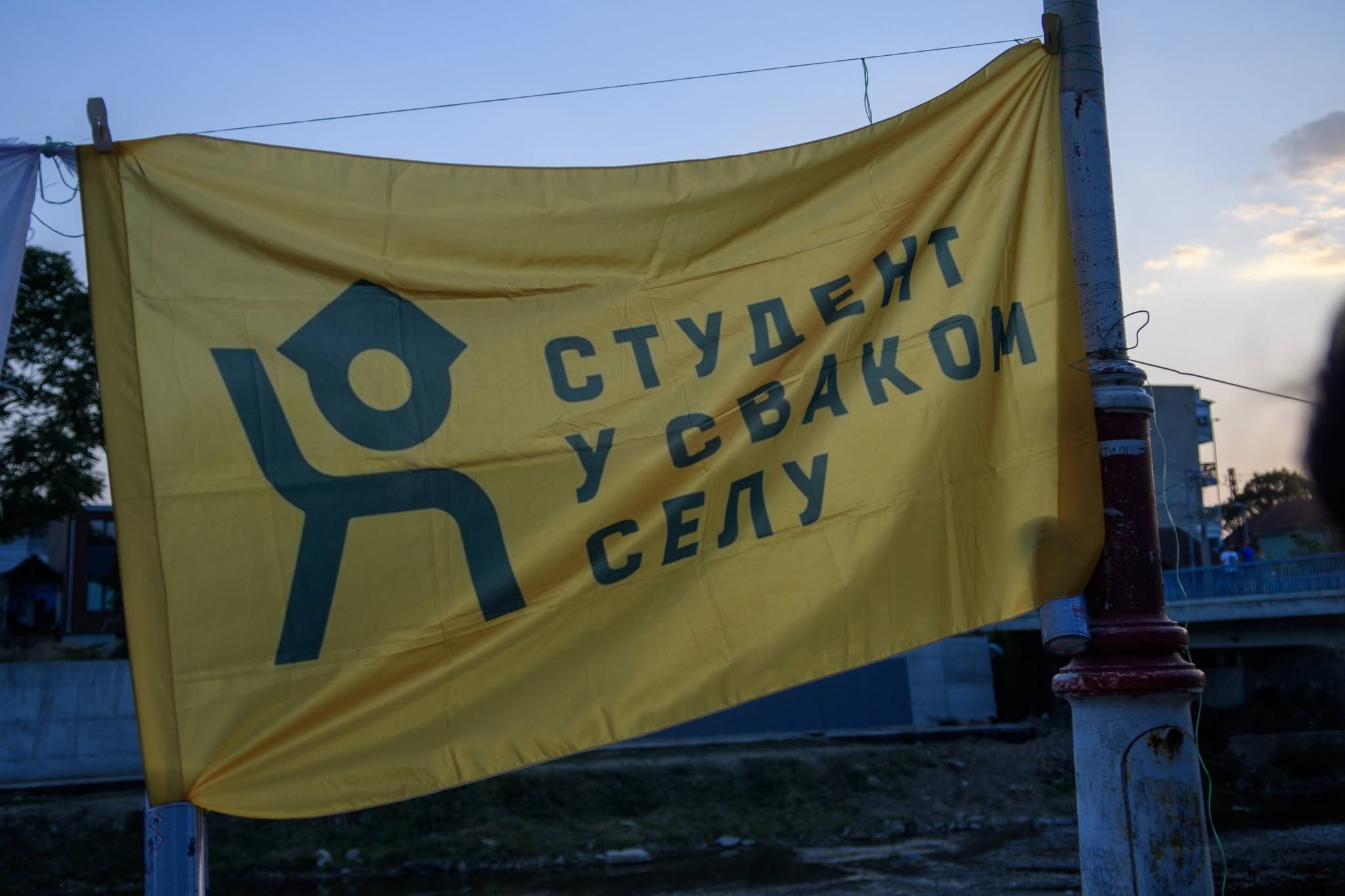

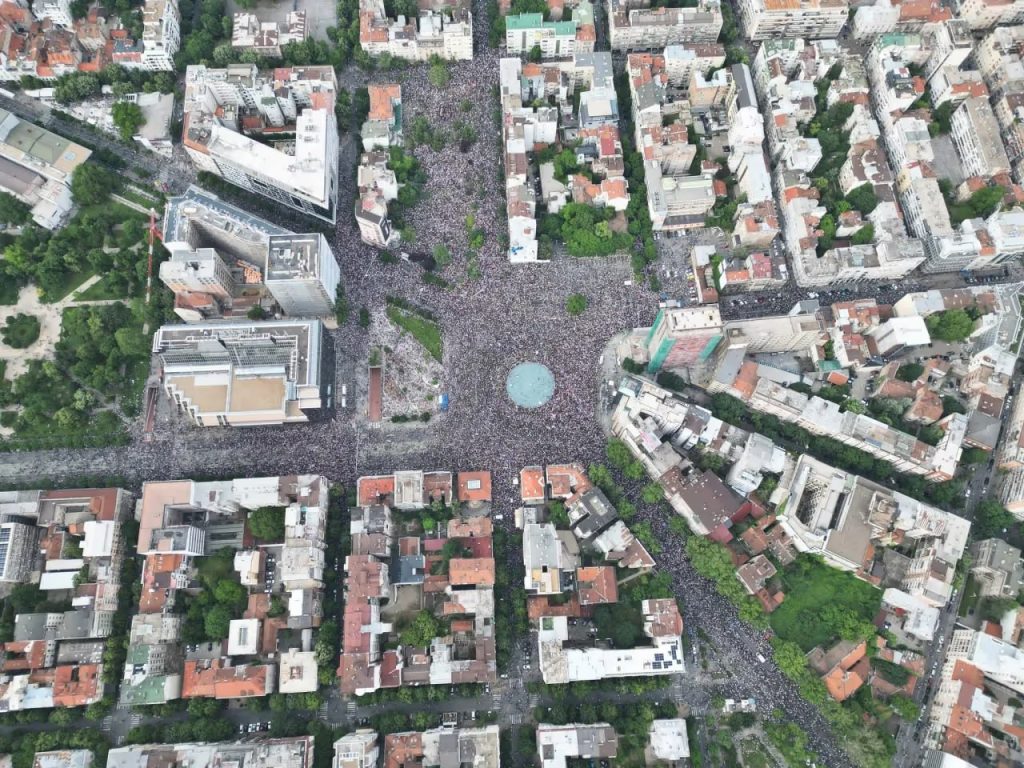
Saturday’s protest in Belgrade gathered between 180.000 and 190.000 people. The police, in line with the government’s usual understanding of mathematics, claimed there were only around 34.000. It was not only one of the largest gatherings Serbia has seen in recent years, but it was also one of those rare political moments in which the size of a crowd becomes impossible to ignore, no matter how hard the state tries to reduce it to an official estimate, a tabloid headline, or a convenient incident after the official programme has ended.
On a beautiful spring day, in the season when Belgrade is perhaps at its best, the atmosphere at the protest was strikingly different from the one later constructed by pro-government media. What stayed with me was not only anger, although there was more than enough reason for it, but a sense of unity, calm and even brightness among the people who came. The messages from the stage were also more balanced and broader than the government would like to admit. The speakers spoke about democracy, corruption, organised crime, repression against the education system, pressure on culture, and the problems faced by workers and farmers. They clearly wanted to show that this was not a narrow generational revolt, but a wider democratic response to a state that has stopped listening to society.
That is precisely why the authorities needed a different story.
The first one was intended for domestic use: violence.
Before the protest, the illegal camp of government supporters in Pioneer Park, the so-called “Ćacilend”, was once again being filled and visually shielded by banners and mobile toilets, apparently to hide the poor turnout inside. That camp of “students who want to study” is, of course, still heroically “defending Serbia from a colour revolution”, although by now it looks less like a political statement and more like a badly maintained open-air installation between the buildings of the most important Serbian institutions. Loudspeakers were turned outwards, broadcasting nationalist music of low artistic quality and of a familiar political origin, the same one from which the roots of Serbia’s ruling party also grew.
At the same time, an unusually large number of special police units were deployed in a part of the city where the student rally was not taking place, almost a kilometre away from the main gathering. It did not look like only prevention. It looked like preparation for the narrative that would follow.
And it followed. Some 20 or 30 minutes after the official programme ended, when people were already leaving, unknown masked men attacked the police. Chaos followed, and it lasted just long enough for the authorities and pro-government media to shift the focus from the size and messages of the protest to alleged “blockader violence”. No serious person should claim without evidence who stood behind the incident. But after years of similar patterns, citizens are entitled to ask a simple question whenever masked men appear at the most convenient possible moment: Who benefits?
The second narrative was aimed not only at domestic audiences, but also at the region and Europe: nationalism.
In the Balkans, this label travels quickly, requires little explanation and easily penetrates regional and international media. If a civic and student-led movement in Serbia can be presented as nationalist, then its democratic character becomes blurred and its legitimacy easier to question. Yet the basis for this claim remains thin. It comes less from unproven links between students and nationalist circles, and much more from the authorities, their media, and superficial readings by those too ready to accept familiar Balkan clichés.
It is also worth noting the strange selectivity of those who suddenly see nationalism in the student movement, often forcefully and through very thin evidence, while somehow failing to see it in the ruling party since 2017, in the media it controls, and in the constant nationalist and anti-European propaganda that has not really stopped for a single day in the past decade. The same people who are now ready to dissect every symbol at a student protest have managed for years to treat government-sponsored narratives against the region, the European Union, civil society, independent media and political opponents as background noise. Apparently, nationalism becomes dangerous only when it can be used to discredit those who challenge power.
This does not mean that the movement should be exempt from criticism, or that nationalist messages, whenever they appear, should be ignored. Any serious democratic movement in Serbia must also be judged by its ability to resist the nationalist reflexes of the society from which it emerges. But reducing this protest to nationalism is not analysis. It is propaganda, whether intentional or merely lazy.
What happened on Saturday should therefore be read carefully. The protest was large, peaceful during its official programme, politically broad and emotionally brighter than many expected. The incidents that followed did not define it; they were used to redefine it. The accusations of nationalism do not explain the movement, they are being used to avoid explaining why it exists.
Serbia is facing a crisis of legitimacy. Institutions are captured, public trust has collapsed, and the authorities have spent months trying to exhaust, discredit or divide the student-led movement. When that failed to stop one of the largest gatherings in the country’s recent history, the government did what it knows best: It changed the subject.
From democracy to disorder. From accountability to violence. From civic protest to nationalism.
But anyone who was there saw something different from what the evening news tried to sell: Citizens who were not afraid!