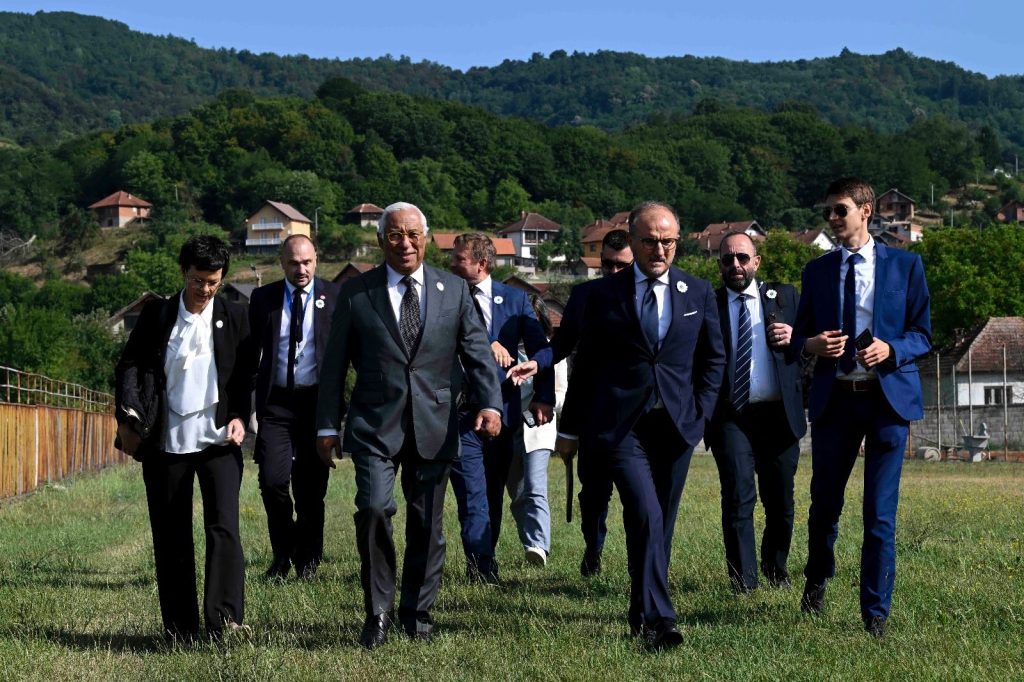
BRUSSELS – The 30th anniversary of the Srebrenica genocide was marked today at the Potočari Memorial Centre. Several thousand people, including the President of the European Council António Costa and the European Commissioner for Enlargement Marta Kos, gathered to pay tribute to the more than 8,300 Bosniak boys and men who were killed by the armed forces of the Bosnian Serbs, led by Ratko Mladić, in July 1995.
The annual commemoration ceremonies started on Tuesday, 8 July, with a 100-kilometre march towards Srebrenica. Participants of the “Peace March” arrived in Potočari on 10 July, and today they attended the collective funeral at the Srebrenica-Potočari Memorial Center cemetery, where the remains of seven more genocide victims were buried today.
The Resolution on Genocide in Srebrenica was adopted by the UN General Assembly on 23 May 2024. Thereby, 11 July was established as the International Day of Reflection and Commemoration of the 1995 Genocide in Srebrenica.
In addition, the Government of the Federation of Bosnia and Herzegovina declared 11 July 2025, an official Day of Mourning in this BiH entity.
Ursula von der Leyen: We firmly reject any denial of the genocide
Ursula von der Leyen, President of the European Commission, stated that the genocide in Srebrenica “stands among the darkest chapters in Europe’s collective memory”.
“It is our duty to remember and to preserve the truth, so that future generations know exactly what happened. They must know that in the summer of 1995, victims were systematically executed and buried in mass graves within the UN-designated ‘safe area’ of Srebrenica. A town they believed would protect them in the brutal war that was ravaging BiH. The European Union will never forget what happened in this town”, the statement reads.
President of the EC stressed that the EU firmly rejects and condemns “any denial, distortion, or minimisation of the Srebrenica genocide, as well as the glorification of war criminals”, adding that “political leaders have a great responsibility in that regard, in particular in BiH and across the Western Balkans – they must lead by example in acknowledging the established facts and genuinely honouring the victims”.
Similarly, António Costa warned that “there is no room in Europe – or anywhere else – for genocide denial, revisionism, or the glorification of those responsible.
“Denying such horrors only poisons our future. It is our duty to confront and acknowledge the full truth. This is the first step in ensuring that such atrocities never happen again”, said Costa at the commemoration ceremony at Potočari Memorial Centre.
Marta Kos: The differences should be resolved through dialogue
According to Marta Kos, “Srebrenica is a deep scar in European history”.
“In the EU, we resolve differences through dialogue and mutual respect, under the protection of democratic institutions. Different beliefs, religions, national affiliations, identities and languages are recognized and respected. So many places where people live together, in peace, are defined not by their nationality, but by their common humanity and protected by human rights. Protect these values at all costs, anywhere in the world. This is a lesson from Srebrenica”, Kos stated in a video-message released at Potočari.
Christian Schmidt, the High Representative in BiH, underlined in his speech that “Srebrenica cannot be forgotten”, adding that “we must work together to contribute to building the future and the peace”.
In his address at Potočari, Croatian Prime Minister Andrej Plenković said that “Srebrenica is more than the place of suffering, it is the place where the evil has demonstrated itself as genocide”. According to him, “the reconciliation can be built only on the truth and justice”.
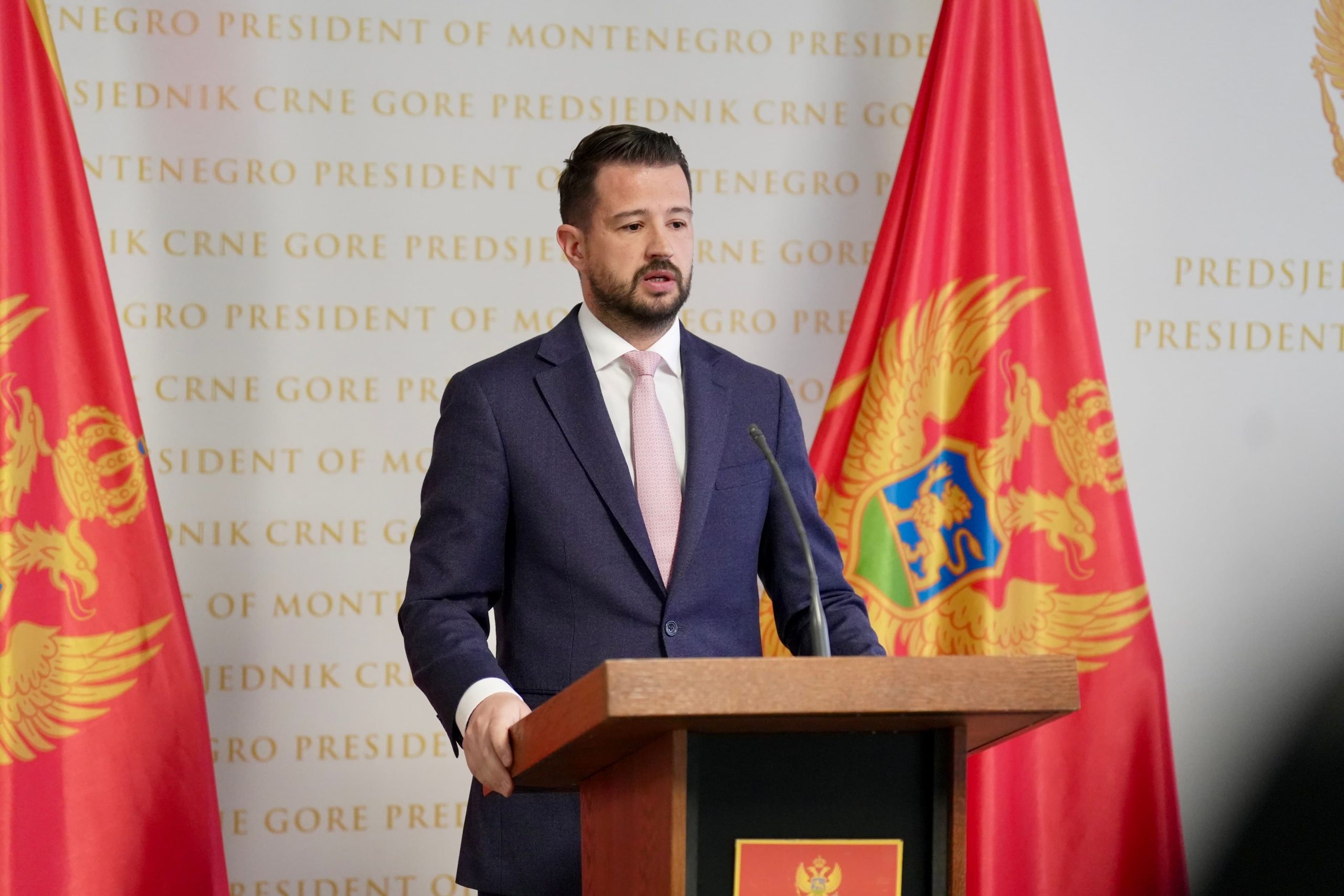
The President of Montenegro Jakov Milatović also attended the commemoration ceremony at Potočari, while the delegation of the Montenegrin Government was led by the Minister of Foreign Affairs Ervin Ibrahimović.
Serbian officials keep denying the Srebrenica genocide, calling it “a terrible crime” instead
On the other hand, no state official from Serbia was present to pay tribute to the victims of the Srebrenica genocide. Serbian President, Aleksandar Vučić, expressed his condolences to the families of the victims via X.
“Today marks thirty years since the terrible crime in Srebrenica was committed. We cannot change the past, but we must change the future. Once again, on behalf of the citizens of Serbia, I express my condolences to the families of the Bosniak victims, confident that a similar crime will never happen again”, Vučić posted in English.
Ana Brnabić, the Speaker of the National Assembly of Serbia, claimed that “no genocide, but a horrible war crime, took place in Srebrenica”. According to her, “this terrible war crime should never have happened”.
Unlike the Serbian state officials, the NGOs and some opposition politicians warned that the Srebrenica genocide should not be denied.
The National Convention on the European Union in Serbia stated that “it is a moral and human obligation to remember all victims with care and, without doubt, condemn any denial, diminution and relativisation of this crime, and especially attempts to impose collective responsibility”.
Meanwhile, Serbian pro-government tabloids fabricated a claim that Marta Kos accused Serbs of the Srebrenica genocide