New disagreements are complicating efforts to finalize the sale of the majority share of Serbian energy company Naftna Industrija Srbije (NIS) to Hungary’s MOL Group.
The Serbian government, which holds a 29.9 percent stake in NIS, has rejected a new proposal by MOL amid ongoing negotiations over how the company would be governed and operated under new ownership.
The U.S. placed the Russian-majority-owned NIS on its sanctions list in January 2025 as part of efforts to target Russian-controlled energy assets and reduce financing for Russia’s war in Ukraine, triggering a process to restructure ownership.
MOL moved to acquire the majority stake in January 2026, signing a preliminary agreement with the Russian shareholders Gazprom and Gazprom Neft and submitting a €1 billion bid. At the time, Serbian Energy Minister Dubravka Đedović Handanović said both sides had agreed on the basic terms of the future sale, with a final agreement expected by March.
Since then, however, the process has repeatedly stalled amid parallel negotiations between the stakeholders. While MOL and the Russian shareholders continue talks to finalize the sale itself, MOL and the Serbian government are engaged in separate negotiations focused on how NIS would be run under new ownership. It is here that key frictions have emerged, centered on the operations of the Pančevo Refinery.
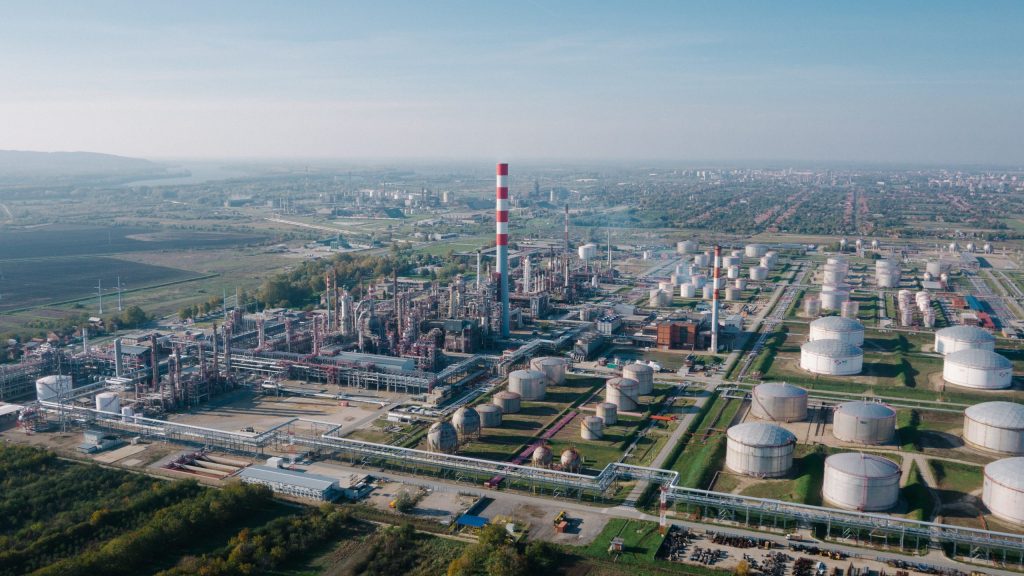
Pančevo is Serbia’s only oil refinery and the source of around 80 percent of its domestic fuel supply. On May 7, Đedović Handanović rejected a MOL proposal she called unsatisfactory, citing provisions related to the refinery’s crude oil refining capacity and stressing that MOL should respect processing levels that had previously been agreed upon and are considered strategically important for Serbia.
MOL put forward a revised proposal this week, but Serbia remains dissatisfied with the terms. Đedović Handanović said talks will continue, adding that the Serbian government hopes to reach a compromise, “but not at any cost.”
The repeated extension of negotiation deadlines reflects a combination of political sensitivity, commercial disagreements, and the complexity of restructuring ownership in a sanctioned energy asset, says Attila Holoda, managing director of Aurora Energy Kft. and a former manager at MOL.
“The Serbian state understandably wants to preserve influence over the country’s only refinery and fuel supply system; the Russian side is looking for the best possible exit terms; and MOL can only accept a structure that is financially, legally, and sanctions-compliant,” Holoda told European Western Balkans.
Complicating matters further, a competing bid for the majority share of NIS has also entered the picture.
Ranko Mimović, a Serbian businessman, told Reuters on May 6 that his company had offered €2 billion to Gazprom Neft and Gazprom for their combined 56.1 percent share of NIS, double MOL’s bid. He went further in later statements to the BBC, claiming that the Russian side had accepted the offer in principle and that the U.S. Office of Foreign Assets Control (OFAC), which must approve the transfer of NIS’s majority stake, had responded positively following six months of communication.
“We have responded to all their requests, we have received their positive opinion and confirmation from senior management,” Mimović told the BBC.
Gazprom Neft has since said that it is actively preparing the sale of its stake in NIS to MOL and is not conducting negotiations with any other companies.
Mimović’s bid has drawn scrutiny on multiple fronts. He has owned and managed companies in Serbia, Croatia, and Slovenia, several of which have faced legal and financial controversies. In 2014, he was indicted for defrauding contractors of a road company he owned at the time, and in 2017, he was convicted of fraud and money laundering, a ruling that was later overturned and sent back for retrial.
His statements have also fueled speculation that his bid has political backing. President Aleksandar Vučić publicly stated that he did not know who Mimović was and dismissed the possibility that Mimović could acquire NIS, citing his lack of experience in the energy sector. This statement appeared to contradict Mimović’s claim that he had informed Vučić’s office about his offer. Mimović has dismissed claims that he is acting in coordination with the Serbian government or has personal ties to Vučić or the Serbian Progressive Party (SNS).
Holoda says the emergence of Mimović’s bid appears to be less of a serious alternative to MOL and more of a political and negotiating complication in an already highly politicized process. He pointed to Gazprom Neft’s statements that it is not negotiating with other companies, as well as Serbia’s continued dissatisfaction with MOL’s proposals.
“This suggests that the main negotiation is not really about the Mimović bid, but about the terms between MOL, the Russian shareholders, and the Serbian state,” Holoda says.
Holoda added that the price tag on Mimović’s offer alone is not enough to establish credibility when bidding to acquire a sanctioned and strategically important energy company. Transparency of financing, OFAC compliance, operational experience, supply-security guarantees, and political acceptability are all equally important factors.
“A relatively unknown investor structure carries much higher execution risk than an established, listed regional energy company such as MOL,” Holoda says. “For all parties, the key question is not only who offers the highest price, but who can operate the company in a stable, politically acceptable, and professionally credible way over the long term.”
Mimović has said he will respect the current negotiation timeline, while Đedović Handanović has said that talks with MOL will continue and could conclude as soon as May 16.