
The idea to write a few lines about European Council President António Costa’s visit to Serbia came after the press conference in Tivat. A journalist asked Ursula von der Leyen a question about Serbia, and Costa confidently intervened to speak about Aleksandar Vučić, who would, supposedly, deliver what was expected of him. Not in some distant future, but in the coming weeks.
For the President of the European Council, this was not only a poor diplomatic reflex. It was a serious political misreading of the country he was visiting, of the public he was addressing, and of the man standing next to him.
Costa may know Vučić from summits, bilateral meetings and carefully staged press conferences. But that is not the same as knowing Aleksandar Vučić as Serbian citizens know him. Costa may have known him for years. Serbian citizens have known him for more than three decades.
They know the man who dismantled democratic institutions, captured the media, normalised pressure on voters and built a system in which elections exist, but fair political competition does not. They know the man whose government has treated students, professors, activists and citizens not as participants in a democracy, but as enemies to be exhausted, intimidated or defeated.
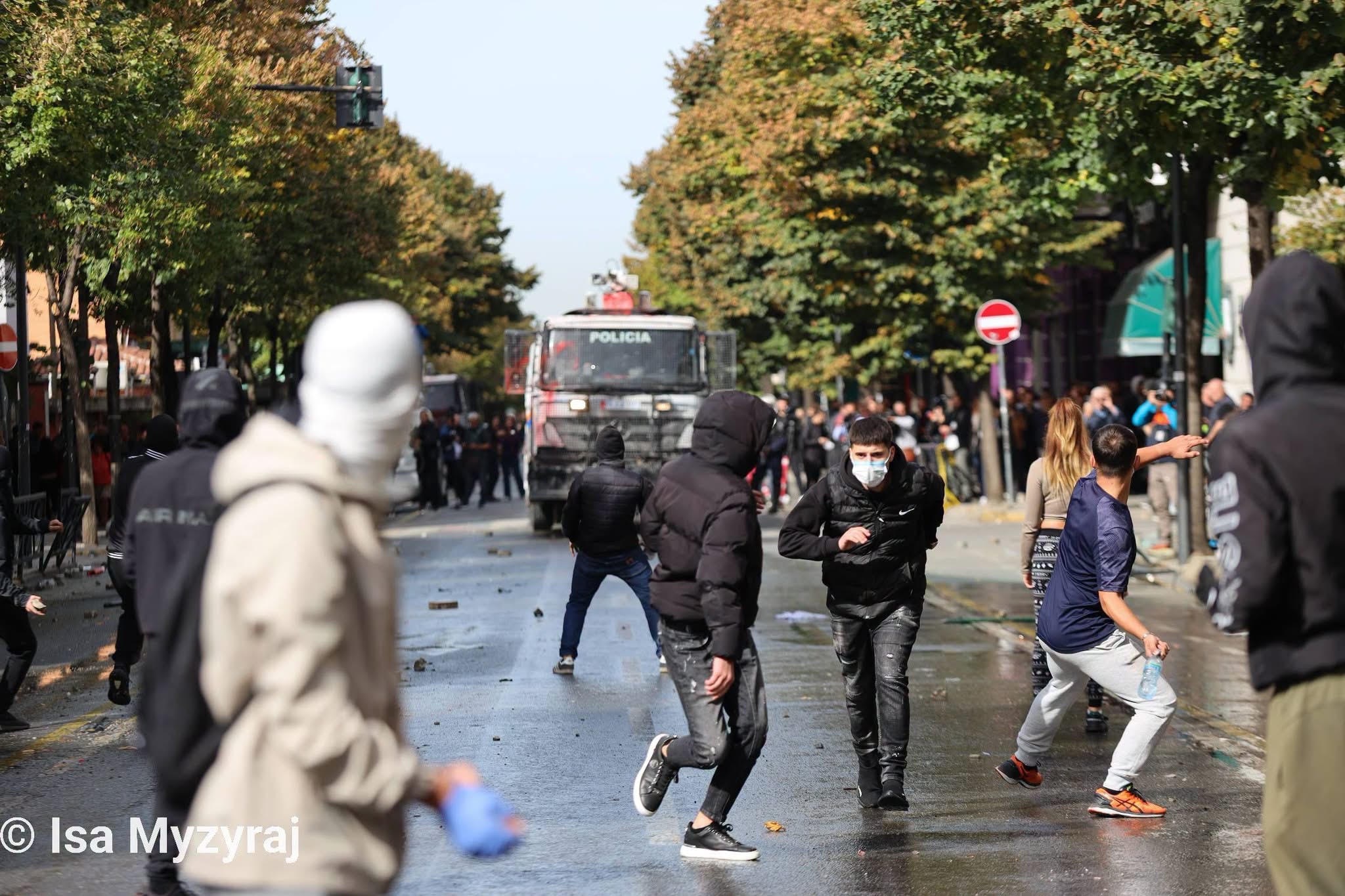
And yet, after almost a year and a half of mass student-led protests and the deepest social and political crisis in Serbia in years, the President of the European Council comes to Belgrade and Tivat and speaks as if all that is needed is a little more trust and another several weeks.
Several weeks for what exactly?
For the authorities that have had more than ten years to build the rule of law, to suddenly discover it? For the ruling party that captured REM to suddenly make REM independent? For a president who has no constitutional role in the election of REM members to decide whether “he” will give or not give a majority to legally elected candidates?
This is where Brussels repeatedly misses the point. The problem is not that Serbia is slow. The problem is that Serbia’s authorities do not want the reforms they are promising. They want the rewards attached to them.
We have seen this before. Serbia receives a deadline, misses it, then receives a new one. “By the end of the month.” “By the end of the year.” “After the Venice Commission.” “In two weeks.” Each time, the promise is repackaged. Each time, the EU pretends that this time may be different.
The so-called firm commitment to the Council from the end of 2024 was supposed to clear the way for Cluster 3. We are now in the middle of 2026 and know what happened to it. Almost nothing. The Reform Agenda was full of vague formulations and was presented as agreed with civil society. It was not. Brussels was told otherwise. Brussels accepted it.
The question is not whether Serbia will change a few articles of the law. The question is whether the authorities will implement reforms that actually limit their power. Serbian citizens already know the answer. That is why Costa’s tone matters. In Brussels, it may sound like encouragement. In Belgrade, it sounds like naivety. Worse, it sounds like indifference towards a society that has spent months demanding institutions, accountability and the rule of law.
Serbia should move beyond the deadlock in the accession process. That is in the interest of Serbia, the region and the European Union. But this cannot be done by pretending that Vučić’s Serbia is a democratic Serbia with temporary technical delays. It is not.
So the real question for António Costa is not whether he trusts Aleksandar Vučić. The question is why he trusts him more than the evidence in front of him.