BELGRADE – Following the death of convicted war criminal Ratko Mladić, major regional media outlets published extensive coverage, focusing on his legal, historical, and wartime legacy. While Bosnian outlets emphasized his conviction for genocide, Croatian media highlighted his role in the1991 war in Croatia, and Montenegrin outlets provided a factual overview of his crimes and judicial history.
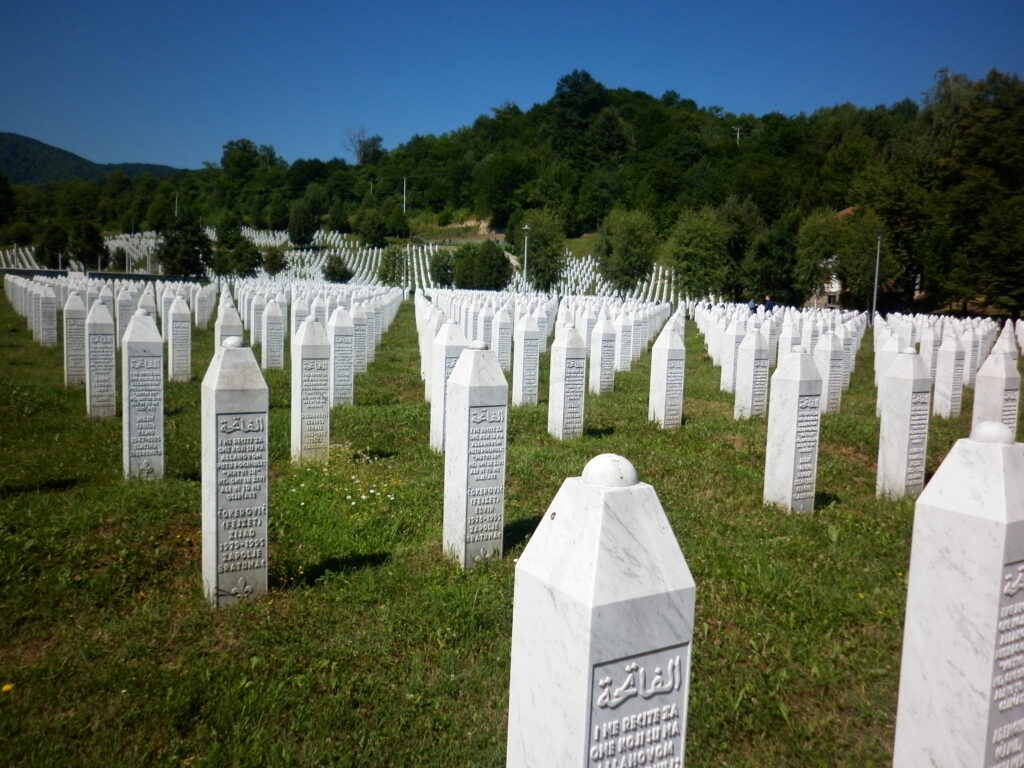
Media outlets in the Federation of BiH uniformly reported the news by labeling him a “convicted war criminal” or “executioner”. Their coverage focused heavily on his role in the Srebrenica genocide and the suffering of victims.
“Ratko Mladić, a convicted war criminal and former commander of the army of Republika Srpska died. Mladić has been a key figure in the war in Bosnia and Herzegovina in the period 1992-1995. He was found guilty of genocide in Srebrenica, where more than 8,000 Bosniaks were killed”, Oslobođenje reports.
Director of Srebrenica Memorial Center, Emir Suljagic, stated that the death of Mladić does not change historical facts or can erase the consequences of genocide, it has been reported by Dnevni avaz.
“Now the more difficult part of the job remains: not to let truth, responsibility and memory die with it. Mladić’s death is another moment in which we must decide what we will remember and, more importantly, what we will not allow to be erased”, Suljagic remarked.
According to the People and Justice Party, led by the Foreign Minister of BiH Elmedin Konaković, “the death behind the prison bars of Ratko Mladić, one of the most responsible persons for genocide and numerous other war crimes, is only a part of the earthly justice for all victims”.
“It is a confirmation that the world has recognized and isolated in a prison cell the person responsible for thousands and thousands of killed, tortured and expelled”, the statement noted.
On the other hand, Milorad Dodik, a former president of Republika Srpska claimed that Mladić’s death in the Hague detention unit was not natural, calling it a “murder”.
He stated that “Mladić was widely respected by the Serbian people and acted as a commander who fought to protect them during the conflicts of the 1990s”.
Mainstream outlets in Croatia and Montenegro framed his death through the lens of international justice. Coverage in major newspapers highlighted his definitive conviction for genocide, war crimes, and crimes against humanity, recalling his military actions during the Balkan wars of the 1990s.
“Until year 1991 no one had heard of him, and then he began to leave bloody traces – he tended to play a hero, and to run away… He was convinced of his untouchability, sure that nothing could happen to him, so he did not hide his arrogance in front of the media”, Jutarnji list writes.
Also, some editorials focused on his legacy of ethnic cleansing, portraying his death as “the final chapter for one of the chief architects of violence in the former Yugoslavia”.