BELGRADE – Serbian Minister of Justice Nenad Vujić stated on Thursday that Ratko Mladić, a convicted war criminal, will be buried “with full state and military honours”, stressing that “standard protocols for generals will be strictly respected”. Speaking to Banja Luka-based Alternative Television following Mladić’s death in the United Nations detention unit in The Hague, Vujić noted that “Mladić is a general and the protocols are known, his role is known, but also what belongs to general Mladić will certainly be respected”.
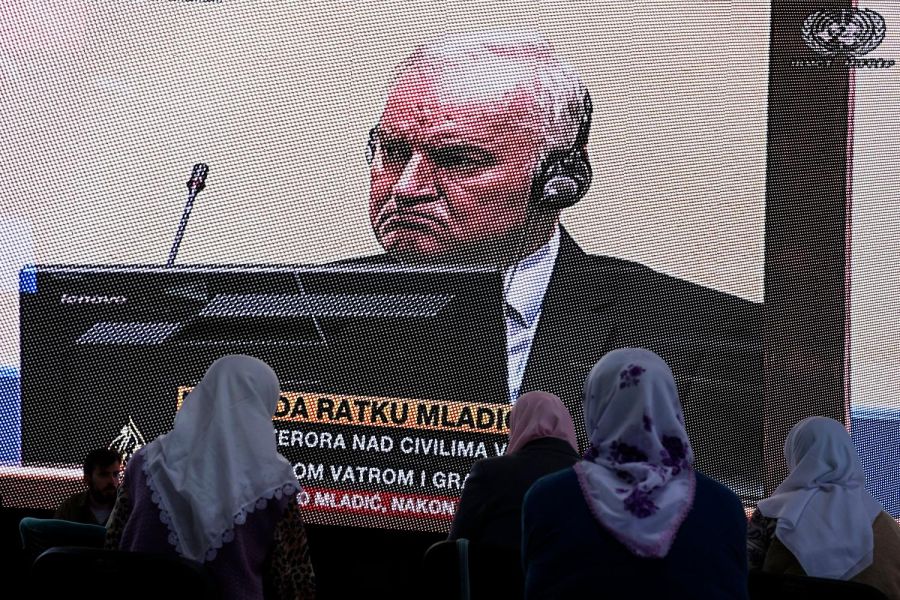
Ratko Mladić died at age 84 in The Hague while serving a life sentence, it was officially confirmed yesterday. Mladić was a top military general for the Bosnian Serbs during the war in Bosnia and Herzegovina from 1992 to 1995.
His army surrounded the city of Sarajevo for nearly four years, killing more than 10,000 civilians with shelling and snipers. In addition, he directed the mass killing of around 8,000 Bosniak men and boys in July 1995 in the town of Srebrenica (Srebrenica Genocide).
Speaking about the funeral of Ratko Mladić, the Serbian Minister of Justice underlined that “Republika Srpska has no role in making a decision, but the family will decide on the location where he will be buried”.
Vujić also stated that the Serbian government is prepared to immediately retrieve the body from the International Residual Mechanism for Criminal Tribunals (IRMCT).
“We expect the Mechanism to give us a specific timeframe regarding the procedures and next steps we need to take. We are ready to leave for The Hague as soon as we find out what the next steps are, while strictly respecting all the wishes of general Mladić’s family, with whom the Government (of Serbia) is in regular contact”, he remarked.
Two types of funerals
Serbia officially recongises both state and military funerals. State funerals are considered to be public ceremonies of the highest national order and are reserved for civilians and officials of supreme national importance. This includes current and former presidents, prime ministers, patriarchs of the Serbian Orthodox Church…
The state budget covers all financial costs of state funerals, including the burial plot, frequently within the Alley of Distinguished Citizens at Belgrade’s New Cemetery. During state funerals, the elite Serbian Armed Forces Guard manages the main casket procession, vigil, and official state honours, and the casket is often displayed publicly in a federal building, such as the National Assembly, for public viewing.
On the other hand, military funerals are mandated for active-duty personnel of the Serbian Armed Forces, retired military officers, veterans and individuals holding high military decorations. These funerals are organised and funded by the Ministry of Defence and the Serbian Armed Forces. If a lower-ranking veteran passes away, the family requests military honors through the local military center, and the protocol is scaled according to the deceased’s final rank.
At the funerals with military honours, the coffin is usually displayed in a standard cemetery chapel or military facility, and these funerals are attended primarily by Ministry of Defence officials, army colleagues, and veteran associations. These funerals are handled by a standard military honor guard unit or regional garrison, and feature the traditional three-volley salute executed by an infantry firing squad with blank rounds.
When a person qualifies for both a state funeral and military honours, the event is called “a state funeral with military honours”. However, having in mind the fact that Ratko Mladić was a convicted war criminal, it is not clear what type of funeral will be organised.
Legally speaking, since Mladić was not officially stripped of his general rank either by the Serbian military or the authorities of Republika Srpska, he can be buried with military honours, as it had been done with Nebojša Pavković, a Serbian army general, who died last October and was convicted of war crimes by the International Criminal Tribunal for the former Yugoslavia.
Why has Mladić not been stripped of his general rank?
Under Serbian law, if an active-duty officer is convicted of a felony and sentenced to an unconditional prison term exceeding one year, they lose their profession by force of law. Once an officer transitions into the reserve force (retired status), they retain their rank as a lifelong honorary title. At this stage, they are technically outside the jurisdiction of the Military Disciplinary Court, meaning civilian court outcomes dictate the legal consequences.
If a retired officer is convicted of highly severe crimes, such as war crimes, crimes against humanity, or high treason, the President of the Republic or a judicial body can strip them of their state decorations and titles via the Law on Decorations of the Republic of Serbia. While this directly targets medals, it strips away the constitutional privileges associated with their former high-ranking status.
Nevertheless, several high-ranking generals convicted of war crimes by the International Criminal Tribunal for the former Yugoslavia (ICTY), including Ratko Mladić, retained their ranks and pensions.
The Serbian Ministry of Defence and political leadership have historically treated these individuals as retired officers in good standing, occasionally inviting them to act as guest lecturers or honouring them at official state military functions once they served their prison sentences.
Organisations such as the Humanitarian Law Center (FHP) from Serbia claim that the fact that Mladić’s status has not been revoked represents a violation of the Law on the Serbian Armed Forces.