SOFIA – Bulgaria may have found another reason to hold up Macedonia’s EU accession process, this time related to a criminal trial involving a dual Bulgarian-Macedonian citizen, Euractiv reports.
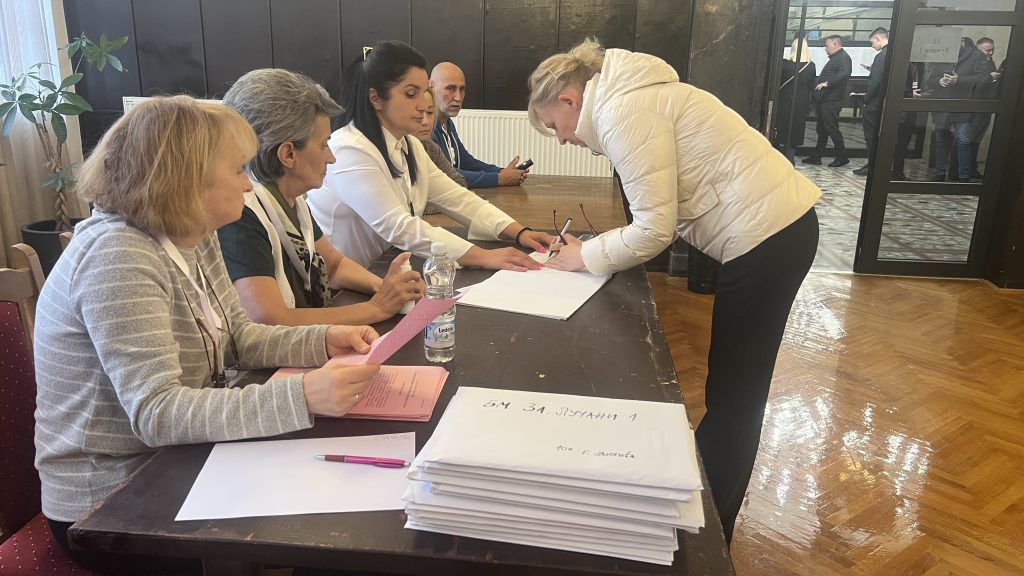
The trial of Iva Mihaylova, who holds both Bulgarian and Macedonian citizenship, resumed on Monday in the eastern town of Kočani. As Euractiv reports, eight MPs from four Bulgarian political parties attended the hearing, including the representatives of the governing Progressive Bulgaria and Boyko Borissov’s centre-right GERB.
Mihaylova is accused of serious road safety offences over a traffic accident last October in which a man was killed. She was seriously injured in the crash, while the court in North Macedonia has held both of her passports since the day after accident.
The case has also reached the EU level, when on 13 August Bulgarian members of the European Parliament asked the European Commission to include it in its rule-of-law monitoring of accession process of North Macedonia.
A Commission spokesperson told Euractiv that individual cases are followed as part of both rule-of-law and enlargement reporting when they can contribute to a broader, systemic assessment of the functioning of the judiciary and the rule of law in a country.
As Euractiv notes, decisions on the accession process are taken unanimously by EU member states in the Council. Bulgaria has already used this leverage to condition North Macedonia’s further progress on constitutional amendments recognising the country’s Bulgarian minority.
One of the main legal issues raised by the case concerns restrictions on Mihaylova’s freedom of movement.
Her defence lawyer, Naser Raufi, told Euractiv that the court has not reviewed the restrictions on Mihaylova’s travel since they were imposed on 8 October last year, despite North Macedonian criminal procedure requiring such measures to be reconsidered every two months. According to Raufi, decisions have only been issued following requests from the defence.
The European Court of Human Rights has repeatedly held that travel restrictions must be individually justified and periodically reviewed by a court on its own initiative, rather than leaving it to the person affected to challenge them.
The Association of Judges of North Macedonia told Euractiv that monitoring of the courts by civil society organisations and the OSCE mission in Skopje represents a relevant basis for assessments made by the EU as part of the accession process.
At the same time, the association stressed that judicial independence should be protected in every procedure involving the monitoring and assessment of the judiciary, while declining to comment on the Mihaylova case itself.
Meanwhile, protesters gathered outside North Macedonia’s embassy, where Mihaylova’s father, Simeon Mihaylov, addressed the crowd.