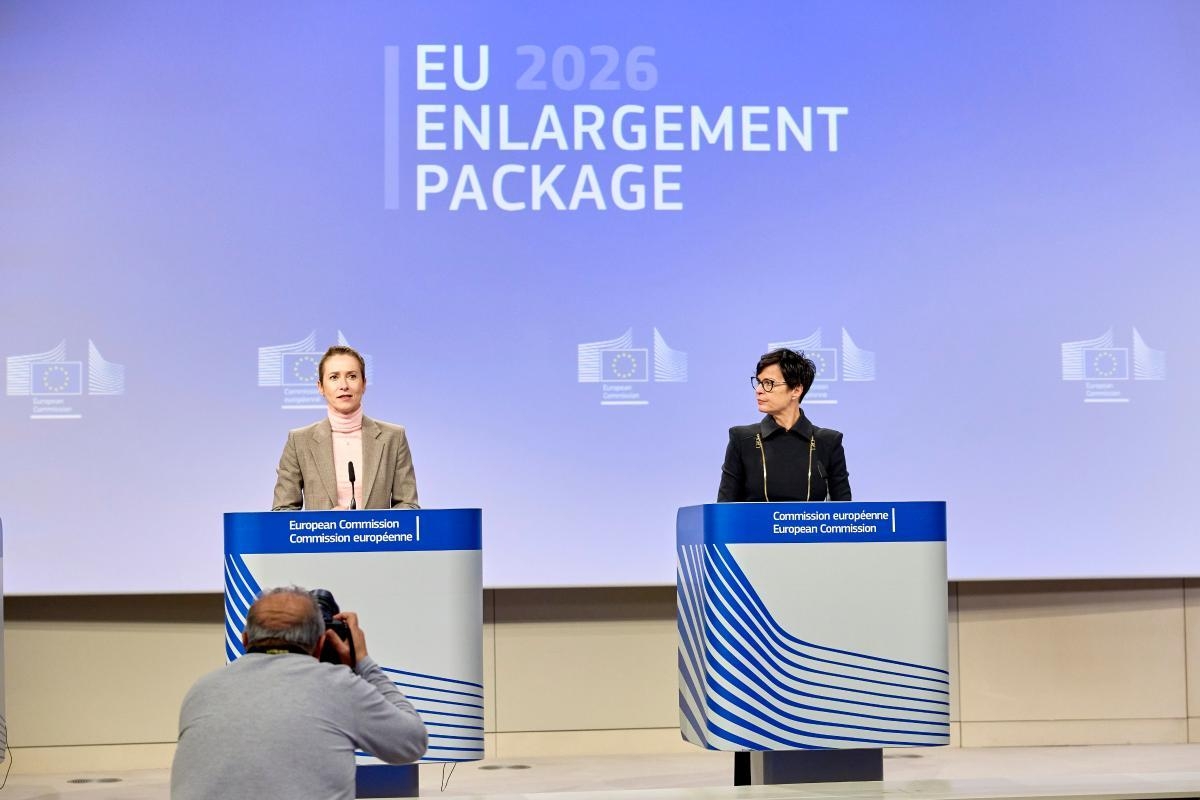
European Commission published its annual enlargement reports yesterday. We report the key findings of the Report on North Macedonia in the areas of democracy, rule of law and economic criteria:
The legal and institutional framework provides a basis for the democratic conduct of elections. However, no progress was made in aligning with EU standards and implementing outstanding recommendations of the Organisation for Security and Cooperation in Europe (OSCE)/Office for Democratic Institutions and Human Rights (ODIHR) and the Venice Commission with regard to the electoral code. Electoral disinformation and foreign information manipulation remain insufficiently addressed. North Macedonia needs to ensure alignment with all relevant EU acquis, including Regulation (EU) 2024/900 on the transparency and targeting of political advertising, taking into account European and international democratic standards.
Parliament can exercise its powers in a partially effective way. Parliament adopted a new Code of Ethics for Members of Parliament and a new strategic plan. Despite having clear Rules of Procedure, Parliament again failed to adopt its annual agenda. Consensus on legislation requiring qualified majorities remained elusive, delaying key reforms, while the use of shortened legislative procedures increased further.
The government coalition remained stable. Some progress was made on local government reform, though key legislation is still pending. The inter-ethnic situation remained stable, and the Ohrid Framework Agreement continued to be implemented, though challenges persist.
Civil society, including human rights defenders, operated in an overall enabling environment. The Council for Cooperation between the Government and Civil Society was reactivated. Civil society organisations (CSOs) participate in the National Council for EU Integration and the Council for Open Government Partnership, but their role should be enhanced. Although there is gradual progress towards a more open dialogue and participatory policy environment, civil society engagement in consultations needs to improve, including in the context of the EU accession process. State support remains limited and funding remains a structural vulnerability. There have been instances in which CSOs and human rights defenders have faced intimidation, online harassment and smear campaigns.
North Macedonia remains moderately prepared in the area of public administration reform. Some progress was made by further expanding the offer of electronic services and upgrading the system for electronic management of documents. Efforts are ongoing to amend the Law on administrative servants and the Law on public service employees to address weaknesses identified after their adoption. The country also enacted a Law on top management, with serious shortcomings regarding the composition of the selection boards, the methodologies for the selection and recruitment of top managers and objective criteria for dismissal. The reorganisation of several state institutions in line with the amended Law on state organisation continued. In November 2025, North Macedonia adopted its roadmap on public administration reform.
The judicial system of North Macedonia is between having some and a moderate level of preparation and made some progress. The country continued implementing the Strategy for Judicial Reform (2024-2028). It adopted a new Law on the Judicial Council, largely addressing the Venice Commission recommendations. Furthermore, it adopted a new Law on the Council for Public Prosecutors, a Law on salaries of judges, a Law on salaries of prosecutors as well as a new Law on civil procedure. The judiciary’s overall independence and financial autonomy is undermined by persisting interference from other state branches and the drastic lack of financial and human resources.
North Macedonia is between having some and a moderate level of preparation and made no progress on the prevention of and fight against corruption. Corruption remains prevalent and is an issue of serious concern. The January 2026 amendments to the Criminal Code concerning the offences of abuse of official position and criminal association do not adequately address the adverse effects of the 2023 amendments and have contributed to legal uncertainty. The State Commission for the Prevention of Corruption needs to step up the proactive identification of potential cases of misconduct. High-level corruption cases continue to face delays and often reach the statute of limitations, contributing to the perception of impunity.
The legal framework on fundamental rights is overall aligned with the EU acquis and European standards. The country continues to meet its general obligations on fundamental rights. However, the implementation of legislation needs to improve. Parliament elected a new Ombudsperson, but eight new Deputy Ombudspersons still need to be chosen. The Ombudsperson’s Office and the Commission on Prevention and Protection against Discrimination still lack financial autonomy. Gender-based violence remains a serious human rights issue, encompassing domestic violence, psychological, economic and cyber violence, and femicide. No steps were taken to align with the EU acquis on nondiscrimination and equality, including gender equality. Despite the renovation of some prison facilities, the overall situation in prisons remains appalling.
North Macedonia is between having some and a moderate level of preparation on freedom of expression and has made no progress in this area. The country took some steps to align the legal framework with the European Media Freedom Act. The Agency for Audio and Audio-Visual Media Services and the public service broadcaster continue to face challenges, primarily due to limited financial and administrative autonomy and irregular funding.
North Macedonia is between having some and a moderate level of preparation in the fight against serious and organised crime and has made limited progress in this area. North Macedonia continued to make progress in the fight against organised crime but should increase its capacities to fight all forms of serious and organised crime. Two revised laws on weapons and on testing and marking firearms, aligning with the relevant EU acquis, were adopted. Further alignment with the EU acquis on the fight against serious and organised crime is needed.
North Macedonia has made limited progress and is at a good level of preparation in developing a functioning market economy. Real GDP growth accelerated in 2025, driven by domestic demand. Inflation rebounded, reflecting both domestic and international price pressures. The 2025 fiscal deficit declined in line with plans, although the spending composition deteriorated. Capital spending execution continues to suffer from weak public investment management. Efforts to formalise the informal economy have slowed down. The central bank maintained a prudent monetary policy and further strengthened the macroprudential framework. The banking sector remained resilient amidst a strong rise in credit growth. The labour market situation improved slightly, but structural problems, including low participation rates, skills mismatches, substantial emigration and a large gender gap, pose obstacles to growth.
North Macedonia has made some progress and is moderately prepared to cope with competitive pressure and market forces within the EU. The digitalisation of the economy has advanced, and the reform of vocational education and training has seen progress. By contrast, higher education remains characterised by outdated curricula. Significant investment needs in transport and energy infrastructure persist. Integration with the EU in trade and investment, as well as overall trade openness, remained high in 2025.