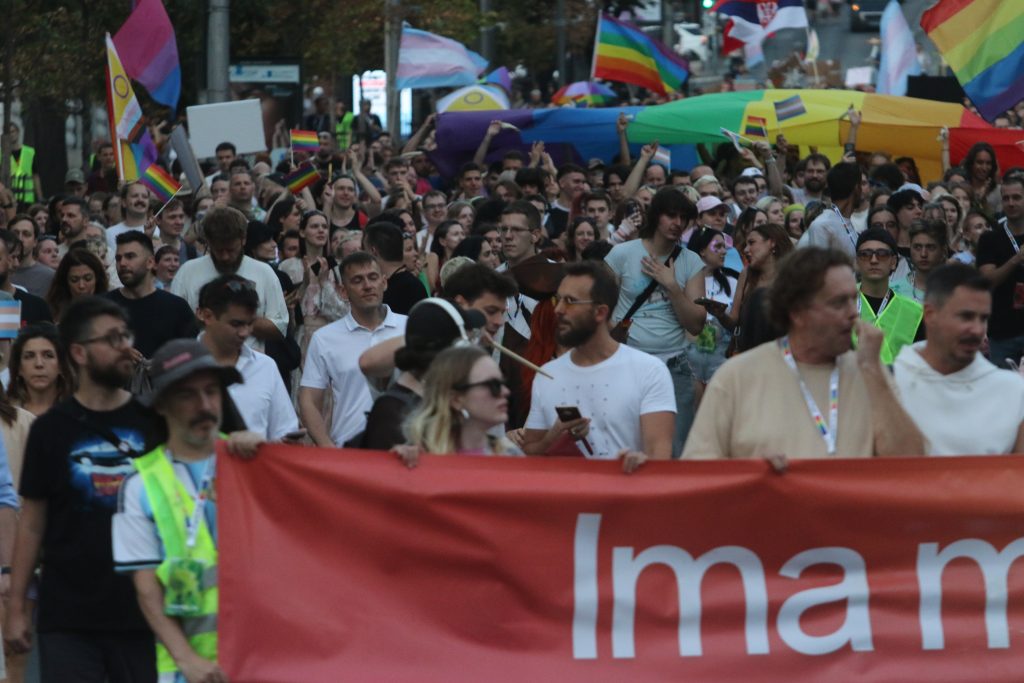
BELGRADE – The Belgrade Pride March took place on Saturday, 5 September 2026, marking 25 years since the first-ever Pride event in Serbia. Gathered under the slogan: “There is a room for all of us”, which was also used during the violence-marred first Pride march in 2001, the participants walked from Manjež Park to the National Assembly, before returning to Manjež Park.
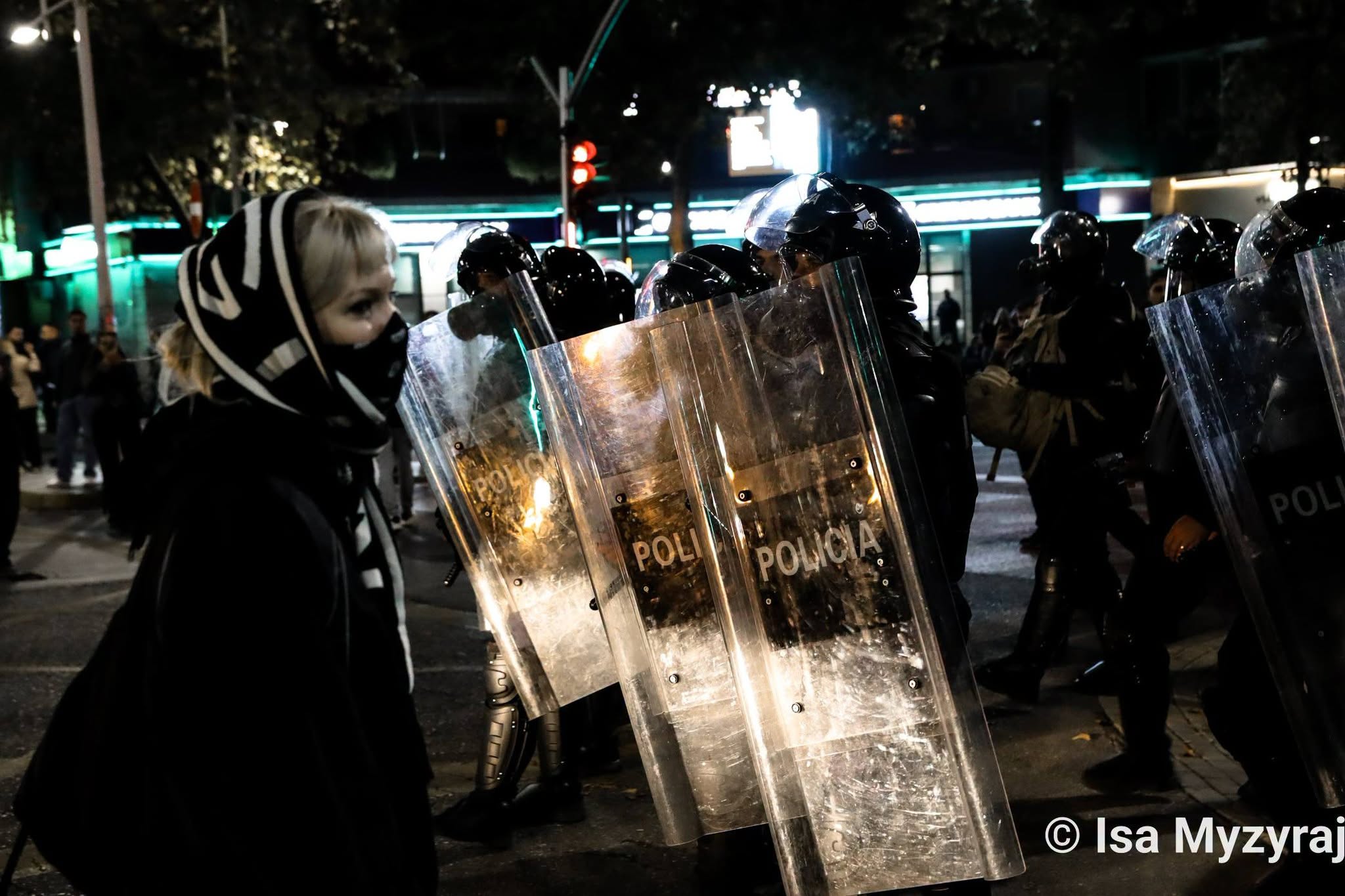
The walk proceeded mostly without major issues, though minor verbal altercations occurred near the Ascension Church where counter-protesters played church music, burned incense, and shouted “Ratko Mladić. Police intervention also safely removed a clergyman near the National Assembly.
Activists highlighted the ongoing lack of legal recognition for same-sex unions and the absence of a legal framework for gender identity.
Matija Stefanović, a representative of the “Let it be known” Association, pointed out that “generations of people deserve to walk in the city today”, stressing that “today we are walking for all those who are not allowed to walk freely.
“We also walk for those of us who have been told that something is wrong with us”, Stefanović said.
He read the demands, including the adoption of the law on same-sex communities and the law on gender identity, as well as the rapid and adequate reaction of state authorities, the condemnation of representatives of hate speech and the explicit recognition of LGBT+ in local action plans, as one of the particularly sensitive social populations.
In addition, the participants also seek an apology to all citizens of Serbia who were prosecuted in court and in other ways because of their sexual orientation and gender identity, as well as education of young people about sexual orientation and gender identity.
Serbian film director Stevan Filipovć stated that he addresses the participants “not as a professor, nor as a director or gay, but as an ordinary citizen, who was beaten for filming criminals committing a crime”.
He added that non-response by institutions breaks “the artificial wall that homophones are trying to build between the LGBT community and straight people, and shows that this can happen to anyone”.
“For me, Pride is an absolute protest, because we do not exist in a vacuum, we are also students, teachers, workers, we are witnessing the general pro-fascization of society and the constant increase of state crime in all spheres”, said Agata Milan Đurić, one of the organizers of the first Pride March.
Former godmother of Pride March, actress Mirjana Karanović, stated that “life is magnificent and that there is nothing that can prevent us from living life the way we want”.
“There are many obstacles, but we will fight for a society that is different, that will not be intolerant and full of hatred,” Karanović noted.
The previous godmother of the Pride March, journalist Olivera Kovačević, stressed that “many things are worse in Serbia, compared to the previous Pride, so what the minority LGBT community has always experienced, many citizens of Serbia now experience as well”.
“An unjust society has no fence, it reaches everyone”, Kovačević remarked, adding that a “happy slave is the pillar of any dictatorship”.
This year’s godmother of Pride March, journalist Danica Vučenić, remarked that this event is organized at a time of “glorification of a person who died in a deep old age, and who is responsible for the shooting of 8,000 people, including underage boys (Ratko Mladić) “, as well as at a time when there is “a serious threat to human rights, due to claims of wiretapping students by the state”.