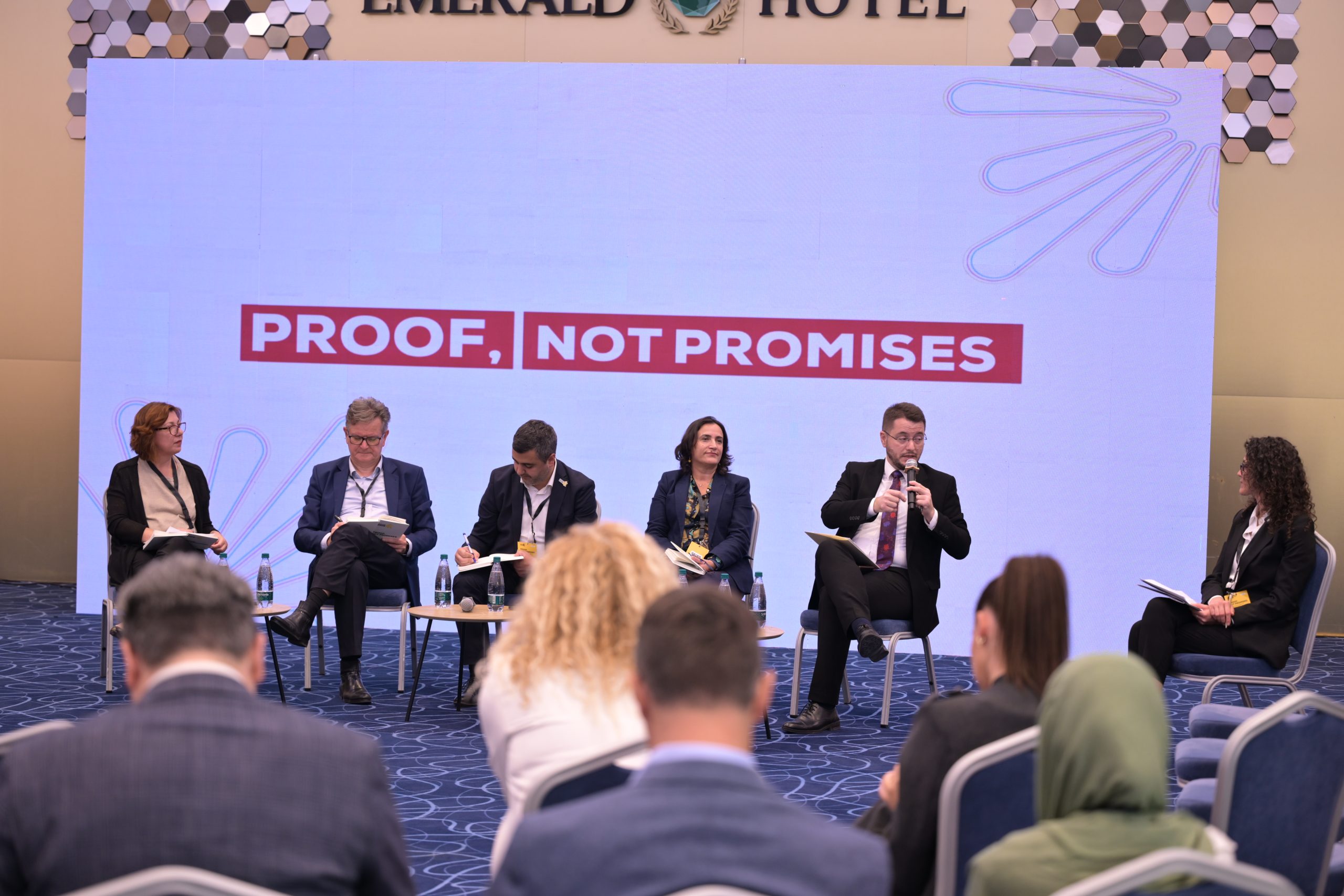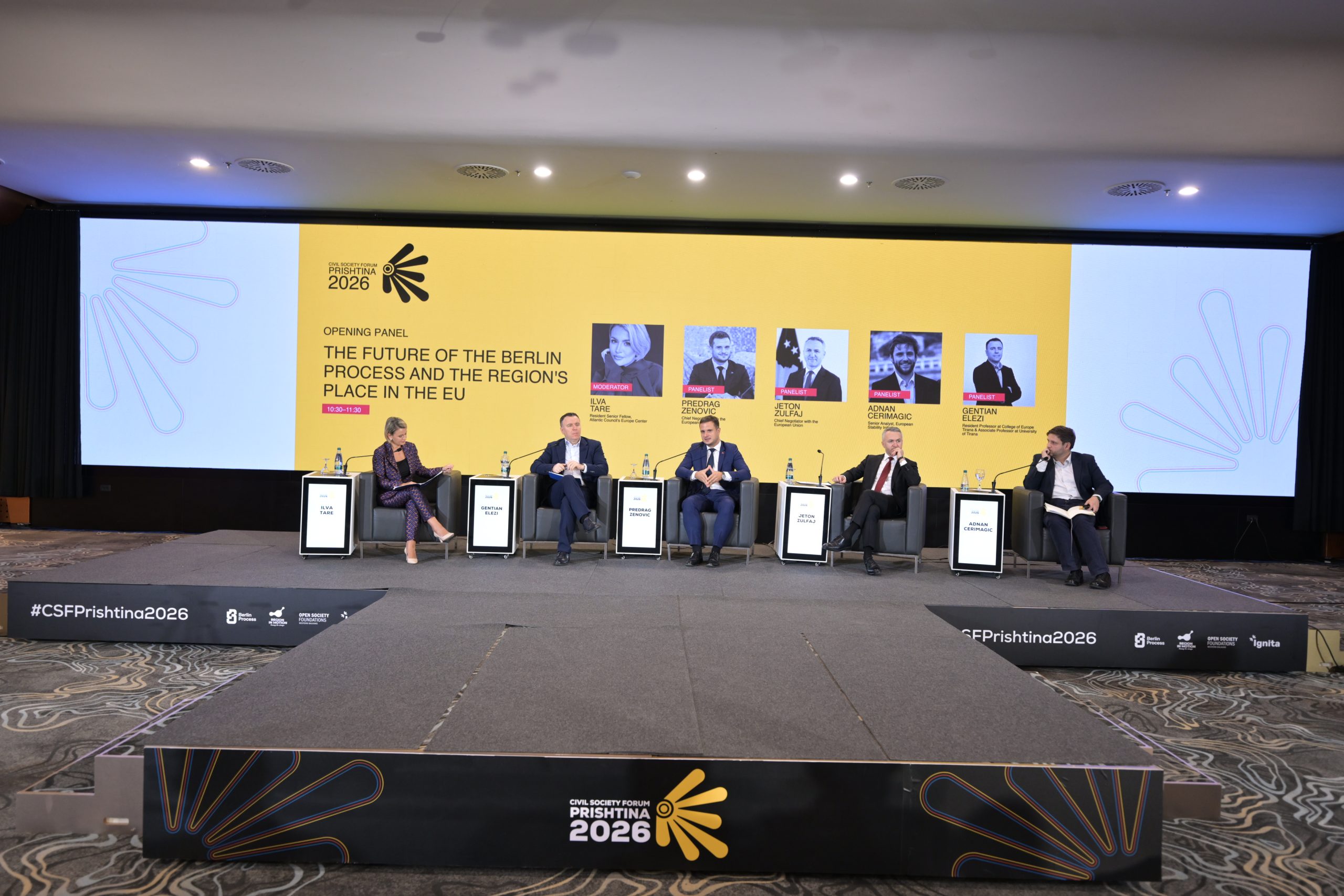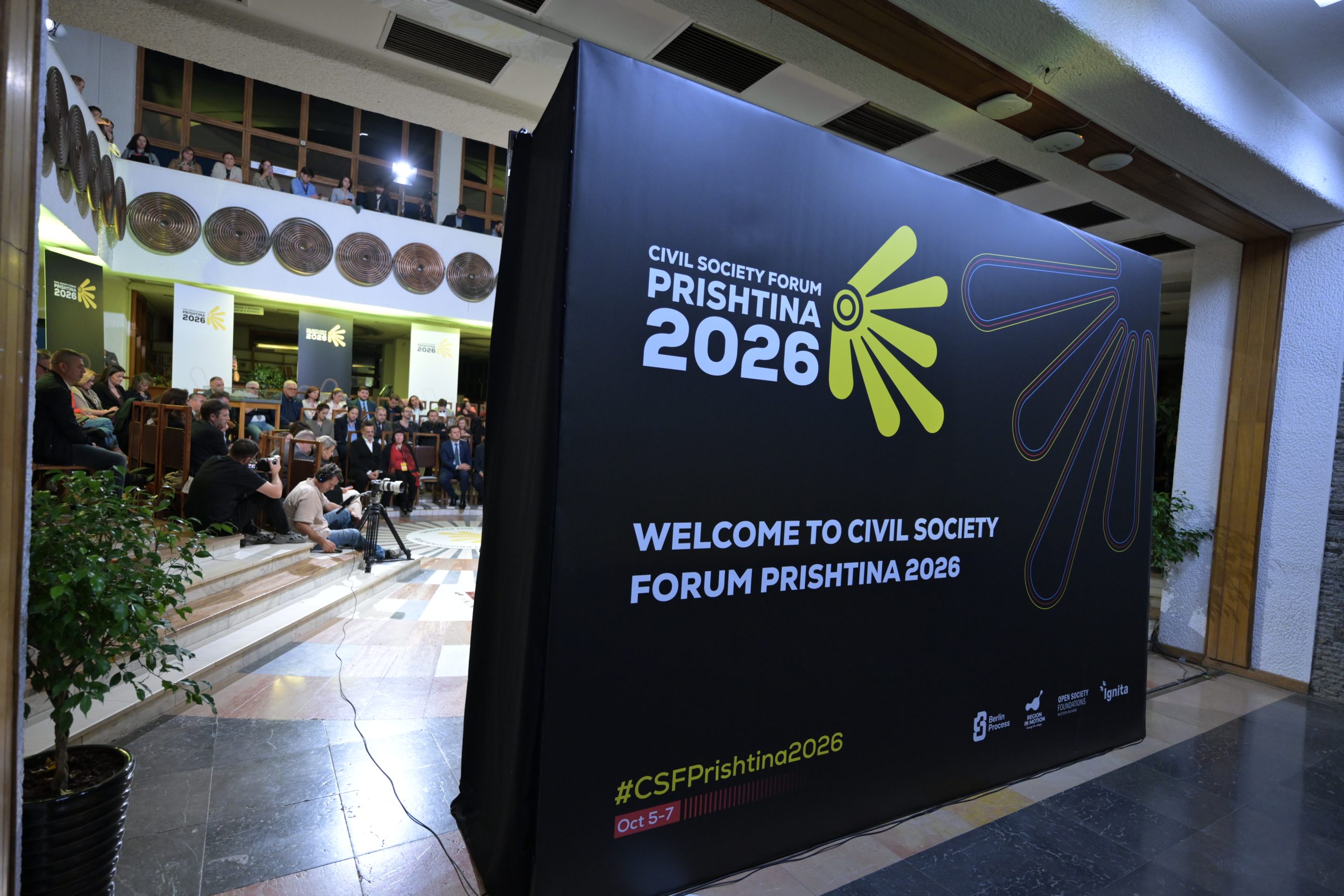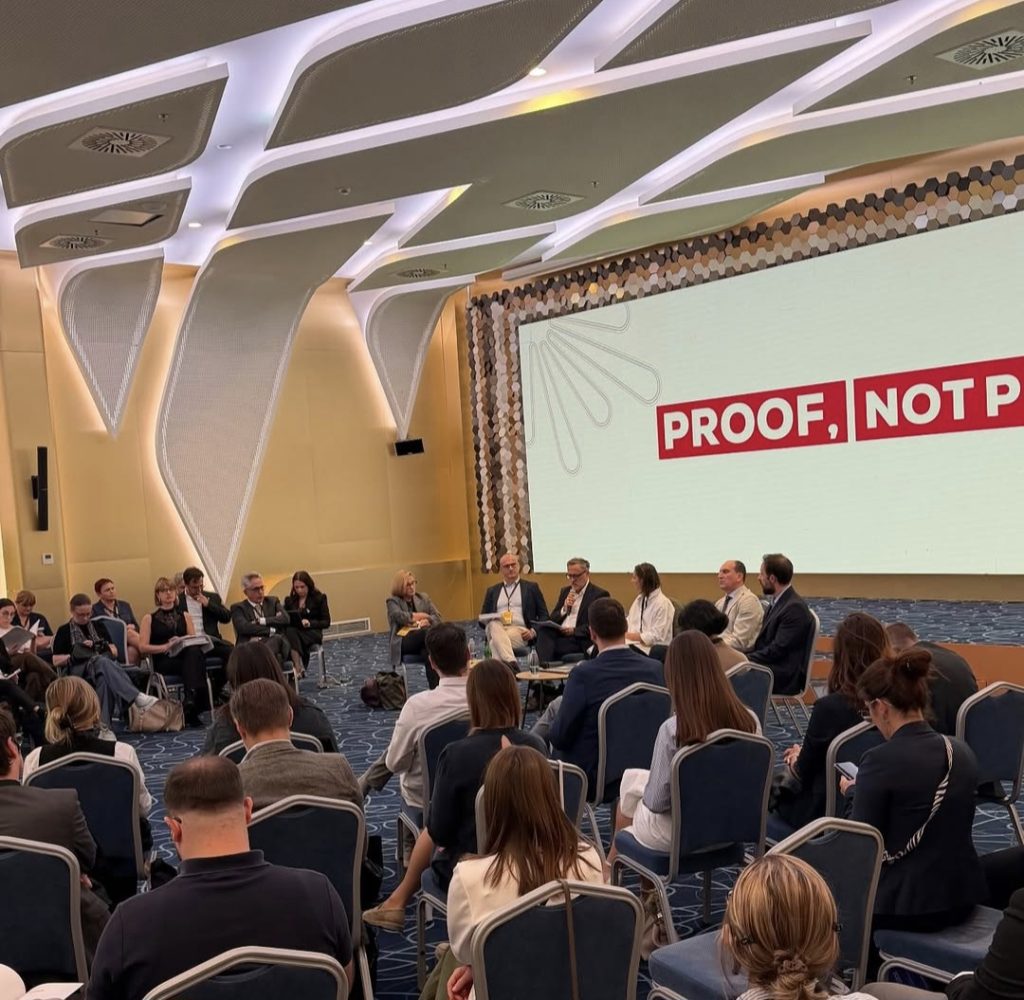
PRISTINA – Civil society across the Western Balkans Six is facing growing pressures, including very restrictive NGO laws, and smear campaigns targeting activists, warned the participants of the discussion entitled “Safeguarding Civic Space and Democracy: From Commitments to Conditionality for a Credible EU Enlargement Process”, which was held within the Civil Society & Think Tank Forum (CSF) 2026 in Pristina.
It was stressed that the “independent media should scrutinize the public officials, and the civil society should meaningfully participate in the decision-making processes”.
“Vibrant civic space is a precondition for a functioning democracy”, stated Klotida Kosta, Director of Programs at Partners Albania for Change and Development, who moderated the discussion.
According to Ionut Sibian, Vice President of the External Relations Section (EESC), the European Union has already recognized that the dynamic civic society is a precondition for meeting the EU accession criteria.
“In the democracies which are really functioning, civil society organizations are free to criticize the government without intimidation, the public consultations are meaningful, and the independent journalists are protected from harassment and SLAPPs”, Sibian noted.
In his opinion, since the free civic space is part of the so-called Fundamentals, the serious backslides in this domain should affect the EU accession process, ie. the EU should reconsider the benefits to the authorities, while protecting and, if possible, increasing the direct support for the civil society…
Similarly, Dren Puka, Executive Director of the Kosovo Civil Society Foundation (KCSF), views the role of the civil society as a corner for democratic transformation, accountability and the protection of a fair public sphere.
“In some Western Balkans, the civil society face the consequences of not doing what the government expect them to do… When it comes to EU enlargement, the focus is pretty much on the security – i.e. it is widely considered that the process will increase the safety and security of Europe and region, whereas the essentials, such as democracy, are at the margins of the discussion”, Puka remarked.
Leila Bičakčić, Executive Director of CIN, underlined that, generally speaking, the civil society is obviously part of a solution in the process of the changing the societies in the Western Balkans.
“However, most of the governments in the Western Balkans are not necessarily democratic in their essence and would like to eliminate the critical part of the civil society… There is a copy-paste restrictive mechanics for the civil society across the countries, and there are many activists who act alone, with no mechanism of protection”, Bičakčić stated.
According to Nenad Koprivica, Policy Expert at CEDEM, the government should treat the civil sector not as a rival, but as a vital partner in policy-making processes.
“Reforms are more likely to be implemented efficiently if the relevant actors are involved in policy-making process from the very beginning”, Koprivica underlined.